Fire Door Installation Costs in London: 2026 Price Guide
Updated 12 June 2026|8 min read
A fitted FD30 fire door in London costs £400–£900 supplied and installed in 2026, while an FD60 door runs £700–£1,200. Upgrading an existing door to FD30 standard, with new intumescent strips, cold smoke seals and a self-closer, costs £150–£350 per door. The wide ranges come down to whether the frame is replaced, the quality of the ironmongery, and whether certification is required for a landlord or HMO. This guide prices every scenario clearly.
How much does fire door installation cost in London in 2026?
Fire door costs split by what you are actually buying: a complete new doorset, a new leaf into an existing frame, or an upgrade of a door you already have. Confusing these is the main reason quotes look so different.
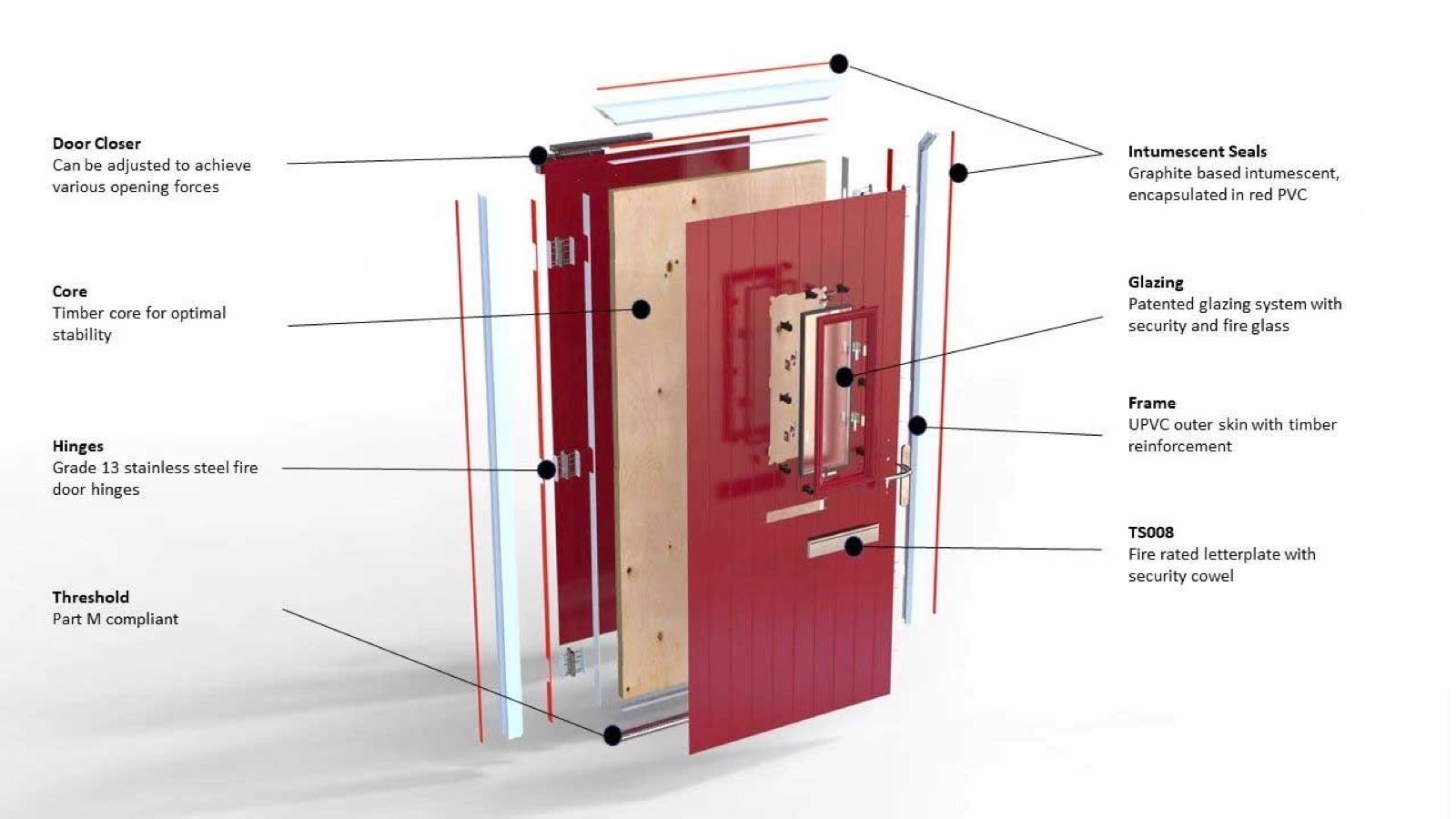
A full FD30 doorset, meaning the door leaf, certified frame, intumescent strips, smoke seals, hinges, latch and closer supplied and fitted, costs £400–£900 in London. An FD60 doorset, rated for sixty minutes rather than thirty, costs £700–£1,200 because the leaf is heavier, the ironmongery is upgraded and the certification is more demanding.
Upgrading an existing solid timber door to an FD30 standard, where the door is suitable, costs £150–£350: this covers rebating in intumescent strips and cold smoke seals, fitting a CE-marked self-closer and replacing hinges with fire-rated ones. The table below shows the common scenarios. Note that prices exclude VAT, which applies to most landlord and commercial work.
Scenario
Typical London cost fitted (2026)
Upgrade existing door to FD30 (strips, seals, closer)
The number after FD is the minutes of fire resistance the door provides, and getting it right is a compliance matter, not a preference.
FD30 doors resist fire for thirty minutes and are the workhorse of residential fire safety. In a typical HMO or flat conversion, FD30S doors (the S denotes smoke seals) protect bedrooms, kitchens and the doors opening onto the escape route. The vast majority of fire doors we fit across London are FD30S.
FD60 doors resist fire for sixty minutes and are specified where the fire strategy demands it: larger HMOs, certain commercial-to-residential conversions, basement flats, and doors separating high-risk areas such as commercial kitchens or plant rooms from escape routes. Your fire risk assessment or building control officer specifies which rating applies where; we do not guess, because an under-specified door is a failed inspection and an over-specified one is wasted money.
The critical point is that a fire door only performs as a complete assembly. The right leaf hung in the wrong frame, with the wrong gaps or a missing closer, is not a fire door. This is why the doorset, frame and ironmongery are priced and certified together.
Upgrading an existing door vs fitting a new doorset
Not every door needs replacing. Where you have an existing solid timber door of adequate thickness and construction, upgrading it is the sensible, lower-cost route, and we assess this honestly at survey rather than defaulting to replacement.
An upgrade at £150–£350 per door involves routing grooves into the door edge or frame to take intumescent strips that expand in heat and seal the gap, fitting cold smoke seals, replacing the hinges with CE-marked fire-rated hinges (three per door), and fitting a controlled self-closer. The door must also close against a proper rebated frame with the correct 3mm gap; a worn frame may itself need attention.
Where the existing door is hollow, too thin, damaged or non-original, an upgrade is not permissible and a new doorset is the only compliant answer. A new FD30 leaf into a sound existing frame costs £300–£600; a complete doorset, where the frame is also replaced, £400–£900.
The false economy to avoid is fitting a fire-rated leaf to a frame that cannot perform, or omitting the self-closer because a tenant finds it annoying. A propped-open or closer-less fire door is, legally and physically, not a fire door.
What drives fire door costs up?
Three things move a fire door quote, and none of them is the colour.
Frame replacement is the biggest single factor. If the existing frame is unsuitable, you move from a £300 leaf swap to a £400–£900 full doorset, because the frame must be removed, the new certified frame fitted plumb and the surrounding plaster made good. In period properties with non-standard openings, the frame may need to be made to size.
Ironmongery is the second. Basic compliant hinges, a latch and an overhead closer are included in standard pricing; but concealed closers, electromagnetic hold-open devices linked to the alarm (common in care settings and larger HMOs), thumb-turn locks, vision panels with fire-rated glazing and finger-protection guards all add cost, from £50 for a better closer to £300+ for glazed vision panels.
Certification and documentation is the third, and it matters most to landlords. A door that must demonstrate compliance to a council HMO inspector needs the right product, fitted to the manufacturer's installation instructions, with traceable labels or plugs and a gap and seal check. We provide installation certificates and photographic evidence as standard, because a fire door with no paper trail is a fire door an inspector will question.
Fire doors for HMOs: the survey and works package
For landlords, fire doors are rarely a single-door purchase; they are a package driven by the HMO licensing standard and the property's fire risk assessment, and pricing the whole job is more useful than pricing one door.
A typical HMO fire door survey identifies every door that forms part of the fire strategy: each bedroom door, the kitchen door, doors onto the protected escape route and the flat entrance doors. For each, we record whether it can be upgraded or must be replaced, and whether the frame and gaps are compliant. That survey turns a vague council action list into a costed schedule.
For a typical four-to-six-bedroom HMO, a fire door works package commonly lands at £2,500–£6,000, depending on how many doors need full replacement versus upgrade. A property where the existing doors are sound solid timber sits at the lower end; one with hollow-core 1980s doors throughout sits at the upper end, because every door becomes a new doorset.
We fit fire doors across the capital with the certification landlords need for licensing. If you are converting or compliance-upgrading a let property, our fire door service dovetails with alarms, emergency lighting and partitions, and landlords can read our wider guidance on the for-landlords pages of this site.
Common fire door mistakes that fail inspections
We are called to put right as many failed fire doors as we fit new ones, and the failures are predictable.
The most common is the gap. A fire door needs a consistent 3mm gap around the leaf (and a slightly larger threshold gap); too tight and it binds, too loose and smoke and fire pass before the intumescent strips can act. Doors planed down by a previous decorator to stop them sticking routinely fail on this alone.
The second is the missing or disconnected self-closer. A fire door must close itself fully into the frame from any angle, every time. Closers removed because they slam, or adjusted so weakly the door does not latch, are an automatic fail.
The third is incompatible ironmongery: non-fire-rated hinges, standard letterplates cut into flat entrance doors, or hold-open devices that are not alarm-linked. The fourth is the wrong door entirely, a hollow-core internal door painted to look the part.
None of these is expensive to avoid; all are expensive to discover at inspection, when remedial works run on a deadline. Fitting compliant doorsets correctly the first time, with documentation, is always cheaper than the second visit.
Frequently Asked Questions
How much does it cost to fit an FD30 fire door in London?
A complete FD30 doorset, supplied and fitted with frame and ironmongery, costs £400–£900 in London in 2026. Fitting a new FD30 leaf into a sound existing frame costs £300–£600, while upgrading a suitable existing door to FD30 standard costs £150–£350. Prices exclude VAT.
How much more does an FD60 fire door cost than FD30?
An FD60 doorset costs £700–£1,200 fitted against £400–£900 for an equivalent FD30. The premium reflects a heavier leaf, upgraded ironmongery and more demanding certification. FD60 is specified by your fire risk assessment for larger HMOs, basements and certain commercial-to-residential conversions.
Can I upgrade my existing door to a fire door instead of replacing it?
Often yes, if the door is solid timber of adequate thickness and in good condition. Upgrading costs £150–£350 per door and involves fitting intumescent strips, cold smoke seals, fire-rated hinges and a self-closer. Hollow-core, thin or damaged doors cannot be upgraded and must be replaced with a certified doorset.
How much do fire doors cost for a whole HMO?
A fire door works package for a typical four-to-six-bedroom HMO lands at £2,500–£6,000 depending on how many doors can be upgraded versus replaced. We survey every door in the fire strategy first and provide a costed schedule plus installation certification for licensing.
Do fire doors need a self-closer to be compliant?
Yes. A fire door must close fully into its frame and latch from any open position, which requires a controlled self-closer in nearly all HMO and communal situations. A fire door without a working closer, or one that has been disconnected, is treated as non-compliant and will fail an inspection.