When a fire risk assessment lands on a landlord or letting agent’s desk, actioning it is our job, not yours. We deliver fire risk assessment remedial works across London — compartmentation, fire-stopping, FD30 and FD60 door upgrades, alarms and signage — as one accountable contractor, with every item photographed, certificated and closed out against its FRA reference for HMO licensing, the fire authority and your insurer.
Written Guarantee: 5 Years
|
Average Timeline Range: 2 days - 4 weeks
From FRA Action Plan to Signed-Off Works
Most London landlords do not struggle to get a fire risk assessment — they struggle to get the actions done. The assessor identifies the defects but does not fix them, and a typical action plan mixes a dozen trades in one document: fire-stopping, joinery, electrics, alarms, emergency lighting, signage and decoration. Chasing separate contractors for each, then proving to the council that the whole list is closed, is where compliance quietly stalls for months.
We take the FRA document itself as our brief. Every action is priced line by line against its own reference number, delivered as one programme under one project manager, and closed out item by item. You get a single fixed written quote instead of a folder of part-quotes, and one point of contact instead of five.
We work for private landlords, letting agents and block managers across London — in occupied HMOs, converted flats, mansion blocks and communal areas from ex-local-authority estates in Southwark to period conversions in Ealing. Works are sequenced around tenants with proper written notice, and every completed item is photographed against its FRA reference so the assessor, the borough or the freeholder can see exactly what was done, where and when. Typical action plans run from two days to four weeks on site depending on scope.
Compartmentation and Fire-Stopping
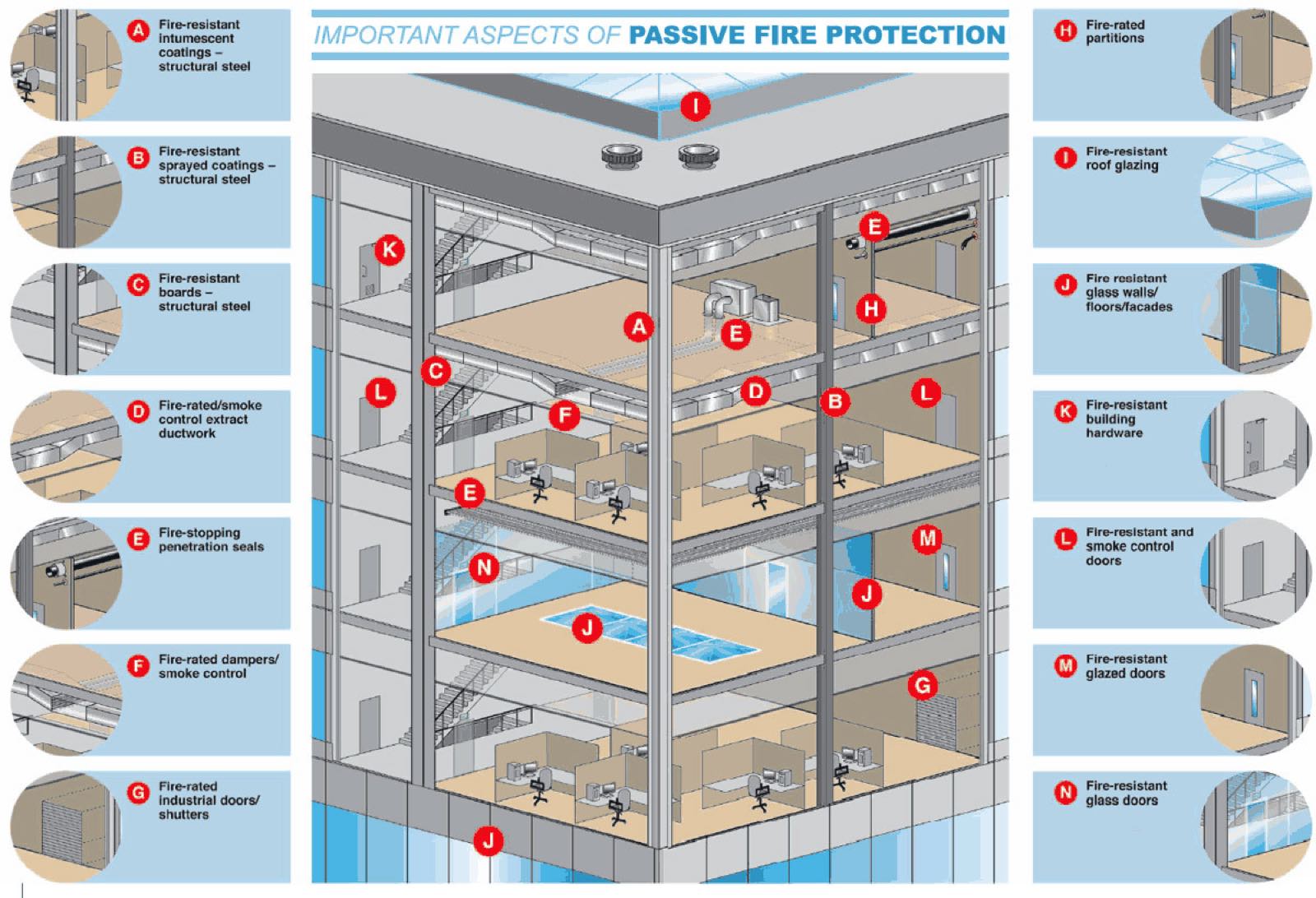
Compartmentation is the principle that holds a building’s fire strategy together: walls, floors and ceilings that contain fire and smoke long enough for people to escape and for the brigade to work. In London’s converted Victorian and Edwardian stock it is routinely compromised, often invisibly — holes drilled for waste pipes and data cables, missing ceiling sections above cupboards, lath-and-plaster that has degraded, and lofts left open across the party line so one flat’s fire becomes the whole terrace’s problem.
Our teams survey the compartment lines, then reinstate them with tested, certified materials rather than whatever is on the van. Service penetrations are sealed with intumescent mastic, collars or fire batt sized to the gap; ceilings are upgraded to 30 or 60 minutes with fire-rated board and skim; protected stairways and voids get fire barriers where the building line has been breached; and walls between separate lettings are brought up to FD-equivalent resistance.
Every seal, barrier and upgrade is logged with a location photograph and the manufacturer’s product data sheet. That evidence file is not bureaucracy for its own sake — it is precisely what a re-inspection, a licensing officer or an insurer asks to see first, and an untested seal in the wrong place fails the whole assessment even when it looks tidy.
Fire Doors, Alarms and Escape Routes
After compartmentation, the two items FRAs flag most are doors and detection. A fire door only works as a complete certified doorset: the right leaf, intumescent strips that expand to seal the gap, cold smoke brushes, a working self-closer and gaps within tolerance. We fit certified FD30 and FD60 doorsets to risk rooms and along the escape route — but we also assess honestly whether a sound existing 44mm leaf can be brought into compliance with new strips, seals, intumescent hinge pads and a closer, which is a fraction of replacement cost and often the right call in a period property.
Detection is the other half of the escape strategy. In a converted HMO the standard is typically a Grade D1 mains-powered, interlinked, battery-backup system to BS 5839-6, with the right category of cover for the layout; our own electricians install and certificate it to BS 7671, and where an FRA calls for emergency lighting on the escape route we commission and certificate that too.
Crucially, in an occupied property we keep the escape route clear and the alarm live at the end of every working day. A disabled alarm mid-project is a live breach in the eyes of both the fire authority and the insurer, so we phase the work so protection is never dropped.
Landlord Duties Under the Fire Safety Order
The Regulatory Reform (Fire Safety) Order 2005 makes the “responsible person” — usually the landlord or the managing agent where duties are delegated — legally accountable for fire safety in the common parts of HMOs and buildings containing flats. Since the Fire Safety Act 2021 clarified its scope, that duty explicitly reaches the structure, external walls and individual flat entrance doors, which is why flat-entrance FD30S doorsets now appear on so many London action plans.
Enforcement is not theoretical. London fire authorities issue enforcement and prohibition notices, and fines under the Order sit at the unlimited end of the scale for serious failings. A prohibition notice on a communal stair can stop you letting overnight.
Running alongside the Order, HMO licensing conditions under the Housing Act 2004 impose their own fire precautions inside the lettings — separation, doors, alarms and escape provision that the borough inspects. The two regimes overlap but are enforced by different bodies with different paperwork. We work to both daily, so the physical works we deliver satisfy the fire authority and the council’s HMO officer at the same time, rather than passing one inspection and failing the next. Where an item is genuinely a matter of legal interpretation, we say so and point you to your assessor rather than guess.
How to Choose a Fire Safety Contractor in London
Fire compliance is the one trade where the paperwork is half the product, so choose on evidence, not just price. Use these criteria.
First, insist on a line-by-line quote referenced to your FRA action numbers. A single lump sum hides what is and is not included, and you will not be able to prove completeness to the council. A proper quote lets you phase the spend and see exactly what closes each defect.
Second, check who does the certificated elements. Alarm and emergency-lighting circuits should be installed and certificated by BS 7671-qualified electricians; any gas work by Gas Safe engineers. Ask to see the £5m public liability cover as a matter of course.
Third, demand certified products, not generic materials. Every fire door should be a certified FD30 or FD60 doorset or a properly documented upgrade; every fire-stopping product should come with a data sheet and third-party certification for the application.
Fourth, make the handover pack a condition of final payment — annotated action plan, dated photographs, product certification and electrical certificates. If a contractor cannot describe that pack before starting, they do not do this work often enough.
Finally, favour a single accountable contractor over a chain of subcontractors. When one firm prices, delivers and documents the whole plan, there is no gap between trades for a defect to hide in — and one number to call when the inspector has a question.
Documentation That Survives an Inspection
Compliance work that is not documented may as well not exist — an inspector, an insurer or a coroner cannot credit what you cannot evidence. Every fire safety project we deliver closes with a structured handover pack rather than a shrug and an invoice.
The pack contains the original FRA action plan annotated item by item with what was done, dated photographs of each completed work referenced to its action number, product certification and data sheets for every fire-stopping material and doorset, and electrical certificates wherever alarm, detection or emergency-lighting circuits were installed or altered. Where doors were upgraded rather than replaced, the pack records what was changed and why.
Letting agents tell us this pack is the difference between a smooth HMO licence renewal and a costly second inspection — borough officers see hundreds of files a year, and clear evidence tied back to the FRA closes yours quickly. It matters just as much when something goes wrong elsewhere in a building: being able to show precisely which works were done, by whom, when and with what certified materials is the first thing insurers and investigators ask for. We keep digital copies of every pack indefinitely, so a replacement for a new managing agent or a remortgage is one email away, and the work is backed by our written guarantee.
Compliance in London’s Building Stock
The defects an FRA throws up depend heavily on what the building is, and London’s housing is unusually varied. In two-storey-into-flats Victorian and Edwardian conversions — the backbone of the private rented sector from Walthamstow to Tooting — the recurring issues are breached compartment floors, original lath-and-plaster ceilings that no longer give 30 minutes, unprotected staircases and flat-entrance doors that predate any fire standard.
Purpose-built mansion blocks in Kensington, Marylebone and Maida Vale bring different problems: communal corridors and lobbies under a freeholder’s control, service risers that run the full height of the building, and works that need the freeholder’s or managing agent’s consent before anyone touches the common parts. We liaise with block managers and are used to booking access, protecting common parts and working within a building’s permitted hours.
Ex-local-authority flats and larger HMOs across the outer boroughs tend to carry alarm-system and emergency-lighting actions alongside door and compartmentation work. Whatever the stock, we survey against the actual FRA and the borough’s specific HMO standards — which differ in the detail from council to council — rather than a generic checklist, and we carry the £5m public liability cover that managing agents and freeholders expect to see before granting access.
What Fire Safety Compliance Works Costs in London (2026)
Item
Typical London Price
Notes
Fire-stopping to service penetrations
£40–£80 per penetration
Intumescent sealant, collars or batt around pipes and cables through a compartment line
Ceiling upgrade to 30-minute fire resistance
£600–£1,500 per room
Fire-rated boarding and skim over lath-and-plaster or single-board ceilings
FD30 fire doorset supplied and fitted
£650–£1,100 per door
Certified doorset with intumescent strips, cold smoke seals and self-closer
FD60 doorset to higher-risk openings
£950–£1,600 per door
60-minute rating for plant rooms, basements or commercial-over-residential
Existing fire door upgrade and remediation
£180–£450 per door
New strips, seals, closer, intumescent hinge pads and gap adjustment where the leaf is sound
Grade D1 interlinked alarm system (mains + battery)
£450–£1,200 per property
BS 5839-6 detection wired and certificated by our own BS 7671 electricians
Emergency lighting to escape route
£120–£280 per fitting
Maintained or non-maintained luminaires with commissioning certificate
Photoluminescent and statutory signage
£8–£35 per sign
Fire action notices, exit and fire door keep-shut signage
Full FRA remedial package, converted HMO
£3,000–£15,000 per property
Typical whole-action-plan close-out for a converted London HMO, phased if required
Indicative Greater London 2026 prices for FRA remedial works; every action plan is priced line by line after a free survey and confirmed as a fixed written quote before work starts.
Insider Tips Before You Commit
Hand us the FRA PDF, not a verbal summary — pricing every action against its exact reference number is what makes the sign-off pack close a licence file first time.
Book fire-stopping and door works before you reinstate decoration; sealing penetrations after skirtings and architraves go back on doubles the making-good bill.
Check the FD rating stamp on the top edge of every existing door before assuming replacement — many sound 44mm leaves only need new intumescent strips, seals and a closer to comply.
In a converted Victorian terrace, get the loft and the cupboard-under-stairs surveyed early; missing compartmentation above ceilings is the defect assessors flag most and landlords notice least.
Keep the escape route and interlinked alarm live at the end of every working day in an occupied HMO — inspectors and insurers treat a disabled alarm mid-works as a live breach.
Ask for product data sheets and third-party certification for every fire-stopping material used; an untested mastic in the wrong gap invalidates the whole seal on inspection.
Phase big action plans by risk, not by room — deal with escape-route compartmentation and detection first so the property is defensible even before the cosmetic items are done.
Store the digital handover pack somewhere your managing agent can reach it; the licence renewal, the insurer and the next FRA all ask for the same evidence.
How Not to Get Scammed
London has more rogue traders than any other UK market. These are the warning signs we see most often — and exactly what to do when you spot them.
Trader quotes a round-number lump sum for the whole FRA without pricing each action line.
Insist on an itemised quote referenced to each FRA action number so you can see what is covered, phase the spend and prove completeness to the council.
Fire-stopping or doors fitted with no product certification, data sheets or photographs handed over.
Make the certified handover pack — dated photos, product certs and, where circuits are touched, electrical certificates — a contractual condition of final payment.
Cash-only pricing with no VAT invoice and a large deposit demanded up front.
Pay by traceable method against a written fixed quote, keep the deposit modest and stage payments to completed, evidenced milestones.
“We found more problems” mid-job with pressure to approve extra work on the spot.
Require any variation in writing with a price before it proceeds; genuine additional defects can be photographed, quoted and added to the same documented plan without pressure.
Uninsured labour on site and no public liability certificate offered when asked.
Ask to see the £5m public liability cover and confirm the electrical and alarm work is by BS 7671-qualified people before anyone starts.
Ordinary internal doors sold as “fire doors” with no rating stamp or certified doorset paperwork.
Confirm every fire door is a certified FD30 or FD60 doorset or a properly upgraded sound leaf, and get the certification reference in the pack.
Standards & Compliance
Every project is delivered to current British Standards and Building Regulations, with works documented for building control and HMO licensing sign-off — backed by fixed written quotes and a written guarantee.
BRITISH STANDARDS · BUILDING REGS COMPLIANT · FD30/FD60 FIRE DOORSETS · BS 5839-6 ALARMS · WRITTEN GUARANTEE
Frequently Asked Questions (FAQ)
Who is legally responsible for fire safety in a rented property?
Under the Regulatory Reform (Fire Safety) Order 2005, the “responsible person” — normally the landlord, or the managing agent where duties are delegated — is accountable for fire safety in the common parts. The Fire Safety Act 2021 confirmed this covers the structure, external walls and flat entrance doors. HMO licence conditions under the Housing Act 2004 add further duties inside the lettings. We carry out the physical works those duties require and document them for both regimes.
How much do fire risk assessment remedial works cost in London?
It depends entirely on the action plan. Sealing a service penetration costs from around £40–£80 each; upgrading a ceiling to 30-minute fire resistance typically £600–£1,500 per room; a certified FD30 doorset £650–£1,100 fitted; a Grade D1 interlinked alarm system £450–£1,200 per property. A full remedial package for a converted London HMO commonly lands between £3,000 and £15,000. We price each FRA action line by line so you can see and phase the spend.
Can you carry out the works with tenants in place?
Yes — most of our compliance work is in occupied HMOs and blocks. We give proper written notice through you or your agent, work room by room to minimise disruption, and keep escape routes clear and the alarm live at the end of every working day. A live FRA breach cannot be created by the very works meant to close it, so protection is never dropped mid-project.
Will your work satisfy the council’s HMO licensing inspection?
That is the purpose of the handover pack: the FRA action plan annotated item by item, dated photographs of each completed work, product certification for fire-stopping and doorsets, and electrical certificates where alarm or emergency-lighting circuits were touched. London borough HMO officers see hundreds of files a year — clear evidence of completed works, referenced back to the FRA, is what closes yours first time.
Do all my existing doors need replacing with new fire doors?
Often not. Many sound existing 44mm leaves can be brought into compliance with new intumescent strips, cold smoke seals, intumescent hinge pads, a certified self-closer and gap adjustment — a fraction of the cost of a new doorset. We check each door’s rating stamp and condition and advise honestly whether it can be upgraded or genuinely needs a certified FD30 or FD60 replacement, which is common for flat entrance doors with no fire rating at all.
What is compartmentation and why does it keep failing in period properties?
Compartmentation is the network of fire-resisting walls, floors and ceilings that contains fire and smoke long enough for escape. In converted Victorian and Edwardian houses it is routinely breached over decades — holes for pipes and cables, missing ceiling sections above cupboards, degraded lath-and-plaster and lofts left open across the party line. We survey the compartment lines and reinstate them with tested, certified fire-stopping materials, each seal photographed and logged with its product data sheet.
What alarm system does an HMO need, and who certificates it?
A converted HMO typically requires a Grade D1 mains-powered, interlinked, battery-backup detection system to BS 5839-6, with the category of cover matching the layout and risk. Our own electricians install and certificate it to BS 7671. Where the FRA calls for emergency lighting on the escape route, we install and commission that too, and both certificates go into your handover pack for the licence file and your insurer.
How long do fire compliance works take?
It ranges from two days for a short action plan — a handful of penetrations sealed, strips and closers fitted, signage installed — up to around four weeks for a full package across a multi-let building involving compartmentation, several doorsets, a new alarm system and emergency lighting. We confirm the programme in writing before starting and phase larger plans by risk so the escape route and detection are dealt with first.
Do I need freeholder or managing agent consent for works in a block?
For works to the common parts of a mansion block or converted building, usually yes — the freeholder or managing agent controls those areas, and a licence to alter or written consent is often required before anyone touches a communal corridor, stair or riser. We liaise with block managers, carry the £5m public liability cover they ask to see, and book access and protect common parts to their rules so consent-dependent items do not stall the programme.
What guarantee do you provide on fire safety works?
Our fire safety compliance works are covered by a written guarantee, with a 5-year guarantee period on the workmanship, backed by £5m public liability insurance. Combined with the documented handover pack — certified products, dated photographs and electrical certificates — you have both the assurance and the evidence trail that the fire authority, the borough HMO officer and your insurer expect to see.
Our Written Guarantee
We provide a fully comprehensive, written 5-Year guarantee covering all structural reinstatement, moisture boundaries, and finish coatings.
100% Insurance Protected
Request an Elite Assessment
Secure a rapid, high-precision physical survey by our team. Fill out our briefing engine instantly.
Fire Safety Compliance Works Across Greater London
We deliver fire safety compliance works across all 33 London boroughs — from the City and Central London out to the M25. Tap any marker to see coverage and local postcodes.