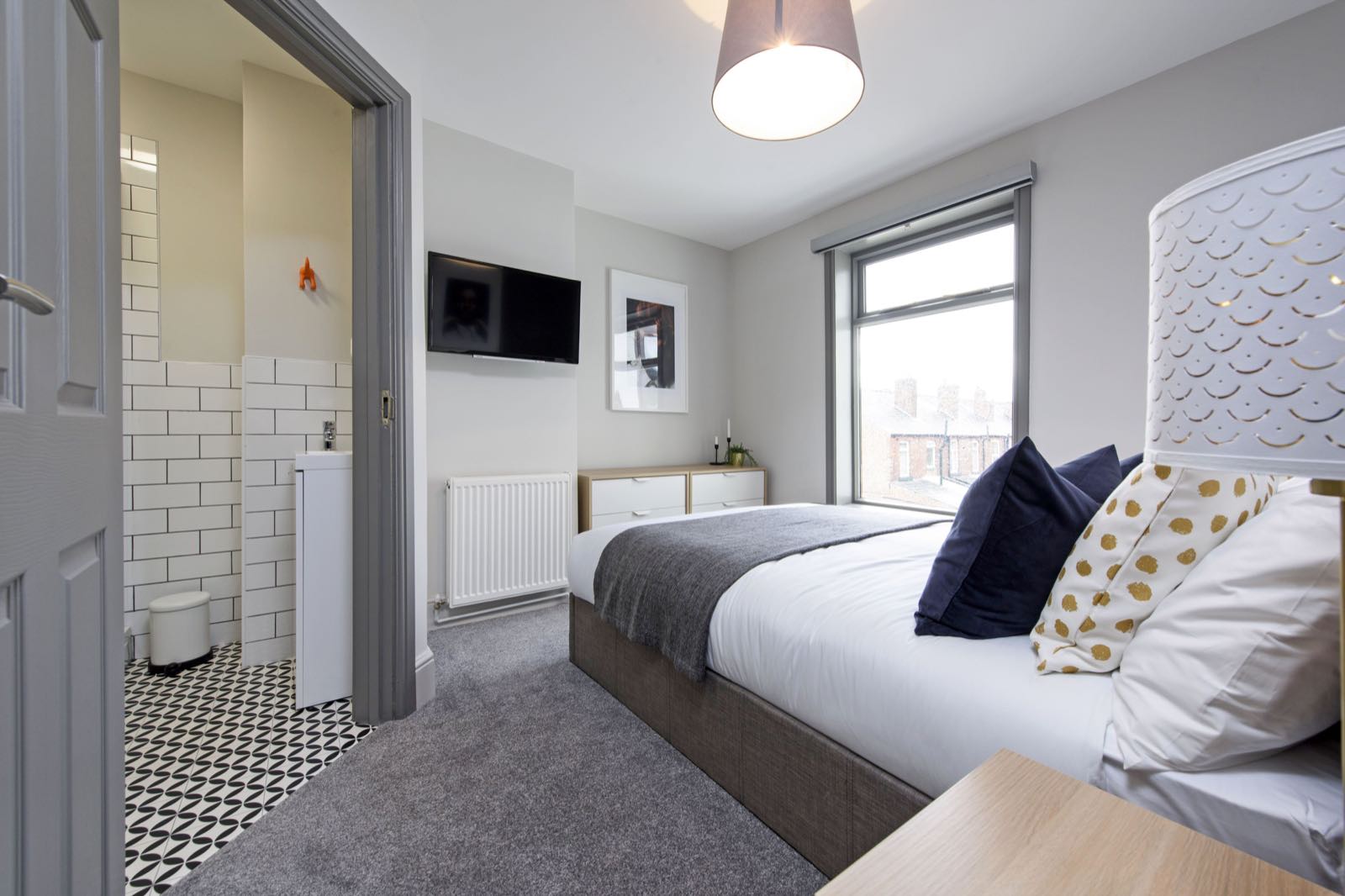
We bring London rental properties up to HMO licensing standard as a single accountable contractor: 30-minute fire separation, protected escape routes, compliant room sizes and amenities. From one remedial item to a full HMO conversion, we work to your borough’s specific licensing conditions and liaise with council HMO officers directly, so landlords and letting agents get the licence granted first time — fully documented for the council file.
Written Guarantee: 5 Years
|
Average Timeline Range: 1 - 6 weeks
Licensing Standards, Borough by Borough
Mandatory HMO licensing applies across England to most properties housing five or more people from two or more households — but in London that is only the start. Many boroughs run additional licensing schemes covering smaller HMOs of three or four sharers, and selective licensing schemes covering all private rentals in designated areas. Newham, Waltham Forest, Croydon, Brent and others each publish their own amenity and space standards, and they differ in the detail: kitchen provision per occupant, bathroom-to-tenant ratios, minimum heating and ventilation, and how communal space is counted.
That variation is exactly where landlords come unstuck. A layout that satisfies one borough’s officer is rejected two postcodes away, and schemes are renewed on roughly five-year cycles, so a designation you relied on last year may have lapsed or expanded. We work to the specific standards of the borough your property sits in, not a generic checklist. Before quoting we pull the council’s current published HMO standards and your draft or existing licence conditions, then survey the property against them item by item — so the scope we price is the scope the officer will actually inspect.
Fire Separation and Protected Escape Routes
The heart of HMO fire safety is the protected escape route: a hallway and staircase that will hold back fire and smoke for 30 minutes while occupants get out. Achieving it in a converted Victorian or Edwardian terrace means 30-minute fire-resisting construction between each letting and the escape route, FD30 fire doors with self-closers on habitable rooms and kitchens, fire-stopping around every service penetration, and a Grade D1 interlinked alarm system to BS 5839-6 throughout.
We deliver all of it with one team rather than a chain of subcontractors: upgrading walls and ceilings with fire-rated board and skim, fitting certified doorsets to BS 8214 tolerances, sealing pipe and cable runs with intumescent products, and installing and certificating the detection. In older London stock the compartment line is routinely compromised — holes drilled through party walls, missing ceiling above cupboards, lofts open across the building line — so reinstating it properly matters more than any single new door. Where the layout makes a fully protected route impractical, we price the alternatives the LACORS guidance allows, such as enhanced detection or sprinkler solutions, before you commit either way.
Room Sizes and Amenity Standards
Since 2018, mandatory licensing conditions have set national minimum sleeping room sizes: 6.51m² for a single adult over ten, 10.22m² for two adults sharing, and 4.64m² for a child under ten. Rooms below the minimum cannot lawfully be let as sleeping accommodation, and councils count usable floor area strictly — space under a ceiling lower than 1.5m generally does not count, which catches out coombed top-floor rooms in London terraces. Some boroughs apply larger standards through their own schemes, so the number that matters is the one your borough enforces.
We measure properly before anything else, then advise where reconfiguration pays. Moving a partition 600mm can turn a non-compliant box room into a lettable bedroom and recover the yield that justifies the whole project. Amenity works follow the same logic: additional bathrooms to hit the borough’s tenant-to-facility ratio, enlarged shared kitchens with the cooker, sink, worktop and storage provision the standard specifies, plus the heating and ventilation upgrades licence conditions routinely require. We draw and price the realistic options so you compare genuine totals, not headline figures that ignore the knock-on works.
How to Choose an HMO Compliance Contractor in London
The cheapest quote is rarely the one that gets your licence. Because HMO works span fire, electrical, building and amenity standards, the biggest risk is a patchwork of trades where no one owns the outcome — so the first thing to establish is that a single contractor is accountable end to end, from survey to the council file.
Use concrete criteria. First, do they quote against your borough’s published standards and licence conditions, or a generic checklist? Second, will they attend the pre-licensing inspection with you, rather than disappearing at handover? Third, can they show £5m public liability cover and confirm alarm and electrical work is certificated to BS 7671, with fire doorsets certified to BS 8214? Fourth, is the fire-stopping and doorset work photographed and backed by product data sheets, so you get an evidence pack the officer accepts? Fifth, is everything a fixed written quote with staged payments against inspected milestones — never a cash deposit for labour up front? Ask for one recent HMO handover pack as a sample; a contractor who documents to inspection standard has nothing to hide, and that pack is what turns a licence application into a first-time pass.
Working With Council HMO Officers
A licensing application goes better when the works and the paperwork arrive together. We liaise directly with borough HMO and environmental health officers on our clients’ behalf: confirming interpretations of standards before work starts, sequencing works to meet improvement-notice deadlines, and attending pre-licensing inspections so technical questions are answered on the spot rather than triggering a second visit.
Most of our HMO clients are letting agents and portfolio landlords who hand us the licence conditions and collect the finished file, so we are used to reporting through a managing agent and giving tenants proper written notice in occupied houses. For landlords buying to convert, we offer a pre-purchase HMO feasibility survey: what the borough will require, what the works will cost and what the compliant room count will be — before you exchange. It is far cheaper to discover a staircase or ceiling-height problem at survey stage than after completion. Every project ends with a documentation pack matched line by line to the licence conditions: annotated standards, dated photographs, product certification and electrical certificates, ready to drop straight into the council file.
Access, Leaseholds and Occupied Conversions
The compliance works are only half the job in London; getting on site cleanly is the other half. Where the HMO is a leasehold flat — an ex-LA maisonette or a mansion-block conversion — fire separation and alarm works almost always touch the structure or common parts, which means a licence to alter from the freeholder and sign-off from the managing agent. We prepare that application pack and run it in parallel with material lead times so it doesn’t stall the programme.
Party wall matters can arise where separation works affect a shared wall, and parking and access need booking in advance across much of inner London, where controlled bays and narrow terraced streets make deliveries and skip permits a genuine constraint. In occupied HMOs we work room by room with proper notice, keep escape routes clear and the interlinked alarm live at the close of every day, and protect common parts and lifts in blocks. Conservation-area and period considerations are handled too: we can fit fire doors with traditional panel profiles so a Georgian or Victorian house meets the standard without losing the character that makes it lettable. Our overall programme runs from a single remedial item in about a week to a full conversion inside six weeks on site.
Documentation and Your Written Guarantee
Compliance work that isn’t documented may as well not exist. Councils, insurers and future purchasers all ask the same question — prove it — and a verbal assurance from a departed builder is worth nothing at renewal. Every HMO project we complete closes with a handover pack built for exactly that scrutiny: the borough’s standards and licence conditions annotated item by item, dated before-and-after photographs of each completed work, certification for fire-stopping materials and doorsets, and electrical certificates to BS 7671 wherever alarm or lighting circuits were touched.
Letting agents tell us this pack is the difference between a smooth licence grant and a costly second inspection, and it protects you long after the works: if something goes wrong elsewhere in a building, being able to show what was done, by whom and with what materials is precisely what investigators ask for first. Behind the paperwork sits a five-year written guarantee on our workmanship, and we keep a digital copy of every handover pack, so if a document is ever mislaid a replacement is one email away. Fixed written quotes, £5m public liability and work to the relevant British Standards and Building Regulations underpin the lot.
What HMO Compliance Works Costs in London (2026)
Item
Typical London Price
Notes
Pre-purchase HMO feasibility survey
£250 – £600 per property
Borough requirements, indicative works cost and achievable compliant room count before you exchange
30-minute fire separation to wall or ceiling
£600 – £1,500 per room
Fire-rated board, skim and sealed perimeter between a letting and the escape route
FD30 fire doorset supplied and fitted
£400 – £900 per door
Certified leaf and frame, intumescent strips, cold smoke seals and self-closer to BS 8214
Grade D1 interlinked alarm system (LD2)
£700 – £1,800 per property
Mains-powered smoke and heat alarms to BS 5839-6, certificated on completion
Fire-stopping to service penetrations
£40 – £90 per penetration
Intumescent sealant or collars around pipes and cables through compartment lines
Additional shared bathroom or shower room
£3,500 – £7,000 per room
New amenity to meet the borough’s bathroom-to-occupant ratio, including drainage
Partition to create or resize a bedroom
£1,000 – £2,500 per wall
Reconfiguring layout so each sleeping room clears the minimum floor area with margin
Emergency lighting to escape route
£120 – £300 per fitting
Where the FRA or licence conditions require illuminated escape in larger HMOs
Full HMO conversion (standard terrace)
£10,000 – £30,000 per property
Fire separation, FD30 doors, D1 alarms and amenity upgrades; heavy reconfiguration runs higher
Indicative Greater London 2026 rates for budgeting only; every project is priced by fixed written quote after a measured survey against your borough’s published HMO standards.
Insider Tips Before You Commit
Download your borough’s current HMO amenity standards before viewing a property — Newham, Waltham Forest and Croydon differ on kitchen and bathroom ratios, so a house that works in one borough can fail in the next.
Check the borough’s live licensing designation, not last year’s — additional and selective schemes are renewed on five-year cycles and lapse or expand without much warning.
Get a measured survey before you exchange: a box room that falls 400mm short of 6.51m² is the difference between a five-bed and a four-bed HMO, and that changes the whole business case.
Insist every fire-stopping seal and doorset is photographed against its location and product data sheet — the council HMO officer wants evidence, not assurances.
Fit a heat alarm rather than a smoke alarm in the shared kitchen; smoke units there generate nuisance false alarms and tenants disconnect them, which is an instant licensing failure.
If the property is leasehold — an ex-LA flat or mansion-block conversion — factor a licence to alter from the freeholder into your programme, because HMO fire works almost always touch the structure.
Keep escape routes and interlinked alarms live at the end of every working day when converting an occupied HMO; officers and insurers treat a dead alarm overnight as a serious breach.
Ask for the room schedule to be measured excluding floor area under 1.5m ceiling height — councils discount it, and coombed top-floor rooms in London terraces are where borderline sizes get rejected.
How Not to Get Scammed
London has more rogue traders than any other UK market. These are the warning signs we see most often — and exactly what to do when you spot them.
Cash-only price with no written quote and no VAT invoice
Only proceed on a fixed written quote itemised against the licence conditions or FRA actions, and keep the invoice — you will need paperwork to evidence the works to the council and your insurer.
Fire doors sold as ‘FD30’ with intumescent strips glued to an ordinary door
Ask for the doorset’s certification or the leaf’s fire-test evidence; a rating belongs to the whole certified assembly, and an unrated leaf with strips added is worthless in an inspection.
‘We found more problems’ mid-job with pressure to pay extra cash immediately
Require any genuine variation to be photographed, quoted in writing and agreed before work continues; a legitimate contractor prices variations, they don’t demand cash on the spot.
Large upfront deposit demanded before any materials are ordered
Stage payments against completed, inspected milestones; a deposit should cover ordered materials only, never a big slice of labour paid before anything is done.
No proof of public liability insurance or electrical competence for the alarm circuits
Ask to see the £5m public liability cover and confirm the alarm and any circuits are installed and certificated to BS 7671 — uninsured labour on fire-safety work exposes you if anything goes wrong.
‘Guaranteed to pass the council’ with no reference to your borough’s actual standards
No contractor can guarantee a licence they don’t control; expect them to quote against your borough’s published HMO standards and offer to attend the pre-licensing inspection, not make blanket promises.
Standards & Compliance
Every project is delivered to current British Standards and Building Regulations, with works documented for building control and HMO licensing sign-off — backed by fixed written quotes and a written guarantee.
BRITISH STANDARDS · BUILDING REGS COMPLIANT · FD30/FD60 FIRE DOORSETS · BS 5839-6 ALARMS · WRITTEN GUARANTEE
Frequently Asked Questions (FAQ)
Do I need an HMO licence for my London rental?
If five or more people from two or more households share, mandatory licensing applies nationally. Many London boroughs also run additional licensing for smaller HMOs of three or four sharers, and selective licensing for all rentals in designated areas — schemes change on roughly five-year cycles, so check your borough’s current designation. Letting a licensable HMO without a licence risks an unlimited fine and rent repayment orders covering up to 12 months of rent.
How much does HMO conversion cost in London?
Bringing a standard three-storey terrace up to licensable standard — fire separation, FD30 doors, Grade D1 alarms and amenity upgrades — typically costs £10,000 to £30,000 at 2026 prices depending on starting condition. A full conversion with added bathrooms and reconfigured rooms can run £40,000–£80,000 or more. We quote against your borough’s published standards after a measured survey, as a fixed written price.
What is the minimum bedroom size for an HMO?
National mandatory conditions under the Housing Act 2004 set 6.51m² for a single adult over ten, 10.22m² for two adults and 4.64m² for a child under ten, with floor area under 1.5-metre ceiling height generally excluded. Some boroughs apply more generous standards through their own schemes. We measure and advise against the standard that actually applies to your property before any work is priced.
How long does bringing a property up to HMO standard take?
It ranges from about one week for a single remedial package — say alarm upgrade, fire-stopping and a few FD30 doors — to around six weeks on site for a full conversion involving reconfiguration and added bathrooms. Freeholder licence-to-alter consent and material lead times run in parallel. We confirm the programme in writing before starting and sequence occupied works room by room.
Can you deal with the council HMO officer for me?
Yes. We liaise with borough HMO and environmental health officers on interpretation, deadlines and inspections, and we attend the pre-licensing inspection alongside you or your agent so technical questions are answered on the spot. Most of our HMO clients are letting agents and portfolio landlords who hand us the licence conditions and collect the completed, documented file.
Do you need to close the HMO or move tenants out?
Usually not. Most of our HMO compliance work is carried out in occupied houses. We give proper written notice through you or your agent, work room by room, protect common parts, and keep escape routes clear and the interlinked alarm live at the end of every working day. Heavier reconfiguration may need a room vacated in turn, which we plan around your tenancies.
My property is a leasehold flat — does that change anything?
It can. Fire separation and alarm works in an ex-LA flat or mansion-block conversion typically touch the structure or common parts, so most leases require a licence to alter from the freeholder and sign-off from the managing agent. We prepare that application pack and run it in parallel with the works programme, and factor party wall and communal-access considerations in from the survey stage.
What documentation do I get on completion?
A handover pack built for inspection: your borough’s standards and licence conditions annotated item by item, dated photographs of each completed work, product certification for fire-stopping and doorsets, and BS 7671 electrical certificates where alarm or lighting circuits were touched. It drops straight into the council file, and we keep a digital copy so a replacement is one email away.
Should I get a feasibility survey before buying a property to convert?
Strongly, yes. Our pre-purchase HMO feasibility survey (typically £250–£600) tells you what the borough will require, what the works will cost and how many compliant rooms the property can actually yield — before you exchange. Discovering a staircase, ceiling-height or room-size problem at survey stage is far cheaper than finding it after completion, when it can wreck the business case.
What guarantee and insurance do you provide?
Our HMO compliance workmanship carries a five-year written guarantee, backed by £5m public liability insurance. Fire doorsets are installed to BS 8214, alarms to BS 5839-6 and any electrical work certificated to BS 7671, all to the relevant Building Regulations. Everything is a fixed written quote with staged payments against inspected milestones — no large cash deposits and no surprises mid-job.
Our Written Guarantee
We provide a fully comprehensive, written 5-Year guarantee covering all structural reinstatement, moisture boundaries, and finish coatings.
100% Insurance Protected
Request an Elite Assessment
Secure a rapid, high-precision physical survey by our team. Fill out our briefing engine instantly.
We deliver hmo compliance works across all 33 London boroughs — from the City and Central London out to the M25. Tap any marker to see coverage and local postcodes.