A fire door only saves lives if it is fitted correctly — and on most London HMO and block inspections, it is not. As one accountable contractor we supply and install certified FD30 and FD60 doorsets for landlords, letting agents, freeholders and block managers across Greater London, with intumescent strips, cold smoke seals and self-closers fitted to specification, every gap gauged and every door photographed for your licensing or Fire Safety Order file.
Written Guarantee: 5 Years
|
Average Timeline Range: 1 - 5 days
FD30 and FD60 Doorsets, Properly Specified
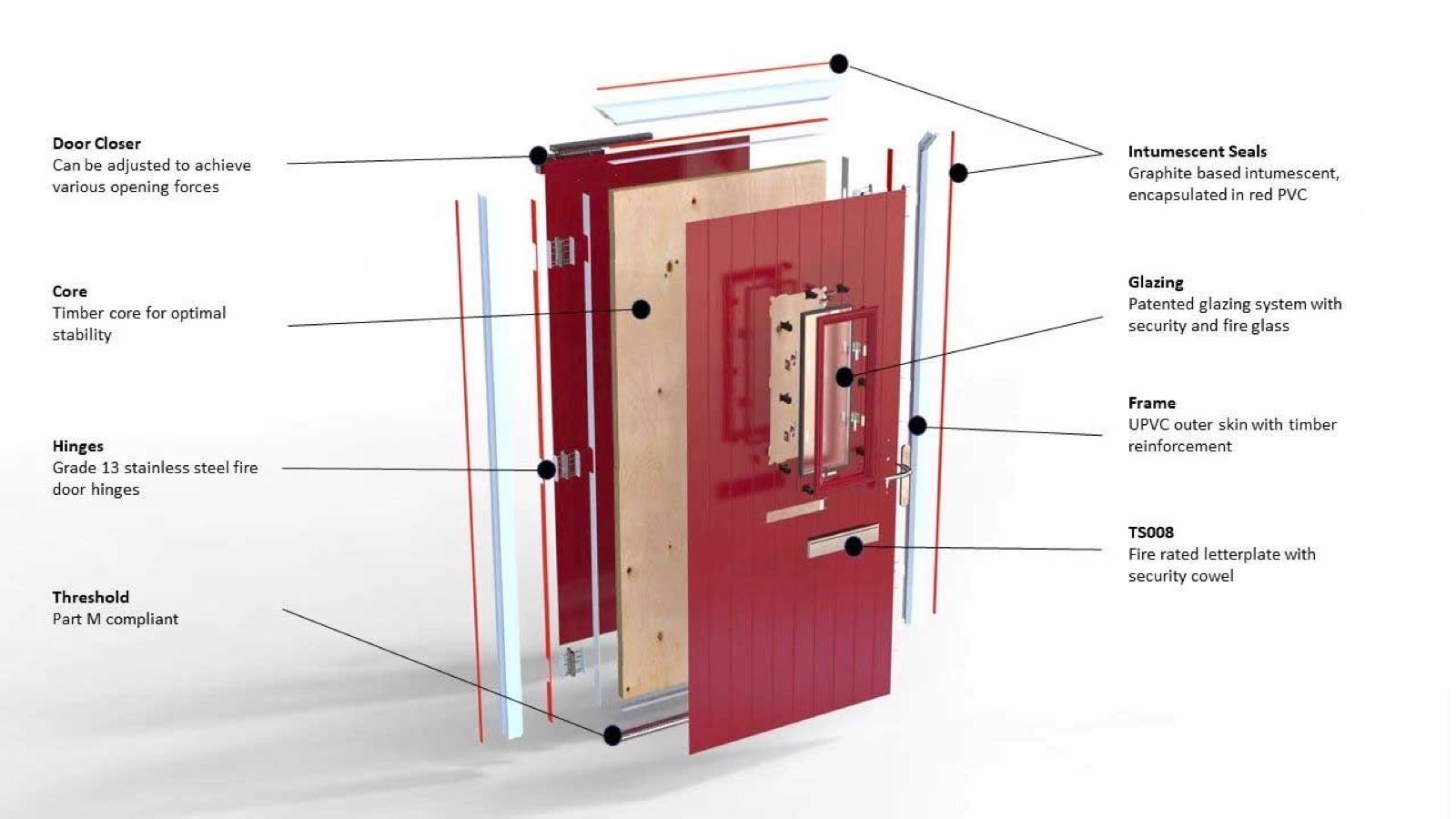
FD30 doors resist fire for 30 minutes and are the standard requirement for HMO bedroom and kitchen doors opening onto a protected escape route; FD60 doors give 60 minutes and appear in higher-risk locations such as plant and riser cupboards, or where a converted London terrace joins a commercial ground floor to flats above. The rating belongs to the whole assembly — leaf, frame, hinges, intumescent strips, cold smoke seals and any glazing — not the leaf on its own.
We install certified doorsets or certificated leaf-and-frame combinations, never an unrated door dressed up with strips. Ironmongery is fire-rated and UKCA or CE marked: three hinges as a minimum, overhead or concealed closers to BS EN 1154, and intumescent protection behind locks, latches and hinges. A flat entrance door onto a communal corridor is usually an FD30S or FD60S with smoke seals throughout, a fire-rated letterplate and a fire-rated spyhole — details a bedroom door does not need.
Where a Georgian or Victorian property deserves it, we source fire doors with traditional four-panel moulding profiles, so compliance in a conservation-area conversion does not cost the building its character or trigger a planning argument.
Why Installation Is Everything
A certified fire door hung with sloppy gaps is worthless, because smoke and flame travel straight around the leaf. The workmanship tolerances are precise: a consistent 2–4mm gap between leaf and frame at the head and along both sides, and anything over 4mm is a routine inspection failure. The threshold gap should generally not exceed 8–10mm, tightening to around 3mm where cold smoke sealing is required, which on London HMO and flat entrance doors it almost always is.
Our installers work to BS 8214 guidance: frames packed solid and fixed correctly into the structural opening, intumescent strips and cold smoke seals run continuous and left unpainted, and self-closers adjusted so the leaf closes fully onto the latch from any angle — not left resting ajar. No wedges, no disconnected closers, no leaves planed down past their fire-rated margin to fit a racked period frame.
Every fitted door is gap-gauged with a feeler gauge and photographed before we sign it off. That single discipline is the difference between a door that passes a fire risk assessment and one that becomes a costly failure item on the report.
Fire Doors and London HMO Licensing
In a licensed HMO, fire doors are where inspections are won or lost. Boroughs typically expect FD30 doors with self-closers on every habitable room and kitchen opening onto the protected escape route, in line with the council’s published licensing standards and LACORS fire safety guidance. A three-storey house share in Haringey or Newham is judged more strictly than a two-storey flat share, because the escape route is longer and occupants on the top floor depend on every door holding.
Damaged, wedged-open or missing fire doors are among the most common HMO licensing defects, and letting a licensable HMO with inadequate fire precautions risks improvement notices, unlimited fines and rent repayment orders. We confirm the exact door schedule your borough requires before quoting, rather than working from a generic list, because additional and selective licensing schemes across London differ in the detail.
Because we handle the wider HMO fire package too — separation, alarms and fire-stopping — the doors are specified as part of a coherent escape strategy, and the handover pack references each door back to the fire risk assessment so the licensing officer can close the file quickly.
Flat Entrance and Communal Doors in Blocks
Under the Fire Safety (England) Regulations 2022, responsible persons in residential buildings over 11 metres must check flat entrance doors at least annually and communal fire doors every three months. Across London’s mansion blocks, ex-local-authority estates and modern developments, that duty falls on freeholders, RMCs and managing agents — and flat entrance doors are the hardest to control because they belong, in leasehold terms, partly to the leaseholder.
Replacing or upgrading a leaseholder’s flat entrance door usually needs the freeholder’s consent and a licence to alter, and works to the communal side must respect access arrangements and reasonable notice. We manage that reality: coordinating with managing agents, giving residents written notice, and scheduling around the block’s access windows so visits are not wasted.
Communal doorsets to stairs, lobbies and risers are specified to the building’s fire strategy, fitted with the correct closers and hold-open or free-swing devices where an assessor has called for them, and documented door by door. For managing agents running the quarterly regime, we provide a repeatable photographic report each round that slots straight into the building safety file.
Fire Door Surveys, Repair Before Replacement
Wholesale replacement is rarely necessary, and any contractor who quotes to swap every door before surveying is guessing at your expense. We carry out fire door surveys across London portfolios, checking each door for certification evidence, edge and threshold gaps, intumescent strips, cold smoke seals, closers, hinges, glazing and any unauthorised alterations such as cat flaps or trimmed leaves.
Each door is graded compliant, repairable or for replacement in a photographic report, with a costed and prioritised schedule rather than a scare list. Repair is often entirely legitimate: replacing perished seals, adjusting or renewing a closer, re-hanging a leaf to restore the correct margin, or making good a fire-rated glazing bead. That routinely costs a fraction of a new doorset and closes the same inspection point.
Where replacement genuinely is the right call — a delaminated leaf, a burned-through lock case, a door cut down beyond its rated margin — we say so plainly and price the certified replacement. For a portfolio landlord or agent, the value is a clear plan: what must be done now for compliance, what can be planned across the maintenance budget, and what is already fine as fitted.
How to Choose a Fire Door Installer in London
Start with evidence, not price. Ask a prospective installer to show the certification behind the doorsets they propose — a certificate, label or plug proving the leaf and frame were tested together — and to explain how they will hit the 2–4mm gap tolerances on your specific frames. Vague answers here are the warning sign; a competent fitter talks fluently about margins, seals and closer force.
Insist on a fixed written quote itemising each door, the rating, the ironmongery and the finish, backed by public liability insurance and a written guarantee. On this work our guarantee runs to five years, and a firm confident in its installation will document every door with a gap-gauged, photographed sign-off rather than a verbal ‘all done’. That paperwork is precisely what a borough HMO officer, a fire risk assessor or a building safety regulator will demand.
For landlords and agents, weigh whether the contractor can handle the whole fire picture — doors, alarms to BS 5839-6, separation and fire-stopping — because a door schedule written in isolation from the escape strategy often misses the point. Finally, check they understand London’s leasehold, licence-to-alter and access realities; a cheap quote that ignores the freeholder’s consent will cost you more in abortive visits than it ever saved.
Access, Timelines and Living Around the Works
Most fire door jobs are quick and contained: a typical installation runs between one and five days depending on how many doors are scheduled and the state of the existing frames. A single flat’s worth of HMO doors is often a day or two; a full house share or a block’s communal doors is longer, and a survey visit is usually a single morning.
The practical friction in London is rarely the joinery — it is parking, access and occupied rooms. We plan for controlled parking zones and permit-only bays, tight communal stairwells with no lift, and tenants who need their room secured overnight. In an occupied HMO we work room by room so nobody is left without a lockable, closing door at the end of the day, and we bag and remove old leaves rather than leaving them stacked in a shared hallway.
Dust and disruption are kept down because fire door fitting is mostly a dry, contained trade — hanging, packing, sealing and adjusting — with far less mess than plastering or flooring. We agree the sequence and access windows with you or your managing agent up front, confirm the schedule in the fixed written quote, and leave each completed door tested, latching and photographed for your file.
What Fire Door Installation Costs in London (2026)
Item
Typical London Price
Notes
FD30 doorset, supplied & fitted
£400–£900 per unit
Certified leaf, frame, hinges, intumescent strips, smoke seals and closer; finish and ironmongery affect price
New intumescent and cold smoke seals, closer and fire-rated ironmongery on a sound rated leaf
Flat entrance fire door (FD30S/FD60S)
£850–£1,600 per unit
Communal-facing leaseholder doors to blocks; letterplate, spyhole and hinges all fire-rated
Fire door survey & photographic report
£15–£35 per door
Portfolio rate; each door graded compliant, repairable or replace, with a costed schedule
Self-closer supply & adjustment
£45–£120 per door
BS EN 1154 overhead closer or concealed Perko; includes final closing test onto latch
Fire door installer day rate
£280–£360 per day
Used for multi-door remedials and snagging where per-door pricing does not fit
HMO / block door package (10+ doors)
£350–£750 per property
Discount against the per-door schedule for whole-property or whole-block programmes
Guide prices for Greater London in 2026, including supply, fitting and a written guarantee; final figures are confirmed in a fixed written quote after survey. VAT is charged separately at the prevailing rate.
Insider Tips Before You Commit
Ask to see the doorset’s certification — a certificate or plug/label proving the leaf and frame were tested together — because strips glued into an ordinary door do not make it a fire door.
Slide a 3mm feeler gauge or a £1 coin around the leaf edge; a gap wider than 4mm at the top or sides is the single most common HMO inspection failure.
Never paint over the intumescent strips or smoke seals — a thick coat stops them expanding, and inspectors treat painted seals as no seals at all.
In a Victorian or Georgian conversion, order fire doors with matching panel-moulding profiles so the flat looks period-correct while still passing FD30.
Check the door actually closes onto the latch from a 5-degree opening; a closer that leaves the door ajar fails the test even if everything else is perfect.
For occupied flats in a mansion block, book communal-side works around the freeholder’s access rules and give leaseholders written notice to avoid abortive visits.
Keep the photographic sign-off sheet for every door — boroughs and fire officers want dated evidence, not a verbal assurance that the doors are fine.
Replacing a leaseholder’s flat entrance door usually needs the freeholder’s consent and a licence to alter, so start that paperwork before ordering doorsets.
How Not to Get Scammed
London has more rogue traders than any other UK market. These are the warning signs we see most often — and exactly what to do when you spot them.
Trader fits an ordinary internal door and adds intumescent strips, calling it a ‘fire door upgrade’.
Insist on a certified FD30 or FD60 doorset with documented evidence — a certificate, label or plug — that the leaf and frame were tested as an assembly.
Cash-only price with no written quote, no VAT invoice and no company details.
Only accept a fixed written quote on letterhead with a VAT number and public liability cover, so the work is traceable and insurable if it later fails inspection.
Large upfront deposit demanded before any doors are ordered or fitted.
Pay a modest deposit against materials at most, with the balance on completion once every door is gap-gauged and signed off — and keep receipts.
Mid-job ‘we found more problems’ pressure to expand the works and the invoice.
Require any variation in writing with its own price before you agree; a genuine surveyor flags likely extras in the original fixed quote.
No gap gauging, no photographs and no handover paperwork on completion.
Make a documented photographic sign-off per door a condition of final payment — it is exactly what a borough HMO officer or fire risk assessor will ask to see.
Uninsured, unnamed labour turning up with no proof of competence.
Ask who is fitting and under what insurance; installation to BS 8214 by a competent installer is what separates a working fire door from a decorative one.
Standards & Compliance
Every project is delivered to current British Standards and Building Regulations, with works documented for building control and HMO licensing sign-off — backed by fixed written quotes and a written guarantee.
BRITISH STANDARDS · BUILDING REGS COMPLIANT · FD30/FD60 FIRE DOORSETS · BS 5839-6 ALARMS · WRITTEN GUARANTEE
Frequently Asked Questions (FAQ)
How much does a fire door cost fitted in London?
A certified FD30 doorset supplied and installed typically costs £400–£900 per door depending on specification and finish, with FD60 doorsets from around £700–£1,300. Upgrading the seals, closer and ironmongery on an existing compliant leaf costs considerably less — usually £120–£280 per door. Multi-door HMO and block packages are priced per schedule after a survey, and every figure is confirmed in a fixed written quote.
Where do I need fire doors in an HMO?
Typically FD30 doors with self-closers on every habitable room and kitchen opening onto the protected escape route, in line with your council’s licensing standards and LACORS fire safety guidance. Requirements scale with height and layout — a three-storey HMO is treated more strictly than a two-storey house share. We confirm the exact door schedule for your London borough before quoting, because additional and selective licensing schemes differ in the detail.
My doors are fire doors but they failed inspection — why?
Almost always installation defects rather than the leaf itself: gaps over 4mm at the leaf edge, missing or painted-over intumescent strips and smoke seals, closers removed or disconnected, or unrated hinges and glazing. The door is often perfectly sound. We re-hang, re-seal, re-adjust and re-certify existing doors wherever possible, so you pay for a genuine remedy rather than needless wholesale replacement.
How often must fire doors be checked in a block?
In residential buildings over 11 metres, the Fire Safety (England) Regulations 2022 require quarterly checks of communal fire doors and annual checks of flat entrance doors, with the duty falling on the responsible person — usually the freeholder, RMC or managing agent. In licensed HMOs, regular documented checks are expected as a licence condition. We run scheduled survey rounds for agents and block managers with a photographic report each time.
Can you fit fire doors that match a period conversion?
Yes. We source certified FD30 and FD60 doorsets with traditional panel-moulding profiles so a Victorian, Georgian or Edwardian conversion keeps its character while meeting the fire rating. The certification belongs to the tested leaf-and-frame assembly, so a period appearance and full compliance are not in conflict — and a sympathetic door helps in conservation areas where appearance matters to the freeholder or the council.
Do you replace every door or repair what you can?
We repair wherever it is legitimate. A sound rated leaf with perished seals, a tired closer or a slightly wide margin can usually be brought back to compliance for a fraction of a new doorset. Replacement is reserved for genuinely failed doors — delaminated or burned leaves, or leaves cut down past their rated margin. Our survey grades each door compliant, repairable or replace, so you spend only where it is needed.
How long does fire door installation take?
Most jobs run between one and five days depending on the number of doors and the condition of the existing frames. A single flat’s HMO doors is often a day or two; a full house share or a block’s communal doors takes longer, and a survey visit is usually a single morning. We agree access windows and parking arrangements up front and confirm the timeline in your fixed written quote.
Do I need the freeholder’s permission to change a flat entrance door?
Usually, yes. In a leasehold flat the entrance door is a fire-critical, often communal-facing element, so replacing or altering it typically needs the freeholder’s consent and a licence to alter. We can specify a compliant FD30S or FD60S doorset to support that application and coordinate with your managing agent, but the consent should be in place before doorsets are ordered to avoid abortive costs.
What guarantee comes with the work?
Our fire door installations carry a five-year written guarantee covering the workmanship of the installation. You also receive a photographic, gap-gauged sign-off for every door and the certification evidence for the doorsets, which is exactly what a borough HMO officer, a fire risk assessor or the building safety regulator will want to see on file.
Are you insured, and do you provide proper invoices?
Yes. We carry £5m public liability cover, work to a fixed written quote, and issue a proper VAT invoice — the opposite of the cash-only, no-paperwork operators who fit decorative doors that fail at inspection. Because we act as one accountable contractor, the same firm surveys, specifies, installs and documents the doors, so responsibility for the result sits in one place.
Our Written Guarantee
We provide a fully comprehensive, written 5-Year guarantee covering all structural reinstatement, moisture boundaries, and finish coatings.
100% Insurance Protected
Request an Elite Assessment
Secure a rapid, high-precision physical survey by our team. Fill out our briefing engine instantly.
We deliver fire door installation across all 33 London boroughs — from the City and Central London out to the M25. Tap any marker to see coverage and local postcodes.