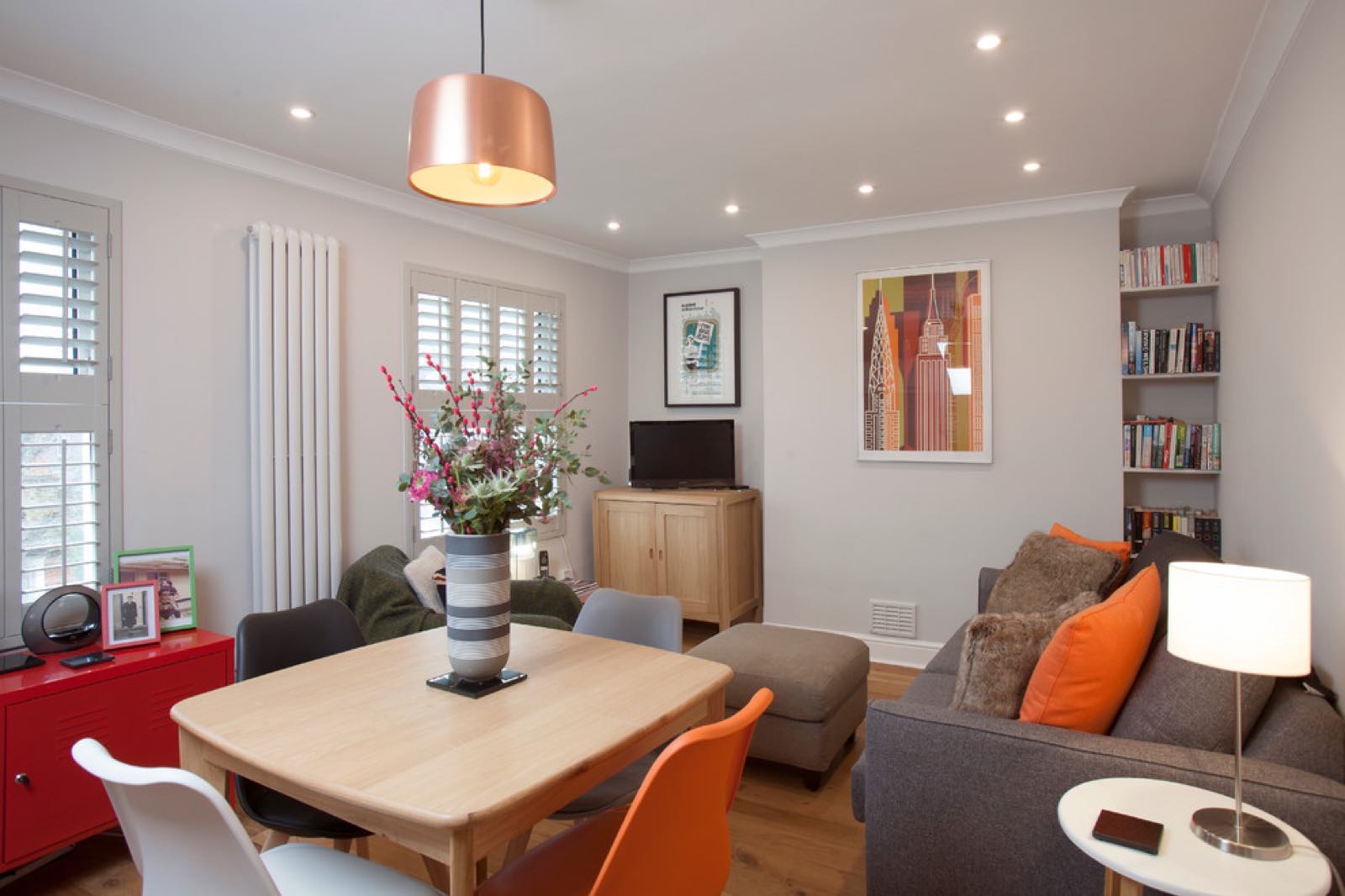
Flat refurbishment in London carries obligations houses never face: licences to alter, managing agents, lift bookings, stack pipework and party walls on every side. Our flat renovation teams work in Central London mansion blocks, period conversions and ex-local-authority blocks every week — delivering one fixed price, one programme and one accountable contractor, with the leaseholder paperwork handled and the porters and neighbours kept onside. Landlords, letting agents and homeowners get a refurbishment that clears its consents and completes without the disputes that stall so many block projects.
Written Guarantee: 10 Years
|
Average Timeline Range: 2 - 6 weeks
Flat Refurbishment in London Blocks, Conversions and Ex-LA Stock
Refurbishing a flat is a different discipline from refurbishing a house, and the differences all sit outside your front door. Materials arrive through communal halls and lifts that must be booked and protected. Noisy works are confined to the managing agent’s permitted hours — usually 8am or 9am to 5pm on weekdays, with nothing at weekends in most Central London blocks. Floor build-ups must satisfy the lease’s acoustic clause, and anything touching structure, the soil stack or external walls needs the freeholder’s formal consent.
The stock varies enormously across the capital, and each type behaves differently. Victorian and Edwardian conversions in Islington, Hackney and Clapham hide lath-and-plaster ceilings, notched joists and generations of amateur wiring. Purpose-built mansion blocks in Marylebone, Pimlico and Kensington bring thick masonry, shared risers and house rules enforced by a live-in porter. Ex-local-authority flats in Southwark, Lambeth and Tower Hamlets often have concrete floors, communal heating and Right to Buy leases with their own consent quirks.
We run flat projects across all of these every week, so the block’s rules are routine rather than a mid-job surprise. Whether it is a one-bed conversion in N1 or a lateral apartment in SW1, you get one fixed price, one written programme and one project manager who deals with the block on your behalf.
Licence to Alter, Freeholder Consent and Party Walls
The single biggest cause of stalled flat refurbishments in London is not the building work — it is the paperwork nobody started early enough. Most leases require the freeholder’s written consent, a licence to alter, before you carry out structural changes, form or move a wet room, alter flooring or relocate services. Starting without it exposes you to an injunction that halts the job and a problem that surfaces years later at resale, when the buyer’s solicitor asks for retrospective consent the freeholder can now charge for.
We prepare the drawings, specifications and schedule of condition that a licence application needs, and we deal directly with the block’s managing agent and surveyor so the process runs in parallel with our lead times rather than delaying the start on site. Typical approval takes four to eight weeks; we build that into the programme from day one.
Where works affect a wall, floor or ceiling shared with a neighbour, the Party Wall etc. Act 1996 applies. We flag when notices are required and work alongside your party wall surveyor so the legal steps run to their own clock without holding up the trades. Throughout, we carry the £5 million public liability cover managing agents insist on seeing before they will grant access.
What a Flat Refurbishment Costs in 2026
For a full refurbishment to a good mid-range specification — new kitchen, new bathroom, rewire, replumb, flooring and decoration throughout — realistic 2026 budgets are around £45,000–£65,000 for a one-bedroom flat, £75,000–£95,000 for a two-bedroom and £105,000–£130,000 for a three-bedroom. Premium specification with bespoke joinery, stone and comfort cooling can approach double those figures; a cosmetic refresh between tenancies comes in well under.
Per square metre, the same bands apply as any London refurbishment: roughly £400–£700 for a cosmetic refresh, £1,200–£1,800 mid-range and £2,000–£2,800 or more for premium work, with inner London commanding a 15–25% premium over outer boroughs on labour and access. Kitchens and bathrooms absorb 30–40% of a full budget, so the decisions you make there move the total more than anywhere else.
Two flat-specific costs catch owners out. First, access and protection: booking lifts, hoarding common parts and hand-balling waste to a shared bin store all add labour a house never needs. Second, moving wet rooms away from the existing soil stack, which can mean raised floors and pumped waste. We itemise every line so you can adjust the specification and watch the budget move before you commit, and we recommend holding a 10–15% contingency for what older blocks conceal.
Kitchens, Bathrooms and Services Behind the Plaster
A flat refurbishment is really a services project wearing a decorative finish. In any flat over forty years old — which describes most of London’s conversions and mansion blocks — the wiring, pipework and heating are the parts that fail, and they are far cheaper to renew while the walls are open than to chase back in afterwards.
We carry out full rewires to BS 7671 with a new consumer unit, certificated on completion, and replace perished rubber, lead or corroded copper with new hot and cold runs. Where a block has a communal heating or hot-water system, we work within its constraints rather than pretending it is a standalone house. Bathrooms are fully tanked before tiling, because a leak in a flat is never your problem alone — it is the ceiling of the flat below, and the fastest way to a dispute and a claim.
Kitchens and bathrooms are where the money shows, so we help clients spend on sanitaryware, worktops and flooring and save on carcassing and first-fix. Every gas appliance is installed and certificated by a Gas Safe engineer, mains-powered smoke and heat alarms are fitted to BS 5839-6 where the layout or a tenancy requires them, and the full certificate set lands in your completion pack — the evidence a lender, insurer or licensing officer will later ask to see.
How to Choose a Flat Refurbishment Contractor in London
The right contractor for a flat is not simply the cheapest quote — it is the one who will still have access to the building in week five. Use these criteria to compare like for like.
First, block experience. Ask directly how many flat projects they have run in leasehold blocks and whether they have prepared licence-to-alter packs before. A firm that only does houses will treat the managing agent as an obstacle rather than a stakeholder. Second, insurance and compliance: insist on seeing the £5 million public liability certificate, confirm they certificate to BS 7671 and use Gas Safe engineers, and check they will provide a full completion pack. Third, a genuinely fixed, itemised written quotation — not a day rate or a round-number estimate. Line-by-line pricing lets you flex the specification and exposes the trader who plans to “find more” once you have paid a deposit.
Fourth, ask how they handle access, protection and neighbours, because in a flat this is half the job. Fifth, get the programme in writing with a stated start and finish and weekly reporting. Finally, compare the guarantee: our structural and waterproofing works carry a 10-year written workmanship guarantee, and snagging is a formal stage, not a favour. A contractor confident enough to put all of this in writing is one you can hold to account.
Working Neighbourly: Access, Protection and the Programme
In a block, your reputation with the porter and the neighbours is part of the project, and mishandling it can get your access revoked overnight. A full flat refurbishment on our books runs two to six weeks on site depending on scope, plus the consent and delivery lead times we sequence in advance — and every day of that runs inside the building’s rules.
We book lifts and loading bays with the managing agent, protect common parts with hard-floor covering and corner guards, and clean the halls and lift at the end of every working day rather than leaving dust for residents. Noisy works — chasing, breaking out, cutting — are planned into the permitted hours and, where we can, front-loaded so the disruptive phase is over quickly rather than dragging across the whole job. Waste is bagged and removed to the agreed bin store or a licensed skip with a permit where the kerb requires one.
Before we start we introduce ourselves to the immediate neighbours and give them a point of contact, because a resident who knows what is happening tolerates far more than one taken by surprise. For tenanted flats we coordinate notice with the letting agent so tenants are informed and access is arranged properly. These are small disciplines, but on a six-week job in an occupied block they are the difference between a smooth completion and a complaint to the freeholder.
Refurbishing Flats to Let: Standards Landlords and Agents Must Meet
For landlords and letting agents, a flat refurbishment is also a compliance opportunity — the moment to bring the property up to the standard the law now demands while the walls are open. We build the relevant requirements into the specification so the flat comes back not just refreshed but lettable and defensible.
Electrical installations in rented homes must meet BS 7671 and hold a satisfactory EICR; refurbishing is the cheapest time to remedy any C1 or C2 findings and issue a fresh certificate. Smoke and heat alarms to BS 5839-6 are fitted where the property and tenancy require them. If the flat is or will be a licensed HMO, room sizes, fire-door provision and compartmentation come into play, and we can specify FD30 fire doorsets and fire-stopping to suit. Every wet room is tanked to protect the flat below and, with it, your relationship with the freeholder and the neighbours.
We work to fixed written quotes and hand over a complete certificate pack — electrical, gas and product data — so your managing agent, your insurer and your next tenant reference check all have the evidence they need. A refurbishment done this way protects the yield, shortens void periods and keeps the property on the right side of a licensing regime that is only tightening across London’s boroughs.
What Flat Refurbishment Costs in London (2026)
Item
Typical London Price
Notes
Cosmetic refresh (skim, decorate, flooring)
£400 – £700 per m²
Ideal between tenancies; no wet works or rewiring
Full mid-range refurbishment
£1,200 – £1,800 per m²
New kitchen, bathroom, rewire, replumb, floors and decoration
Premium / lateral apartment spec
£2,000 – £2,800+ per m²
Bespoke joinery, stone, comfort cooling, smart systems
One-bed full refurbishment
£45,000 – £65,000
Typical Central London conversion or mansion flat
Two-bed full refurbishment
£75,000 – £95,000
Add £8k–£15k for a second bathroom or en-suite
Three-bed full refurbishment
£105,000 – £130,000
Lateral flats and larger mansion-block layouts
Fitted kitchen supply and install
£9,000 – £30,000
Excludes appliances; premium ranges run higher
Bathroom refit
£8,000 – £18,000
Includes tanking, tiling and BS 7671 electrics
Licence-to-alter drawings and schedule of condition
£1,200 – £3,500 per property
Our fee; freeholder’s surveyor and legal costs are separate
Indicative Greater London 2026 rates for a tenanted-standard to mid-range specification; every project is quoted fixed and itemised after a free measured survey.
Insider Tips Before You Commit
Ask your managing agent for the block’s alterations policy and permitted working hours before you design anything — it dictates deliveries, skips and how long the job takes.
Apply for your licence to alter the moment the scope is fixed; freeholder consent runs 4–8 weeks and can start in parallel with kitchen and sanitaryware lead times.
Commission a schedule of condition on the flats below and beside you before works start — it is your defence if a neighbour later blames you for a crack or a leak.
In upper-floor flats, check the lease’s acoustic clause before changing floors; hard flooring over a downstairs bedroom is the single most common leaseholder dispute.
Spend your budget on the kitchen, bathroom and flooring where tenants and buyers actually look, and economise on carcassing and first-fix materials nobody sees.
If you are relocating a bathroom or kitchen, get the soil-stack and fall checked first — moving wet rooms away from the existing stack is where flat budgets quietly balloon.
Hold a 10–15% contingency: older mansion blocks and ex-LA flats hide perished wiring, lead pipe and shared services behind sound-looking plaster.
Introduce yourself to the porter and adjoining neighbours before the first delivery — goodwill in the block is worth more than any protection sheet over six weeks on site.
How Not to Get Scammed
London has more rogue traders than any other UK market. These are the warning signs we see most often — and exactly what to do when you spot them.
Cash-only pricing with no VAT invoice and a verbal quote scribbled on a notepad.
Insist on a written, itemised fixed quotation and proper invoices; without paperwork you have no warranty, no VAT record and no proof for your freeholder or insurer.
A large upfront deposit — 40–50% before a single tool is on site.
Agree a staged payment schedule tied to completed milestones; a fair deposit covers initial materials only, not half the contract before work begins.
The trader dismisses your licence to alter — “nobody bothers, just crack on.”
Walk away. Unlicensed structural or wet-room changes risk an injunction and derail your resale; a genuine London contractor prepares the consent pack as standard.
“We’ve found more problems” mid-job, with pressure to pay extra in cash that day.
Require any variation to be priced and agreed in writing before work continues; a legitimate contractor documents and quotes every surprise, never demands same-day cash.
No proof of public liability insurance and labour that changes faces every day.
Ask to see the £5m public liability certificate and confirm who is actually on site; managing agents will refuse access to uninsured trades and the liability lands on you.
Electrical or gas work with no certificate offered on completion.
Demand BS 7671 electrical certification and Gas Safe documentation for the completion pack; without it you cannot satisfy licensing, insurance or a future sale.
Standards & Compliance
Every project is delivered to current British Standards and Building Regulations, with works documented for building control and HMO licensing sign-off — backed by fixed written quotes and a written guarantee.
BRITISH STANDARDS · BUILDING REGS COMPLIANT · FD30/FD60 FIRE DOORSETS · BS 5839-6 ALARMS · WRITTEN GUARANTEE
Frequently Asked Questions (FAQ)
How much does it cost to refurbish a flat in London?
At 2026 prices, a full mid-range refurbishment costs roughly £45,000–£65,000 for a one-bed, £75,000–£95,000 for a two-bed and £105,000–£130,000 for a three-bed. A cosmetic refresh between tenancies costs considerably less; premium specification with bespoke joinery and stone costs considerably more. We provide a fixed, itemised quotation after a free measured survey so you can adjust the specification before committing.
How long does a flat refurbishment take?
A cosmetic renovation takes two to three weeks; a full refurbishment of a one- or two-bedroom flat typically takes four to six weeks on site, larger flats a little longer. On top of that, allow lead time for freeholder consent and for kitchen or sanitaryware deliveries, which we run in parallel wherever possible. We confirm the programme in writing before starting and report progress weekly.
Do I need my freeholder’s permission to refurbish a leasehold flat?
For redecoration, usually not. For structural changes, new or relocated bathrooms and kitchens, altered plumbing or flooring changes, most London leases require a licence to alter. We prepare the drawings, specification and schedule of condition, and liaise with your managing agent. Typical approval takes four to eight weeks, which we run alongside material lead times so it rarely delays the start on site.
Will the work disturb my neighbours in the block?
We keep noisy works within the block’s permitted hours, book and protect the lift and common parts, clean communal areas daily and introduce ourselves to adjoining neighbours before starting. Where we can, we front-load the disruptive works so the noisiest phase is over quickly. Keeping the porter and neighbours onside is the single best way to keep a flat refurbishment running smoothly to completion.
Can I change the flooring in my flat, and what about noise to the flat below?
Often yes, but most leases contain an acoustic clause, particularly for upper-floor flats, that restricts hard flooring or requires an acoustic underlay to a specified performance. Changing from carpet to timber or tile over a neighbour’s bedroom is the most common leaseholder dispute in London. We check the lease, specify a compliant floor build-up, and include it in the licence-to-alter application where consent is required.
Do you handle rewiring and certification during a flat refurbishment?
Yes. Most flats over forty years old need renewed services, and it is far cheaper while the walls are open. We carry out full rewires to BS 7671 with a new consumer unit, certificated on completion, and fit mains-powered smoke and heat alarms to BS 5839-6 where required. Gas work is completed and certificated by a Gas Safe engineer. All paperwork goes into your completion pack for lettings, insurance or resale.
Can you refurbish a tenanted or occupied flat?
For a full strip-out we normally recommend a vacant flat, as it is faster, safer and cheaper. For lighter works we can phase around occupation where the layout allows, keeping a usable bathroom and kitchen area running. For tenanted property we coordinate notice and access with your letting agent so tenants are properly informed. We confirm the realistic options and any programme impact at the free survey.
Should I budget a contingency on top of your quote?
Yes — we recommend holding 10–15% of the contract value as contingency. Older London mansion blocks and ex-local-authority flats hide perished wiring, lead pipe and shared services behind sound-looking plaster, and moving a wet room away from the existing soil stack can add cost. Anything we uncover is priced and agreed with you in writing before we proceed, so there are no surprise cash demands mid-job.
What guarantee and insurance do you provide?
We are fully insured with £5 million public liability cover, which managing agents typically require to see before granting access to the block. All structural and waterproofing works carry our 10-year written workmanship guarantee, and snagging is a formal stage of the programme — we walk the flat with you room by room, log every item and return until the list is closed.
Do you work with landlords and letting agents managing multiple flats?
Yes. A large share of our flat work is for landlords, letting agents and block managers across London. We work to fixed written quotes, coordinate access and tenant notice, and hand over a full certificate pack so the property is lettable and compliant — EICR to BS 7671, alarms to BS 5839-6, and fire-door or HMO measures where the licensing regime applies. We can turn around void refurbishments to minimise the empty period.
Our Written Guarantee
We provide a fully comprehensive, written 10-Year guarantee covering all structural reinstatement, moisture boundaries, and finish coatings.
100% Insurance Protected
Request an Elite Assessment
Secure a rapid, high-precision physical survey by our team. Fill out our briefing engine instantly.
We deliver flat refurbishment across all 33 London boroughs — from the City and Central London out to the M25. Tap any marker to see coverage and local postcodes.