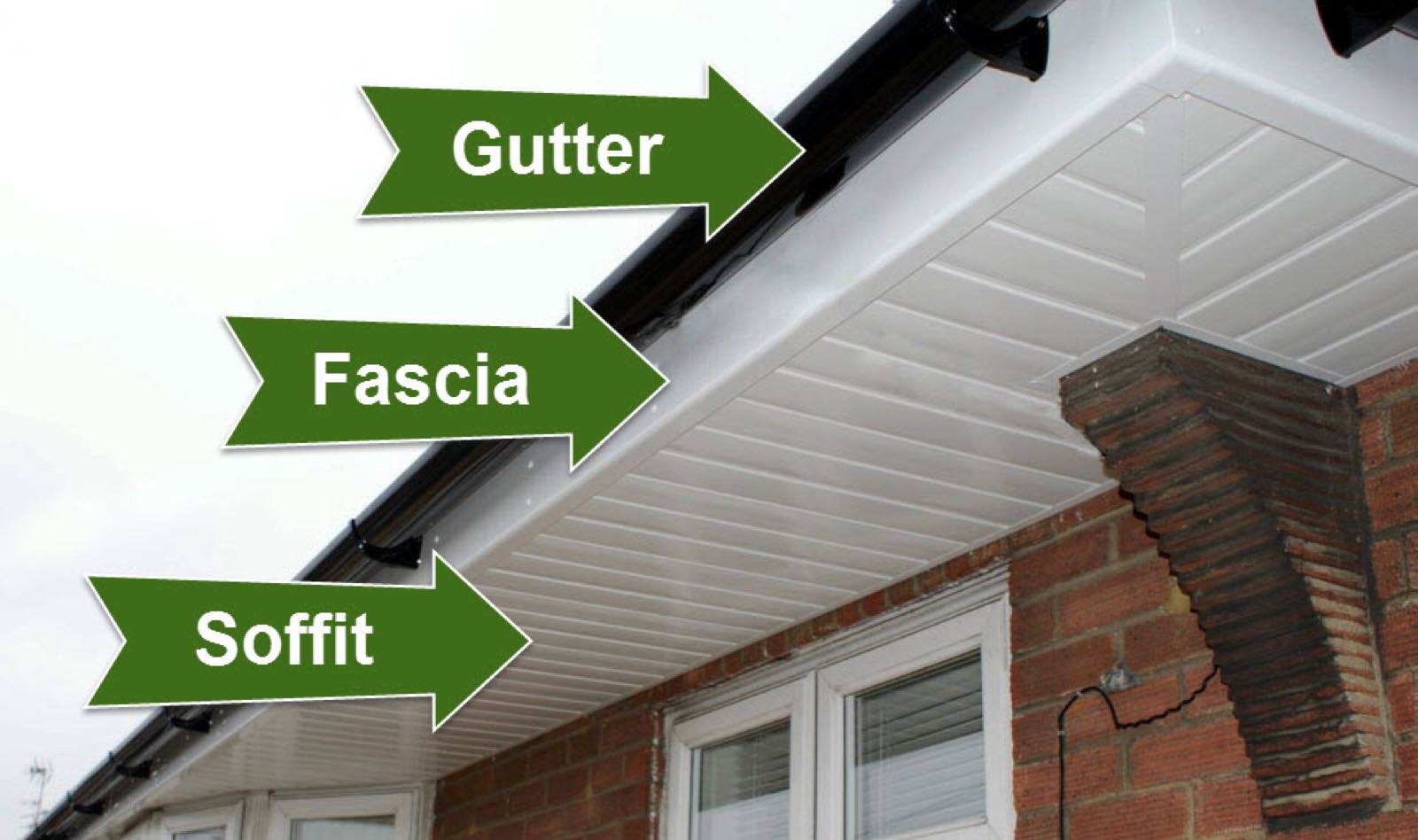
We clear, repair and replace guttering across London, along with UPVC and timber fascias, soffits and downpipes. Because overflowing and leaking gutters are a leading cause of the penetrating damp and blown render we already treat, we fix the roofline and the damage it causes together — one accountable contractor for landlords, letting agents and homeowners, with seasonal maintenance and a written guarantee.
Written Guarantee: 5 Years
|
Average Timeline Range: Same day - 1 week
Gutter Clearing, Repair and Replacement
A blocked or broken gutter is one of the most damaging faults a building can have, precisely because it looks trivial. Leaves and moss block the run, water overflows down the wall instead of into the downpipe, and within a couple of wet seasons you have penetrating damp, blown render and rot in the fascia behind. The cheapest job on the building, neglected, becomes one of the most expensive.
We clear gutters fully — not just the obvious debris in the run but the downpipe outlets, hoppers and the underground gully where they discharge — then flush them to confirm they actually run. We re-fix sagging gutters back to the correct fall so water reaches the outlet, replace cracked and leaking sections and joints, and where cast iron has corroded beyond repair we replace in matched cast iron on period and conservation-area properties or modern UPVC where appearance allows.
Leaking joints are the commonest fault we are called to on London terraces, and they are the commonest thing done badly. A joint smeared with silicone or bitumen fails by the next winter; we renew the union or gasket properly so the repair lasts. On a typical two-storey terrace or flat a full clear runs around £80–£150, with joint and section repairs added per item and confirmed before we start, never charged by the hour up a ladder.
Fascias, Soffits and Downpipes
The fascia, soffit and bargeboards are the timber or UPVC trim that close off the roofline and carry the guttering. When they rot — usually because a gutter has been overflowing behind them for years — the roof edge loses support, the felt at the eaves perishes, birds and squirrels get into the loft, and the gutter itself works loose from its fixings. It is rarely just the visible board that has gone by the time you notice.
We replace failed fascias and soffits in low-maintenance UPVC, or repair and redecorate timber where a period or conservation-area property warrants keeping the original detail. Crucially, we fit vented soffits or add eaves ventilation so the loft keeps breathing — sealing the roofline solid is a common shortcut that simply moves the damp inside as loft condensation and rotten rafter feet.
Downpipes are renewed and re-clipped, outlets, hoppers and swan-necks cleared, and discharge directed properly into a gully rather than spilling against the wall or over a neighbour’s boundary. We match profiles and colours to the existing roofline — ogee or half-round, black, white or grey — so replacement reads as original rather than a patch. Where a Victorian or Edwardian terrace, a mansion block or an ex-LA flat needs tower or scaffold access, we itemise it transparently and coordinate access so one visit covers gutter, roofline and any downpipe work together.
Stopping the Damp at Source
A great deal of the damp, staining and blown plaster we are called to repair inside London homes traces straight back to a roofline fault: an overflowing gutter, a split downpipe, a blocked outlet soaking one patch of wall every time it rains. Treating the damp inside without fixing the gutter outside guarantees it returns — which is why so many damp-proofing jobs quietly fail within a year.
Because we handle both the roofline and the internal reinstatement, we fix the cause and the symptom together under one team: clear and repair the gutter, allow the wall to dry, then re-render or re-plaster and redecorate the affected area. That single line of accountability matters most to landlords and letting agents, where a recurring damp patch quickly becomes a tenant complaint, a deposit dispute or, at worst, a disrepair claim under the Homes (Fitness for Human Habitation) Act.
The pattern is predictable enough that we treat guttering as cheap intelligence. A £100 seasonal clear that flags a hairline crack or a failing bracket heads off the four-figure damp, timber-rot and redecoration bill that neglected gutters always lead to. For agents managing portfolios across several boroughs, catching these faults on a scheduled visit is far cheaper than reacting to them as emergencies once water is already inside a let flat.
Period Rooflines, Cast Iron and Conservation Areas
Much of London’s housing stock — Victorian, Georgian and Edwardian terraces, mansion blocks and villas — was built with cast iron guttering and painted timber fascias, and getting roofline work right on these is as much about appearance as function. In a conservation area, and always on a listed building, the material and profile of the guttering can be controlled: swapping ornamental cast iron ogee gutters for plain UPVC can breach conservation-area consent and devalue the property.
We assess honestly which sections of cast iron are genuinely beyond saving and which can be de-rusted, repaired and repainted to get another couple of decades out of them. Where replacement is unavoidable we match in cast iron, or in heritage-profile aluminium and cast-effect UPVC where consent and budget allow, keeping ogee and half-round profiles and the original downpipe detailing so the elevation reads as it should from the street.
On leasehold flats and mansion blocks the roofline is almost always the freeholder’s or managing agent’s responsibility, funded through the service charge, and works may need a licence-to-alter or freeholder sign-off before starting. We are used to working within those constraints — providing the specification, photographs and fixed written quote that a managing agent or freeholder needs to approve communal roofline work — rather than leaving a leaseholder to fight it out. Where scaffold sits on a public footway we also arrange the borough pavement licence that access legally requires.
How to Choose Guttering, Fascias and Soffits for Your London Property
The right roofline specification depends on the building, not on what a trader has on the van. Use a few concrete criteria to decide.
Material: UPVC is the low-maintenance default — it never needs repainting, resists rot, and suits most modern and unremarkable properties. On period and conservation-area homes, timber fascias and cast iron gutters keep the correct appearance and may be a planning requirement; heritage aluminium is a middle path where you want cast-iron looks without the maintenance. Match material to the property’s age and any conservation controls first, cost second.
Profile and colour: match the existing profile — ogee, half-round or square — and colour so the work reads as original. On a terrace, mismatched guttering next door is obvious from the pavement and can knock kerb appeal.
Ventilation: any soffit replacement must maintain or add eaves ventilation. Non-vented soffits are cheaper but cause loft condensation; insist on vented units unless there is roof-level ventilation already.
Gutter capacity: properties under trees, on exposed elevations, or with large roof areas benefit from deeper-flow or larger-section gutters and extra outlets, rather than repeatedly clearing an undersized run.
Installer: choose one contractor who quotes a fixed written price with access itemised, carries public liability cover (we carry £5m), and gives a written guarantee — our roofline work is backed for 5 years. Avoid anyone quoting only verbally or pushing a single material for every property.
Seasonal Maintenance for Landlords and Managing Agents
For landlords and letting agents, guttering is the classic false economy: invisible when it works, expensive when it fails, and almost always failing between inspections rather than during them. A managed seasonal programme turns an unpredictable emergency into a planned, budgeted line item.
We run scheduled clearances — typically autumn, once the leaves are down, and spring — across single properties and portfolios spread over multiple boroughs. Each visit clears the runs, outlets and gullies, checks joints, brackets and downpipes, and closes with dated photographs of roofline condition against your works order. That photographic record is genuine intelligence: it flags a slipping bracket, a hairline crack or early fascia rot while the fix is still £50, not once it has become a damp wall in a let flat.
We attend on agreed account terms, arrange access with tenants directly giving the proper notice, and can consolidate multiple properties onto one monthly invoice to keep maintenance budgets predictable. For HMOs, where roofline neglect feeds straight into damp-and-mould hazards assessed under HHSRS, keeping gutters clear is part of demonstrating the property is being properly maintained. Where a visit uncovers work beyond clearing — a rotten soffit, a corroded cast iron section — we report it with photographs and a fixed written quote rather than starting unauthorised extras, so you stay in control of spend.
Access, Timescales and What a Typical Job Involves
Most roofline work is quick once access is sorted, and access is usually what dictates both price and programme. A straightforward gutter clear or joint repair on a two-storey terrace is a same-day job from a ladder or tower. A full fascia, soffit and gutter replacement across a semi or detached typically runs two to four days, and larger period or mansion-block rooflines up to about a week — consistent with the same-day to one-week window we quote.
On the day, we confirm the scope against the written quote, set up safe access — ladder, tower or scaffold depending on height, frontage and whether a pavement licence is needed — and protect planting and paving below. Old guttering and rotten timber come down and are cleared away; we do not leave debris or offcuts behind. New runs are set to the correct fall, outlets aligned over gullies, and everything flushed and tested with water before we call it done.
Parking and access are real constraints in London: permit bays, red routes, narrow rear elevations and shared side returns all affect how we work, and we sort permits and neighbour access rather than turning up and improvising. Where the roofline abuts a neighbour or a party wall, or where a scaffold needs to oversail a boundary, we handle the conversation up front. Every completed job is backed by our written 5-year guarantee on the work, with before-and-after photographs for your records.
What Guttering, Fascias & Soffits Costs in London (2026)
Item
Typical London Price
Notes
Gutter clearing (flat or 2-storey terrace)
£80–£150 per property
Full clear of runs, outlets and gully, then flushed to confirm flow
Leaking joint / union repair
£40–£90 per joint
Re-sealed or renewed properly, not smeared with mastic
Re-fixing sagging gutter to correct fall
£60–£140 per run
New brackets and fall corrected so water reaches the outlet
UPVC gutter replacement
£18–£35 per metre
Supply and fit, matched profile and colour
Cast iron gutter repair / matched section
£90–£220 per metre
Period and conservation stock; higher for ornamental profiles
UPVC fascia and soffit replacement
£45–£75 per metre
Includes new fascia, vented soffit and roofline trim
Downpipe renewal and re-clipping
£15–£30 per metre
Outlets, hoppers and shoe cleared and directed to gully
Tower or scaffold access
£150–£900 per property
Depends on height, frontage and pavement licence needs
Seasonal maintenance (landlords / agents)
£65–£120 per visit
Autumn and spring clearance with dated roofline photos
Guide prices for Greater London in 2026, inclusive of VAT where applicable. Working at height means access costs (ladder, tower or scaffold), which we itemise separately after a look at the property. Every job is confirmed with a fixed written quote before we start — never charged by the hour up a ladder.
Insider Tips Before You Commit
Book the autumn clear once the leaves are actually down, not in September — clearing before the trees drop just means a blocked gutter by December.
If you see a green or dark vertical stain running down an external wall, that is a gutter or downpipe leak painting the brickwork every time it rains — deal with it before it becomes penetrating damp inside.
Ask for the downpipe outlet and underground gully to be cleared too, not just the visible run; most ‘cleared’ gutters still overflow because the blockage is at the bottom, not the top.
On a mid-terrace, coordinate a shared scaffold or tower with your neighbour if their roofline needs work too — splitting access costs can halve the biggest line on the quote.
Never let anyone seal a cast iron gutter joint with silicone or bitumen; on iron it fails by the next winter and you pay twice — joints should be renewed with the correct gasket or sealant.
If your soffits have no ventilation gaps or vents, insist on vented replacements; sealing the roofline solid just moves the damp into the loft as condensation.
Get roofline work quoted at the same time as any roof or leak repair so one lot of access covers both trades — paying twice for scaffold is the most common avoidable cost.
For a flat or mansion block, check whether the freeholder or managing agent is responsible for shared rooflines and downpipes before you pay — communal guttering is often a service-charge item, not yours.
How Not to Get Scammed
London has more rogue traders than any other UK market. These are the warning signs we see most often — and exactly what to do when you spot them.
Doorstep caller says your gutters are ‘dangerous’ and pressures you to pay cash on the spot for immediate work.
Never buy roofline work from an unsolicited caller. Say no, take a photo of their van and any paperwork, and get an independent fixed written quote from a firm you contacted first.
No written quote — just a verbal figure that creeps up once the ladder is against the wall.
Insist on a fixed written quote itemising clearing, repairs and access before any work starts. A legitimate firm confirms the price in writing, not by the hour mid-job.
Cash only, no VAT invoice and no company details.
Ask for a proper invoice with company name and address, and pay traceably by card or bank transfer. No paper trail means no recourse if the ‘repair’ fails or causes damage.
‘We found much more rot / your whole fascia’s gone’ once they are up at roof level and you cannot see it.
Ask them to photograph the defect on their phone and send it before agreeing to any extra. Genuine additional work is documented with pictures, not just described from a ladder.
Large upfront deposit demanded before any materials arrive on site.
For clearing and small repairs, expect to pay on completion. For larger replacements a modest deposit is reasonable, but never hand over most of the cost before work or materials appear.
Uninsured labour working at height with no public liability cover.
Ask to see proof of public liability insurance (we carry £5m). If a ladder goes through a window or a tile drops on a car, an uninsured trader leaves you carrying the loss.
Standards & Compliance
Every project is delivered to current British Standards and Building Regulations, with works documented for building control and HMO licensing sign-off — backed by fixed written quotes and a written guarantee.
BRITISH STANDARDS · BUILDING REGS COMPLIANT · FD30/FD60 FIRE DOORSETS · BS 5839-6 ALARMS · WRITTEN GUARANTEE
Frequently Asked Questions (FAQ)
How much does gutter clearing cost in London?
Gutter clearing for a typical London house usually costs around £80–£150 depending on the size of the property and access — flats and two-storey terraces at the lower end, larger or harder-to-reach roofs higher. Repairs to leaking joints and sagging runs are added per section. We confirm the price in a fixed written quote before starting, rather than charging by the hour up a ladder.
How often should gutters be cleared?
For most London properties, twice a year — autumn, once the leaves are down, and spring — keeps gutters running and heads off damp. Properties under or near trees may need more frequent clearing. For landlords and managing agents we run scheduled seasonal visits with dated photographs of the roofline each round, so problems are planned for and budgeted rather than discovered as a damp wall inside a let flat.
Can a blocked gutter really cause damp inside the house?
Very commonly, yes — it is one of the leading causes of penetrating damp we see. An overflowing or leaking gutter pours water down one patch of wall every time it rains, eventually showing inside as staining, blown plaster or timber rot. Fixing internal damp without addressing the gutter outside is why so many damp repairs fail; because we handle both the roofline and the internal reinstatement, we treat cause and symptom together under one team.
Should I replace fascias and soffits in UPVC or timber?
UPVC is the low-maintenance default — it never needs repainting and resists the rot that destroys neglected timber. On period and conservation-area properties, though, timber keeps the right appearance and may be required by planning, and we repair and redecorate it where that matters. Heritage aluminium is a middle path. We advise honestly on what suits your property, appearance controls and budget rather than defaulting to one material.
Do you replace cast iron guttering on period properties?
Yes. On Victorian, Georgian and Edwardian properties we assess which cast iron sections can be de-rusted, repaired and repainted to last another couple of decades, and which are genuinely beyond saving. Where replacement is needed we match in cast iron, heritage-profile aluminium or cast-effect UPVC where conservation consent and budget allow, keeping the original ogee or half-round profile so the elevation reads as it should from the street.
How long does gutter and fascia replacement take?
A straightforward gutter clear or joint repair on a two-storey terrace is usually a same-day job. A full fascia, soffit and gutter replacement across a semi or detached typically takes two to four days, and larger period or mansion-block rooflines up to about a week. Access — ladder, tower or scaffold — is often what sets both the timescale and the cost, and we itemise it in the quote.
Who is responsible for guttering on a leasehold flat or mansion block?
On leasehold flats and mansion blocks the roofline, gutters and downpipes are almost always the freeholder’s or managing agent’s responsibility, funded through the service charge, and works may need freeholder sign-off or a licence-to-alter before starting. We provide the specification, photographs and fixed written quote a managing agent or freeholder needs to approve communal roofline work, and we work within those constraints rather than leaving a leaseholder stuck.
Why does my gutter still overflow after being cleared?
Almost always because only the visible run was cleared, not the downpipe outlet, hopper or underground gully where the real blockage sits — or because the gutter has dropped out of level so water pools instead of draining to the outlet. We clear the whole system, from run to gully, flush it to confirm flow, and re-fix any sagging sections back to the correct fall so it actually drains.
Do you handle scaffold, towers and parking permits for roofline work?
Yes. We arrange the right access for the height and elevation — ladder, mobile tower or scaffold — and handle borough pavement licences where a scaffold sits on a public footway. We also sort parking suspensions or permits on permit bays and red routes, and coordinate neighbour or party-wall access where a rear elevation or boundary is involved, rather than turning up and improvising on the day.
Is your roofline work guaranteed and are you insured?
Yes. All our guttering, fascia and soffit work is backed by a written 5-year workmanship guarantee, and we carry £5m public liability insurance covering work at height — important when a ladder or scaffold is over your windows, car or planting. Every job is confirmed with a fixed written quote and closed with before-and-after photographs for your records, so you have both the paperwork and the cover.
Our Written Guarantee
We provide a fully comprehensive, written 5-Year guarantee covering all structural reinstatement, moisture boundaries, and finish coatings.
100% Insurance Protected
Request an Elite Assessment
Secure a rapid, high-precision physical survey by our team. Fill out our briefing engine instantly.
Guttering, Fascias & Soffits Across Greater London
We deliver guttering, fascias & soffits across all 33 London boroughs — from the City and Central London out to the M25. Tap any marker to see coverage and local postcodes.