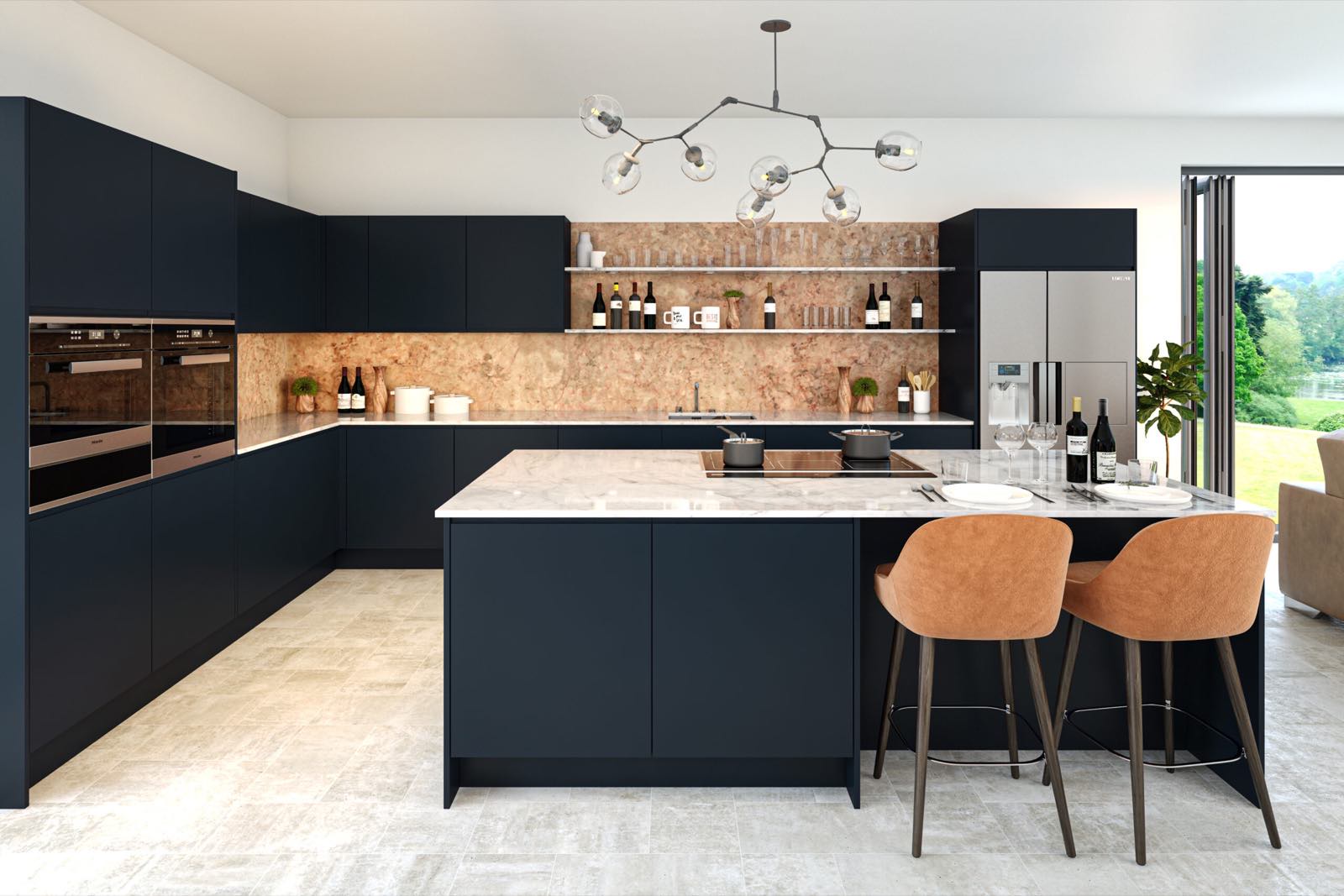
A kitchen renovation touches more trades than any other room: gas, electrics, plumbing, plastering, tiling, flooring and carpentry, all in a strict sequence that punishes a missed step. We deliver London kitchen renovations as one managed package — from layout design and supply through installation and decoration — to a fixed written price and programme. Landlords, letting agents and homeowners deal with a single accountable contractor rather than juggling a designer, a fitter and four subcontractors who blame each other when it slips.
Written Guarantee: 5 Years
|
Average Timeline Range: 2 - 5 weeks
Layout First, Units Second
The most expensive kitchen mistake in London homes is keeping a bad layout and spending the whole budget on doors. Before any units are ordered we look at what the room could actually be: opening to an adjacent dining room, moving the sink under the window, borrowing space from a redundant hallway cupboard, or running services out to an island.
In Victorian and Edwardian terraces and mansion-block flats this often means structural openings or relocated gas and water runs, which we price and certify in-house rather than leaving you to find a structural engineer mid-project. Our designers produce scaled drawings of two or three layout options with honest costings against each, so the big decisions are made on paper — where changes are free — rather than on site, where they cost a fortnight.
Only then do we talk cabinetry. We fit everything from quality trade ranges to bespoke hand-built in-frame kitchens, and we will tell you plainly where extra spend earns its keep and where a brochure upgrade is money you will never notice again. The layout is the one decision you cannot cheaply change later; the door finish is the one you can.
Installation by One Sequenced Team
A kitchen installation succeeds or fails on sequencing. First fix — new circuits for appliances, relocated gas runs, water and waste — must be complete and tested before plastering; floors go down before units; stone templating happens only once base units are fixed dead level. Miss one step and the programme slips two weeks while trades wait on each other.
Because our electricians, Gas Safe engineers, plumbers, plasterers and fitters are one team under one project manager, that sequence is run daily rather than negotiated between strangers who have never met. Worktop templating is booked the day base units are set, appliances are commissioned and demonstrated at handover, and every gas and electrical installation comes with its Gas Safe and BS 7671 certification in your completion pack.
That single line of accountability is the whole point for landlords and letting agents: one number to call, one contract, one guarantee, and no finger-pointing between a supplier and a fitter when a drawer front is wrong. A straightforward replacement takes about two weeks on site; a kitchen involving structural work and relocated services runs to four or five weeks.
Choosing the Right Kitchen: A London Buyer’s Guide
Judge a kitchen by what you cannot see in the showroom. Start with carcass construction: an 18mm rigid, pre-built carcass with cam-and-dowel or screwed joints outlasts a flat-pack 15mm cabinet assembled on site, especially under a heavy stone top. Look for solid backs, adjustable legs and metal drawer boxes with soft-close runners rated for the cycles a family or a tenancy will put through them.
Match the specification to how long you will hold the property. An owner staying ten years can justify bespoke joinery and premium appliances; a landlord refitting between tenancies wants durable trade cabinetry, a laminate or quartz top and appliances with cheap, available spares. Integrated appliances look seamless but tie you to a size and a brand — freestanding is often the smarter rental choice.
Then weigh the supplier, not just the price. Ask who templates the worktop, who certifies the gas and electrics, and who you call if a hinge fails in year three. A slightly higher quote from one accountable contractor usually beats a cheaper headline that quietly leaves you coordinating a fitter, a stone mason and an electrician yourself — and carrying the risk when they disagree.
Worktops: Laminate, Quartz, Granite or Porcelain
The worktop is the surface you touch every day and the line where quotes diverge most, so it pays to understand the trade-offs. Laminate has come a long way — good ranges convincingly mimic stone at a fraction of the cost, resist stains and are ideal for rentals and tighter budgets, though a hot pan or a deep scratch cannot be repaired.
Quartz is the London default for owner-occupiers: engineered, non-porous, needs no sealing and shrugs off red wine and turmeric, but it will scorch, so a trivet is non-negotiable. Granite gives genuine natural character and takes heat well, though it needs periodic sealing and every slab is unique, which matters for joins. Porcelain, including large-format sintered slabs, is the toughest of all — heat, scratch and UV resistant and thin enough for a crisp modern edge — but it is unforgiving to cut and template, so fabrication quality is everything.
Whatever the material, the finish depends on flat, level base units and accurate templating taken on site rather than off a drawing. We template only once carcasses are fixed dead level, itemise the worktop as its own line so you can trade material against budget, and hand over care guidance and any offcuts for future repairs.
Permissions, Leases and Building Control in London
A kitchen renovation in London rarely stops at the four walls of the room, and the paperwork protects you as much as the plumbing does. Notifiable electrical work — new circuits, a consumer unit change, work in the kitchen — falls under Part P of the Building Regulations and must be certified and notified to Building Control; gas work must be carried out and certificated by a Gas Safe registered engineer. We handle both in-house and put the certificates in your completion pack.
Leaseholders in flats, mansion blocks and ex-local-authority conversions should read the lease before moving anything. Relocating a sink, waste or gas run, or altering the layout, commonly needs a formal licence to alter from the freeholder or managing agent, and doing the work without it risks a breach that surfaces at sale. We prepare the application and supporting drawings.
Beyond that: a structural opening to a dining room needs engineer’s calculations and Building Control sign-off; work near a shared wall can trigger the Party Wall etc. Act 1996; HMOs carry their own amenity and fire-safety standards; and conservation-area or listed properties bring extra consents. We flag every one of these at survey rather than after the units are ordered.
Realistic Kitchen Budgets in 2026
London kitchen renovations divide roughly into thirds: cabinetry and worktops, appliances, and installation works. At 2026 prices a quality mid-range renovation — trade cabinetry, a stone worktop, mid-range appliances, new flooring and decoration — typically runs £18,000 to £35,000 installed. Premium bespoke kitchens start around £45,000 and run well past £80,000 in prime central postcodes. A like-for-like replacement that keeps the existing layout can be done from around £12,000.
Installation, including any structural and services work, usually accounts for about a third of the total, which is why a suspiciously cheap quote almost always means corners cut in exactly the places you cannot inspect: no tanking behind a splashback, undersized circuits, a worktop templated off unlevelled units. Within a whole-property refurbishment, expect the kitchen and bathrooms together to absorb 30–40 per cent of the entire budget — they are where the money shows and where it is best spent.
We itemise every line of the quotation so you can trade specification against cost before committing, and we recommend a 10–15 per cent contingency wherever walls are being opened or services moved. The fixed written quote you sign is the price you pay unless you change the scope.
Kitchens for Landlords and Letting Agents
A rental kitchen has a different job from an owner’s: it must let quickly, survive turnover and be cheap to maintain, not win a design award. That changes the specification in useful ways. We steer landlords towards robust trade cabinetry with metal drawer boxes and soft-close hinges, a through-body laminate or quartz worktop that resists chips and stains, and freestanding rather than integrated appliances so a failed oven is swapped in an hour, not rebuilt into a cabinet.
Void periods are the real cost, so we work to fixed programmes and can sequence a replacement kitchen into the gap between tenancies. For HMOs we specify to the licence — adequate cooking and worktop provision per occupant, and fire-rated finishes where the kitchen sits on an escape route — and every gas and electrical certificate goes straight into the compliance file your managing agent needs.
Because one team handles design, supply, installation and certification, letting agents get a single point of contact, a written guarantee and a completion pack that satisfies inventory clerks and incoming tenants alike. Spend sensibly, document everything, and a well-specified rental kitchen pays for itself across several tenancies rather than becoming a deposit dispute after the first.
What Happens on Site: Programme, Dust and Living Through It
A kitchen is disruptive because it is your only kitchen, so we plan the human side as carefully as the technical one. After a design survey and a fixed written quote, cabinetry and stone are ordered while you finalise finishes — those 4–8 week lead times run before we ever set foot on site, so the room itself is only out of action for the fit.
On day one we protect floors and routes, set up dust barriers, and strip out to a clean shell. First fix — electrics, gas, plumbing, any structural work — is completed and tested, then plastering, flooring and units follow in sequence, with worktop templating and installation towards the end. Where it is your only kitchen we help you rig a temporary sink, kettle and microwave elsewhere so daily life carries on.
Access and parking get sorted up front: skip permits, parking suspensions or bay booking, materials lifts to upper-floor flats, and agreed working hours where a lease or managing agent restricts them. You get a named project manager, a written programme with milestones, and appliances commissioned and demonstrated at handover — with every certificate, care sheet and the 5-year written guarantee handed over in one completion pack.
What Kitchen Renovation Costs in London (2026)
Item
Typical London Price
Notes
Like-for-like replacement (existing layout kept)
£12,000 – £16,000 per kitchen
New units, worktop, appliances and decoration with no walls or services moved.
Mid-range full renovation (trade cabinetry + stone)
£18,000 – £35,000 per kitchen
Redesigned layout, stone worktop, mid-range appliances, flooring and decoration.
Bespoke / premium hand-built kitchen
£45,000 – £80,000+ per kitchen
In-frame or bespoke joinery, premium appliances and stone; higher in prime central postcodes.
Fitting labour only (you supply the units)
£3,500 – £8,000 per kitchen
Installation of client-supplied Howdens, DeVOL or German kitchens; excludes worktop and services.
Quartz, granite or porcelain worktop, supplied and fitted
£350 – £650 per m²
Templated, cut and installed; includes upstands and cut-outs. Laminate is far cheaper.
New appliance and ring circuits, notifiable under Part P; Building Control sign-off included.
Gas hob or cooker relocation (Gas Safe registered)
£350 – £800 per appliance
Repositioned gas run, tightness test and Gas Safe certificate for your records.
Replastering walls and ceiling after strip-out
£45 – £70 per m²
Skim over sound backgrounds; full re-plaster or dot-and-dab where substrates have failed.
Structural opening (steel beam) with calcs and Building Control
£2,500 – £6,000 per opening
Knocking through to a dining room or garden; engineer’s calculations and sign-off included.
Indicative Greater London supply-and-fit prices for 2026; every project is fixed and itemised after a design survey of your property.
Insider Tips Before You Commit
Spend money on the layout, not the doors — moving a sink to the window or borrowing a redundant hallway cupboard adds more everyday value than an upgraded handle range.
Order cabinetry and stone before strip-out; lead times of 4–8 weeks run in parallel with design so your kitchen is only out of use for the fit, not the wait.
In a leasehold flat, check your lease for a licence-to-alter clause before you move any gas, water or waste run — retrospective consent is slower and more expensive than asking first.
Insist on templating only after base units are fixed dead level; a worktop templated off unlevelled carcasses will never sit flush against the wall.
Keep your old kitchen working as long as possible — a temporary sink, kettle and microwave in another room turns a brutal fortnight into a manageable one.
Get the Gas Safe and BS 7671 certificates handed over at completion, not promised later; without them you cannot prove compliance to a buyer, insurer or managing agent.
For rentals, choose a through-body laminate or quartz worktop and soft-close doors — they survive tenant turnover far better than timber or high-gloss acrylic that scratches.
Budget a 10–15 per cent contingency whenever walls are opening or services are moving; London period floors and walls always hide a surprise.
How Not to Get Scammed
London has more rogue traders than any other UK market. These are the warning signs we see most often — and exactly what to do when you spot them.
Cash-only price with no written quotation or VAT invoice.
Insist on a fixed, itemised written quote and a proper invoice; a trader who avoids paper leaves you no recourse and no warranty if the worktop cracks or the hob fails.
Large upfront deposit demanded before any materials are ordered.
Pay a modest deposit against ordered goods, then stage payments to completed milestones; never hand over 50 per cent for a kitchen that has not been ordered.
Gas or electrical work done without Gas Safe or Part P certification.
Ask for the engineer’s Gas Safe number and confirm BS 7671 and Building Control notification; uncertified work is illegal, uninsured and a nightmare at resale.
"We’ve found more problems" mid-job, with a demand for extra cash to continue.
Genuine surprises are documented with photos and a written variation before work proceeds; open-ended verbal add-ons are a classic way to inflate a low headline price.
No proof of public liability insurance for work in your flat or a leaseholder’s building.
Ask to see a current public liability policy; a flood from a botched kitchen supply can cost tens of thousands in a mansion block, and you do not want it uninsured.
Pressure to sign today for a "one-off discount" that expires by the weekend.
Reputable kitchen contractors hold a fixed quote for weeks; artificial urgency exists to stop you comparing quotes or reading the small print.
Standards & Compliance
Every project is delivered to current British Standards and Building Regulations, with works documented for building control and HMO licensing sign-off — backed by fixed written quotes and a written guarantee.
BRITISH STANDARDS · BUILDING REGS COMPLIANT · FD30/FD60 FIRE DOORSETS · BS 5839-6 ALARMS · WRITTEN GUARANTEE
Frequently Asked Questions (FAQ)
How much does a kitchen renovation cost in London?
At 2026 prices: like-for-like replacements from around £12,000; quality mid-range renovations £18,000–£35,000 installed; bespoke premium kitchens £45,000–£80,000 and beyond in prime postcodes. Installation, including any structural and services work, typically accounts for about a third of the total. We provide fixed, itemised quotes after a design survey so you can trade specification against cost before committing.
How long does a kitchen renovation take?
A straightforward replacement takes around two weeks on site. Renovations involving structural openings, relocated gas or plumbing, or bespoke cabinetry take four to five weeks. Cabinetry and stone carry lead times of roughly 4–8 weeks, but we run those before site start so your kitchen is only out of use for the fit itself, not the waiting.
Can you move the kitchen to a different room?
Yes — relocating a kitchen means new water, waste, gas and electrical runs, ventilation and usually Building Control sign-off, all of which we handle in-house. In leasehold flats a relocated or reconfigured kitchen normally needs freeholder or managing-agent consent through a licence to alter, and we prepare the application and supporting drawings for you.
Do you supply the kitchen or just install it?
Either. Most clients use our supply-and-install package for single accountability, but we regularly install client-supplied kitchens from Howdens, DeVOL, Naked Kitchens and German manufacturers. If you supply, we check every unit against the delivery schedule before strip-out, so the programme is never held hostage by a missing cabinet or a wrong door discovered halfway through the fit.
Do I need freeholder consent for a new kitchen in my flat?
For a like-for-like replacement in the same position, usually not. But moving the sink, waste or gas run, altering the layout, or affecting shared services generally needs a formal licence to alter from the freeholder or managing agent under your lease. Doing the work without it risks a breach that resurfaces at sale, so we check the clause and prepare the application at survey stage.
Is the gas and electrical work certified?
Always. Gas work is carried out and certificated by a Gas Safe registered engineer, and new kitchen electrical circuits are installed to BS 7671 and notified to Building Control under Part P. Both certificates go into your completion pack, which you will need to satisfy a buyer, an insurer or a managing agent, and to keep the work legal and insured.
What worktop should I choose for a London kitchen?
For owner-occupiers, quartz is the popular default — non-porous, no sealing and highly stain-resistant, though it scorches, so use a trivet. Granite and porcelain suit those wanting natural character or maximum durability. For rentals and tighter budgets, a good through-body laminate mimics stone convincingly and shrugs off turnover. We itemise the worktop separately so you can trade material against budget.
Can I stay in the property during the work?
Usually yes. The kitchen itself will be unusable during the fit, so where it is your only kitchen we help you rig a temporary sink, kettle and microwave in another room and sequence the work to keep the rest of the home habitable. We set dust barriers, protect floors and routes, and agree working hours where a lease or managing agent restricts them.
What deposit do you take and how are payments staged?
A modest deposit against ordered cabinetry and materials, then staged payments tied to completed milestones — never a large upfront sum for goods that have not been ordered. Everything is set out in the fixed written quotation. Be wary of any trader demanding cash, a big deposit or half the total before ordering; it is the most common way kitchen jobs go wrong.
What guarantee do you provide on a kitchen renovation?
Five years on our installation workmanship, alongside the manufacturers’ warranties on cabinetry, worktops and appliances. Gas and electrical installations are certificated to Gas Safe and BS 7671, and we carry £5m public liability cover. At handover you receive one completion pack with the guarantee, all certificates, care guidance and any worktop offcuts for future repairs.
Our Written Guarantee
We provide a fully comprehensive, written 5-Year guarantee covering all structural reinstatement, moisture boundaries, and finish coatings.
100% Insurance Protected
Request an Elite Assessment
Secure a rapid, high-precision physical survey by our team. Fill out our briefing engine instantly.
We deliver kitchen renovation across all 33 London boroughs — from the City and Central London out to the M25. Tap any marker to see coverage and local postcodes.