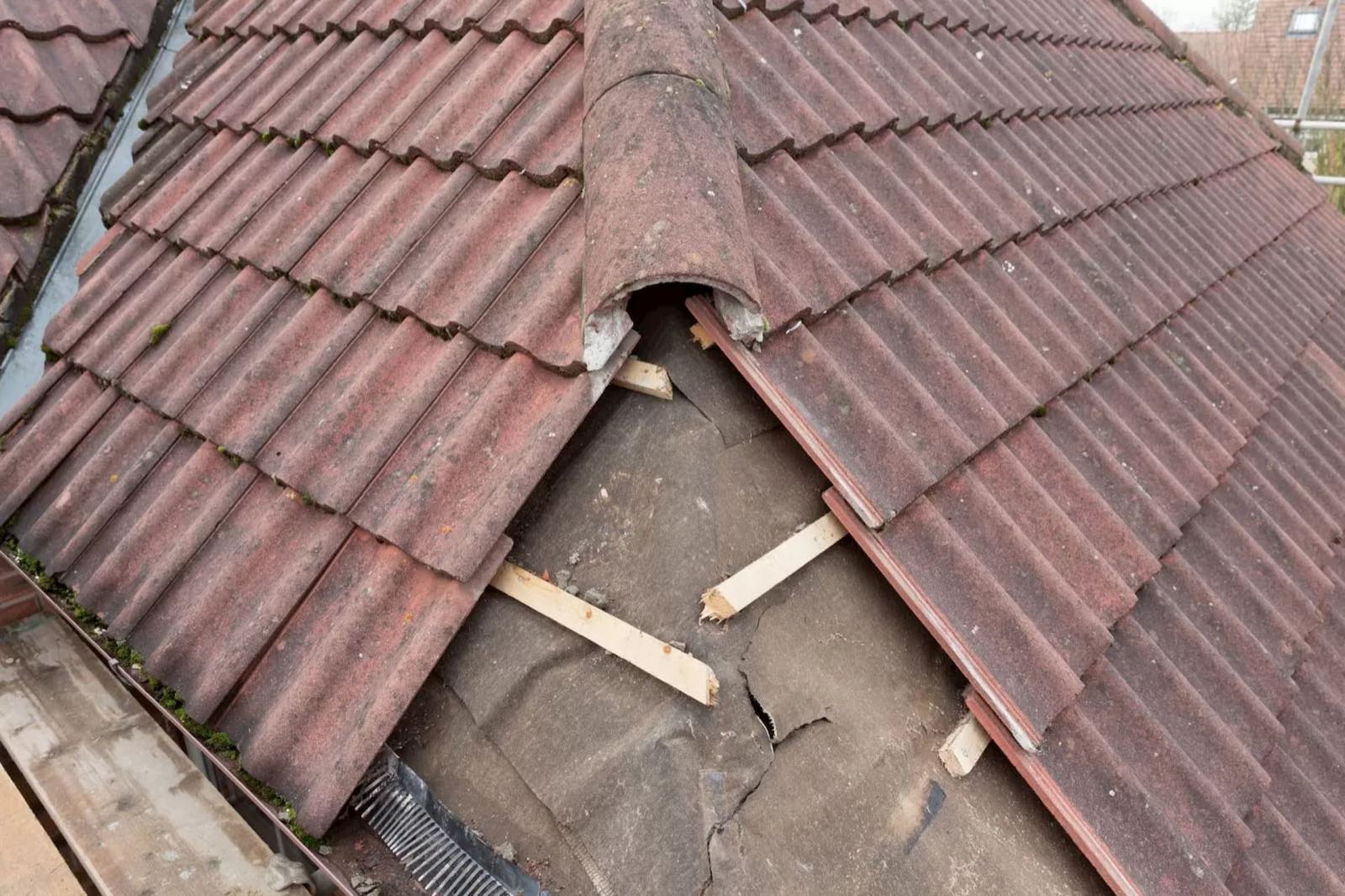
We repair pitched and flat roofs across London — slipped and broken tiles, flat-roof splits, leadwork, chimney flashing, moss clearance and storm damage — with emergency make-safe attendance. Because roof faults cause most of the ceiling leaks we already fix, one team traces the entry point on the roof and reinstates the damage inside, giving landlords, letting agents and homeowners a single accountable contractor from the tile to the paint.
Written Guarantee: 5 Years
|
Average Timeline Range: Same day - 2 weeks
Pitched Roof Repairs and Tile Replacement
Most London roof leaks start small: a single slipped or cracked tile, a nail-sick slate, a ridge tile working loose in the wind. Water then tracks along battens and rafters and emerges as a ceiling stain metres from the actual defect, which is why chasing a roof leak from inside a bedroom rarely works. We locate the entry point on the roof, not the symptom on the ceiling.
We replace slipped, cracked and missing tiles and slates with matched materials, re-bed and repoint ridge and hip tiles, renew nail-sick fixings, and repair or replace failed felt and battens where access allows. Valleys — the most leak-prone part of any pitched roof — are cleared, re-lined and re-leaded where the existing lining has split.
London’s stock sets the detail. Victorian and Edwardian terraces across Islington, Hackney, Wandsworth and Ealing were laid in natural slate or clay plain tile; matching the reclaimed material and the original ridge profile is what makes a repair disappear from the street and satisfies conservation-area officers. Ex-local-authority blocks and inter-war semis in the outer boroughs more often carry concrete interlocking tiles, where the fix is faster but colour-fade means a blend rather than a single new tile. We tell you which your roof needs before we quote.
Flat Roofs, Leadwork and Flashing
Flat roofs on London extensions, rear-addition ‘outriggers’, dormers and bay tops fail predictably: ponding water where the fall is wrong, split felt at the seams, blistering, and perished upstands where the covering meets a wall. We repair localised splits and, where a covering is past saving, recover in modern systems — EPDM rubber, GRP fibreglass or torch-on felt — that outlast the old three-layer built-up felt by decades. We never patch over a covering that needs replacing simply to win a cheap quote; we tell you honestly which it is.
Leadwork and flashing are where most roofs actually leak. Failed chimney flashing, stepped flashing to abutments, soakers, back gutters, valley linings and parapet gutters are stripped and renewed in correctly sized, properly dressed and pointed lead. The single most common bodge we are called to put right is mastic smeared over lead: it looks like a repair, lasts a winter or two, then cracks and lifts.
Parapet and valley gutters behind the front wall of a terrace or on a mansion-block roof are a particular London weak point — hidden, hard to reach and catastrophic when they overflow inside. We line them properly and make sure outlets discharge where they should.
Storm Damage, Emergency Make-Safe and Insurance Claims
When a storm strips tiles, lifts a ridge or drives water through a ceiling, the priority is making the building safe and watertight fast before the damage spreads. We offer emergency roof attendance across London: temporary covering and tarpaulin, securing loose tiles and ridge, and stopping ingress. Same-day attendance is usually possible for an active leak, and the make-safe cost is deducted from the permanent repair.
We then provide a costed, fixed written quote for the lasting fix and, crucially, the documentation your insurer needs: dated before-and-after photographs, a written description of the cause and a clear scope of works. Storm-damage claims are paid far more readily when the loss is evidenced properly, and we hand you that evidence rather than leaving you to argue from memory.
Access and safety drive the timeline. A single slipped tile reachable from a tower is a same-day job; a stripped elevation on a four-storey terrace or a mansion block needs scaffold, a schedule for the managing agent, and sometimes a pavement licence from the borough. We are upfront about which applies, because the honest answer on a storm job is usually ‘make it safe today, do it properly next week’.
One Team From the Tile to the Paint
Roof defects sit behind a large share of the ceiling leaks and damp staining we are already called to repair inside London homes, which is the whole logic of handling both. Fix the roof and walk away and the customer is left hunting for a plasterer and decorator for the mess inside; treat the ceiling without fixing the roof and it simply returns with the next downpour.
We trace the whole problem under one team. We locate the entry point on the roof, carry out the permanent repair, then let the structure dry, replaster or re-board the affected ceiling, and redecorate — one contractor from the tile to the paint, under one written guarantee. That single line of accountability matters most to the audience we work for.
For landlords and letting agents it means one works order, one invoice and no arguments about whether the roofer or the plasterer owns the fault. For a leaseholder chasing a freeholder or managing agent over a shared roof, it means one clear report of cause and cost to put in front of the block manager. And for a homeowner it means the person who diagnoses the leak is the person who guarantees it stays fixed — not a chain of trades each blaming the last.
How to Choose a Roofer in London
Roofing attracts more doorstep chancers than almost any trade, because the work is out of sight and most people can’t inspect it. Choosing well comes down to a few concrete checks.
First, never engage anyone who found you — unsolicited callers claiming they ‘spotted loose tiles from the road’ are the classic opening. Approach contractors yourself. Second, demand a fixed written quote that itemises labour, materials and access separately; if access is by scaffold rather than tower, that cost belongs on the page, not as a surprise later. Third, ask what the actual repair is: ‘renew the flashing in lead’ is an answer; ‘seal it up’ is a warning. Fourth, confirm public liability cover — we carry £5m — before anyone goes up, because a fall or a dropped tile on a London street is your liability if they’re uninsured.
Then check they understand your building. A period slate roof in a conservation area needs matched reclaimed materials and an eye on planning; a leasehold flat needs the roof responsibility confirmed against the lease before a penny is spent. Ask for a written guarantee in the quote — ours is five years — and get the diagnosis, the repair and the reinstatement from one contractor so no one can pass the blame. Cheapest per tile is meaningless if the fix fails by the next winter.
Access, Scaffold and Working at Height in London
On most London roofs, how you reach the work costs more than the work itself, so it pays to understand access before you accept any quote. A spot repair on a two-storey terrace may be reachable from a ladder or a mobile tower; anything involving a full elevation, a chimney stack or a four-storey building needs proper scaffold, and that is a legitimate cost, not padding.
Street and pavement conditions add London-specific hurdles. Scaffold that oversails the highway or stands on a pavement usually needs a licence from the borough highways department, and on red routes or busy high streets that can take days to arrange. Terraced access often means going through a neighbour’s property or airspace, which can bring the Party Wall etc. Act 1996 into play for scaffold ties or work close to the boundary. On estates and mansion blocks the managing agent will want method statements, insurance and notice before scaffold goes up.
We factor all of this in at quoting stage and itemise it, so the access line is transparent rather than a mid-job surprise. Where a tower will safely do the job we use one; where the safe, compliant answer is scaffold, we say so — cutting corners on access is how roofers and homeowners both end up in trouble.
Moss, Maintenance and Preventing the Next Leak
Most roof failures are gradual and preventable, and the cheapest work on a roof is the maintenance that stops the expensive work. Moss and lichen — heavy on the shaded north slopes of London terraces and under tree cover in the leafier boroughs — hold water against the tiles, block valley and gutter outlets, and in frost lift and crack the tiles they sit on. Clearing it and freeing the outlets is modest money that heads off penetrating damp and rotten fascias.
We carry out careful moss clearance without power-washing old clay and slate to death, clear valleys and gutter lines at the same visit, and flag the early warnings that a roof gives before it leaks: slipped or cracked tiles, cracked mortar on ridge and hips, tired flashing, and daylight through the felt when we check the loft.
For landlords, letting agents and block managers we offer this as scheduled seasonal roof and roofline maintenance with photographs of condition each round — cheap intelligence that turns an unpredictable disrepair risk into a planned line item. Catching a slipped tile in October is a £150 visit; the same tile ignored until water reaches a first-floor ceiling is a roof repair, a replaster and a redecoration, plus an unhappy tenant.
What Roof Repairs & Damage Restoration Costs in London (2026)
Item
Typical London Price
Notes
Replace slipped or broken tiles / slates
from £150 per visit
Minor repair; price rises with quantity and roof pitch.
Re-bed and repoint ridge or hip tiles
£250–£600
Per run; full ridge re-bedding on a terrace sits higher and needs access.
Chimney or abutment flashing renewed in lead
£300–£850
Stripped and re-leaded, not mastic-sealed; stack height affects access.
Small flat-roof patch / localised split repair
£250–£600
Temporary or localised; full recover is a separate quote.
Flat-roof recovering (EPDM, GRP or torch-on felt)
£90–£150 per m²
Dormers, extensions and bay tops; includes strip and new upstands.
Valley re-lining / lead valley renewal
£600–£1,600
Per valley; depends on length and whether battens and felt are sound.
Moss clearance and gutter-line make-good
£180–£450
Per elevation; heavy north-slope growth on a terrace at the upper end.
Emergency make-safe / temporary weatherproofing
£180–£450
Same-day attendance for active leaks; deducted from the permanent repair.
Scaffold or tower access
£40–£120 per day
Tower for spot repairs; full scaffold for larger works, quoted per elevation.
Indicative Greater London prices for 2026. Working at height means access costs (ladder, tower or scaffold) which we itemise separately. Every job is confirmed with a fixed written quote after inspection — never priced from a photo.
Insider Tips Before You Commit
Photograph the ceiling stain and the outside of the roof from ground level before anyone attends — it speeds up leak tracing and gives you a record for an insurance claim.
Never let a roofer seal a chimney or abutment flashing with mastic; insist on renewed, dressed lead, because mastic cracks and lifts within a season.
Check your lease before booking on a flat or maisonette — on many London leaseholds the roof is a freeholder or managing-agent responsibility and the cost may fall to the service charge.
Book roof and gutter work together in autumn once the leaves are down; clearing moss and outlets at the same visit as a tile repair saves a second access charge.
On a Victorian or Edwardian terrace, ask for reclaimed or matched clay and slate so the repair is invisible from the street and keeps conservation-area officers happy.
If a storm strips tiles, get a make-safe done first and keep the dated photos and written report — insurers pay far more readily with a documented before-and-after.
Ask whether access is by tower or full scaffold before you accept a quote; the access method often costs more than the roof repair itself and should be itemised.
Have the loft checked from inside after heavy rain — daylight through the felt, damp battens or staining on rafters pinpoints the entry long before the ceiling shows it.
How Not to Get Scammed
London has more rogue traders than any other UK market. These are the warning signs we see most often — and exactly what to do when you spot them.
Doorstep caller says they ‘noticed loose tiles from the road’ and can fix it today for cash.
Turn down unsolicited roof callers. Get an itemised written quote from a contractor you invited, and never pay cash on the spot to someone who found you.
Quote is verbal or scribbled on a scrap of paper with no breakdown for labour, materials or access.
Insist on a fixed written quote listing the work, materials and access costs separately, plus a written guarantee — we provide both before any work starts.
Large deposit demanded up front ‘for materials’ before any work begins.
Reputable roofers rarely need a big deposit for a domestic repair. Agree staged payment against work completed, and pay by traceable method, never cash.
Mid-job the trader ‘finds’ extra rot or a cracked chimney and pressures you to authorise costly work immediately.
Stop and ask for photos of the alleged defect. Get an independent second opinion before agreeing any variation — genuine extras are shown to you, not rushed through.
No VAT invoice, no company details, no proof of public liability insurance.
Ask for a proper invoice, company address and evidence of public liability cover before work at height begins — we carry £5m public liability and invoice properly.
Flashing or a failing felt roof is smeared with mastic or bitumen paint and sold as a ‘repair’.
Ask what the actual fix is. Mastic over lead or a tired covering is a bodge that fails within a year — insist on renewal in the correct material and get it in writing.
Standards & Compliance
Every project is delivered to current British Standards and Building Regulations, with works documented for building control and HMO licensing sign-off — backed by fixed written quotes and a written guarantee.
BRITISH STANDARDS · BUILDING REGS COMPLIANT · FD30/FD60 FIRE DOORSETS · BS 5839-6 ALARMS · WRITTEN GUARANTEE
Frequently Asked Questions (FAQ)
How much does a roof repair cost in London?
Minor repairs such as replacing slipped or broken tiles typically start from around £150, with re-bedding ridge tiles, flashing repairs and small flat-roof patches commonly £250–£600 depending on access and scaffold or tower needs. Larger leadwork, valley re-lining and flat-roof recovering are quoted after inspection. Working at height usually means access costs, which we itemise honestly rather than hiding in the headline price.
Can you find a roof leak as well as repair it?
Yes. Roof leaks rarely appear directly below the defect — water tracks along battens and rafters before showing on the ceiling — so we locate the actual entry point on the roof rather than chasing the stain. Because we also carry out leak damage reinstatement, we can repair the roof and then dry, replaster and redecorate the ceiling under one team, so you deal with one contractor rather than three.
Do you offer emergency roof repairs after a storm?
Yes — we attend across London to make roofs safe and watertight: temporary covering, securing loose tiles and ridge, and stopping further water ingress. Same-day attendance is usually possible for an active leak. We then provide a costed permanent repair and the dated photographs and written report your insurer needs for a storm-damage claim, which is what gets claims paid without argument.
Why does my flashing keep leaking after being repaired?
Almost always because it was sealed with mastic instead of being renewed in lead. Mastic on a chimney or abutment flashing is a temporary bodge that cracks and lifts within a year or two. We strip failed flashing and renew it in correctly sized, properly dressed and pointed lead, which is what makes the repair last rather than recur. It is the single most common bodge we are called to put right.
How long does a roof repair take?
It depends entirely on access and scope. A slipped tile or small flashing repair reachable from a tower is usually a same-day job, while a full flat-roof recover, valley re-lining or storm reinstatement on a scaffolded elevation can run to two weeks once access is arranged. We give a realistic timeline in the written quote, and for active leaks we make the roof safe the same day even if the permanent repair follows later.
Who is responsible for the roof on a leasehold flat?
On most London leasehold flats and maisonettes the roof is a freeholder or managing-agent responsibility, with the cost usually recovered through the service charge, so you should check your lease before booking. We are happy to inspect, provide a clear report of cause and cost for you to put to the block manager, and carry out the work once responsibility and funding are agreed. Getting that confirmed first avoids paying for something that isn’t yours to fix.
Do I need scaffolding, or can the job be done from a ladder or tower?
Small, localised repairs on a two-storey property can often be done safely from a ladder or mobile tower, which keeps costs down. A full elevation, chimney work or anything on a taller terrace or mansion block needs proper scaffold, and where it oversails a pavement or highway it may need a borough licence. We assess this at quoting stage and itemise the access separately so there is no mid-job surprise.
Should a flat roof be repaired or fully recovered?
If the covering is sound and the fault is a localised split or a failed upstand, a repair is honest value. But a felt roof that is blistered, ponding and perished across the whole surface will keep failing, and patching it just to win a cheap quote wastes your money. We tell you plainly which yours is, and where recovering makes sense we use EPDM, GRP or torch-on systems that outlast old built-up felt by decades.
Will you match the tiles and slates on my period property?
Yes — matching is the point of a good repair. On Victorian, Edwardian and Georgian roofs we source reclaimed or matched natural slate and clay tiles and replicate the original ridge and hip detailing so the repair is invisible from the street. That also matters in conservation areas, where visible mismatched materials can attract attention from the council. On concrete interlocking tile roofs we blend for colour fade rather than leaving one bright new tile.
What guarantee do you provide on roof work?
Our roof repairs carry a five-year written guarantee, provided with a fixed written quote before work starts. Because we also handle the internal reinstatement, the guarantee covers the whole fix — the roof repair and the ceiling made good — under one contractor, so there is no gap where a roofer blames a plasterer or vice versa. We carry £5m public liability cover and invoice properly, with VAT where it applies.
Our Written Guarantee
We provide a fully comprehensive, written 5-Year guarantee covering all structural reinstatement, moisture boundaries, and finish coatings.
100% Insurance Protected
Request an Elite Assessment
Secure a rapid, high-precision physical survey by our team. Fill out our briefing engine instantly.
Roof Repairs & Damage Restoration Across Greater London
We deliver roof repairs & damage restoration across all 33 London boroughs — from the City and Central London out to the M25. Tap any marker to see coverage and local postcodes.