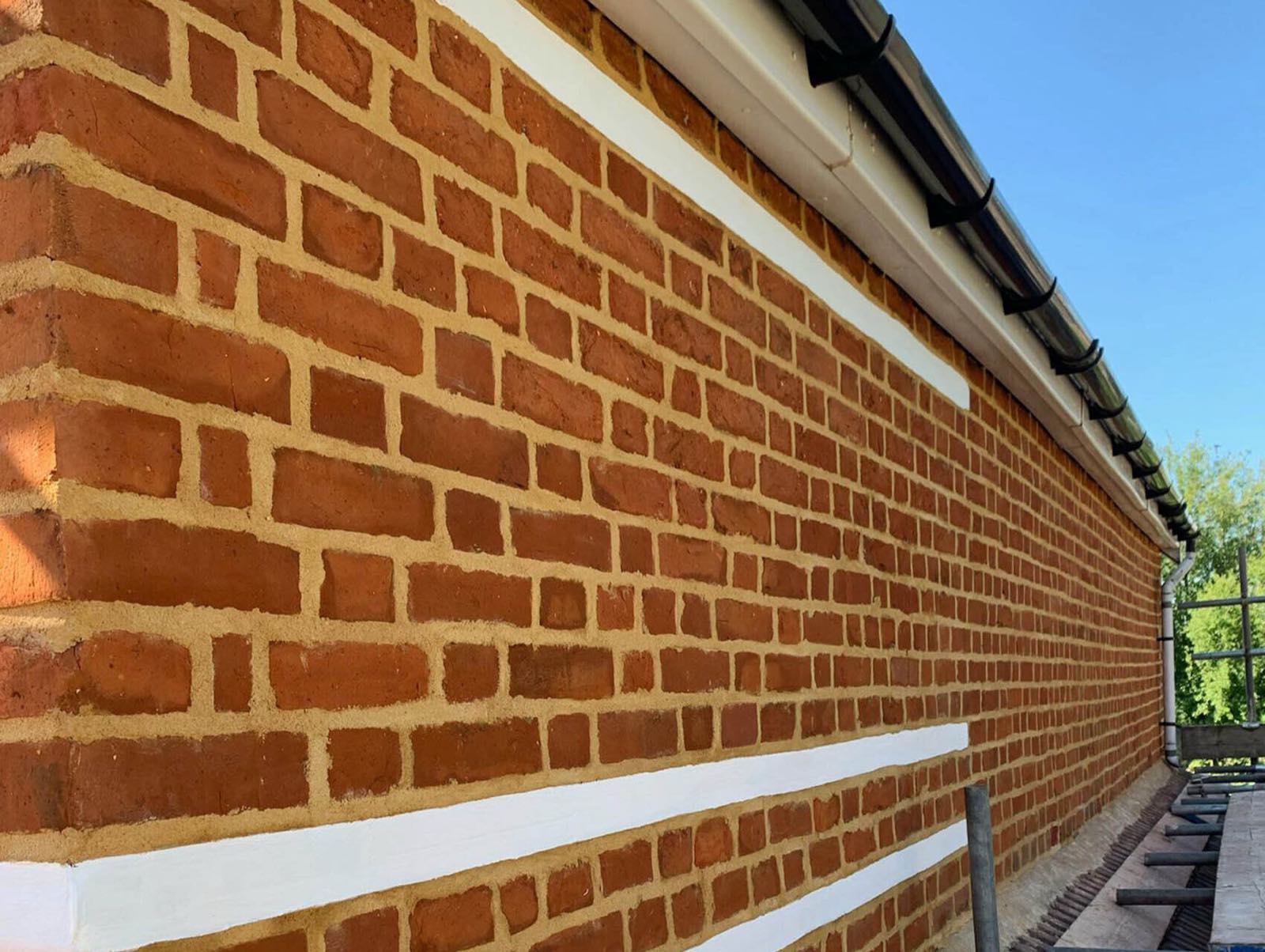
Repointing Costs in London: 2026 Brickwork Price Guide
Updated 12 June 2026|8 min read
Repointing in London costs £40–£90 per square metre in 2026, with lime mortar at the upper end and sand-and-cement at the lower. Repointing a whole house typically runs £2,000–£6,000 or more once scaffold and access are included. Brick replacement, crack stitching and chimney repointing are priced separately. This guide breaks down brickwork repointing prices by job, explains why access drives so much of the cost, and shows when lime mortar is worth the premium.
How much does repointing cost per square metre in London?
Repointing, raking out failed mortar joints and refilling them, is priced per square metre of wall, and in London that means £40–£90 per square metre in 2026. The spread comes down to the mortar used and how difficult the wall is to reach.
Sand-and-cement pointing sits at the lower end and suits many post-war and modern properties. Lime mortar, which is breathable and correct for solid-wall Victorian and Edwardian housing and a requirement in most conservation areas, costs more because it is slower to work and needs protecting as it cures. The table below shows typical rates; access and scaffold are usually priced on top, which we cover further down.
Repointing type
Cost per square metre (2026)
Sand-and-cement pointing
£40 – £60
Lime mortar pointing
£60 – £90
Heritage / specialist lime
£80 – £110
How much does it cost to repoint a whole house?
Repointing a whole house in London costs £2,000–£6,000 or more, and the figure depends on the property size, how many elevations need doing and the access required.
A small terraced house where only the front elevation needs attention can be done for £2,000–£3,500. A larger semi or a house needing front, rear and side elevations, especially over three or four storeys, runs £4,000–£6,000 and beyond once full scaffold is in place. The mortar choice moves the figure too: a full house in lime mortar costs noticeably more than the same area in sand-and-cement.
Most London houses do not need every joint redone at once. A good assessment identifies the elevations and bands of brickwork that are genuinely failing, usually the most weather-exposed faces, and prioritises those, which keeps the cost proportionate to the actual problem rather than repointing sound brickwork unnecessarily.
Why lime mortar costs more than sand-and-cement
On older London housing, lime mortar is not a luxury, it is the correct material, and it explains much of the price difference in repointing quotes.
Solid-wall Victorian and Edwardian properties were built with soft bricks and breathable lime mortar that let moisture escape. Pointing them in hard sand-and-cement traps moisture against the brick faces, which then spall and crack as they try to dry, causing more damage than the original failed joints. Lime mortar stays breathable and moves with the building.
Lime costs more to use because it is slower. Joints are filled in stages, the work is protected from rain and direct sun while it cures over days rather than hours, and the finish requires more skill. In conservation areas, lime is usually a condition of any consent. The extra £20–£30 per square metre over cement is genuine added value on the right property, not a markup, and using the wrong mortar to save money is a false economy that shows within a few winters.
Brick replacement and crack stitching costs
Repointing deals with the mortar, but London brickwork often needs more, and these related jobs are priced separately.
Replacing spalled or cracked bricks, cutting out the damaged brick and bedding in a matching replacement, costs £30–£80 per brick depending on access and how rare the match is. Reclaimed London stocks and gault bricks cost more to source than modern equivalents but are essential for a repair that blends in.
Crack stitching, used where movement has cracked the brickwork, involves bonding stainless-steel helical bars across the crack in raked-out bed joints. Expect £300–£800 per crack for a typical run, more for long or structural cracks that need an engineer's input first. It is a proven, far cheaper alternative to rebuilding, but it should follow a proper diagnosis of why the wall cracked, because stitching a crack without addressing ongoing movement only delays the problem.
Brickwork job
Typical London cost (2026)
Brick replacement (per brick)
£30 – £80
Crack stitching (per crack)
£300 – £800
Chimney repointing
£400 – £1,200
Rebuild small section of wall
£600 – £2,000
Chimney repointing costs
Chimney stacks are the most exposed brickwork on any London house, taking weather from every side, so their mortar fails first and repointing them is a common job.
Repointing a chimney stack costs £400–£1,200, with the range driven almost entirely by access. A stack reachable from a flat-roof extension is at the lower end; the same stack on a four-storey terrace needing a scaffold to the ridge sits at the top. The work usually includes raking out and repointing the brickwork, and it is sensible to attend to the flaunching (the mortar bed around the pots) and the flashing where the stack meets the roof at the same time, since the scaffold is already up.
Neglected chimney pointing is a frequent and underestimated source of damp on upper-floor walls, because water tracks down inside the stack and into the rooms below. Sorting it when the scaffold is up for roof or pointing work is far cheaper than a separate return visit.
Scaffold and access: the hidden cost in repointing
Scaffold and access are the part of a repointing quote people most often overlook, and on upper storeys they can rival the cost of the pointing itself.
For anything above the ground floor, repointing needs a safe working platform. A scaffold to one elevation of a terraced house typically costs £800–£2,000 depending on height and how long it is needed; multiple elevations or a corner plot push that higher. On lower or single-storey work, a tower or staging may suffice for a fraction of the cost.
This is why repointing is best combined with other external work. If the scaffold is up for a re-roof, gutter renewal or rendering, adding repointing to the same visit spreads the access cost across several jobs and can save a four-figure sum. When you compare quotes, check whether scaffold is included, excluded or shown as a provisional sum, because a low headline rate per square metre with access bolted on afterwards can end up dearer than an all-in price.
How to get repointing right and avoid wasting money
Repointing is one of the most cost-effective things you can do for a London house, protecting the structure and lifting the appearance, provided it is done correctly.
Start with the right mortar for the building: lime for solid-wall period properties, cement only where the construction suits it. Repoint only what genuinely needs it rather than every joint, and combine the work with other external jobs while the scaffold is up. Insist on the joints being raked out to a proper depth, at least twice their width, because shallow surface pointing looks the same on day one but fails within a couple of years.
Most of all, address why the mortar failed. Repointing over a leaking gutter, a defective chimney or rising damp treats the symptom and not the cause, and the new pointing will fail the same way. A proper assessment first means you spend once and spend well. VAT at 20% applies on top of the figures here where the contractor is VAT-registered.
Frequently Asked Questions
How much does repointing cost per square metre in London?
Repointing costs £40–£60 per square metre in sand-and-cement and £60–£90 per square metre in lime mortar, with specialist heritage lime reaching £110. Lime is dearer because it is slower to apply and cure, but it is the correct material for solid-wall Victorian and Edwardian properties and a requirement in most conservation areas.
How much does it cost to repoint a whole house in London?
Repointing a whole house typically costs £2,000–£6,000 or more, depending on size, the number of elevations and the access needed. A front-only terraced house can be £2,000–£3,500, while a larger property needing full scaffold to several elevations runs £4,000–£6,000 and beyond. Lime mortar adds to the figure.
Should I use lime or cement mortar for repointing?
Use lime mortar on solid-wall period properties and in conservation areas, and cement only where the construction genuinely suits it. Cement pointing on a soft-brick Victorian wall traps moisture and causes the bricks to spall and crack, creating more damage than it prevents. The extra cost of lime is worthwhile on the right building.
Does repointing a house need scaffold?
Any repointing above the ground floor needs a safe working platform, usually scaffold, which adds £800–£2,000 per elevation depending on height and duration. Ground-floor or single-storey work may only need a tower. Combining repointing with a re-roof or rendering while the scaffold is up spreads the access cost and can save a significant sum.
How long does repointing last?
Repointing done properly, with joints raked out to a sufficient depth and the correct mortar for the building, lasts 50 years or more. Shallow surface pointing or the wrong mortar can fail within a few years, which is why depth and material choice matter more than the headline price. Always address the cause of the original mortar failure first.