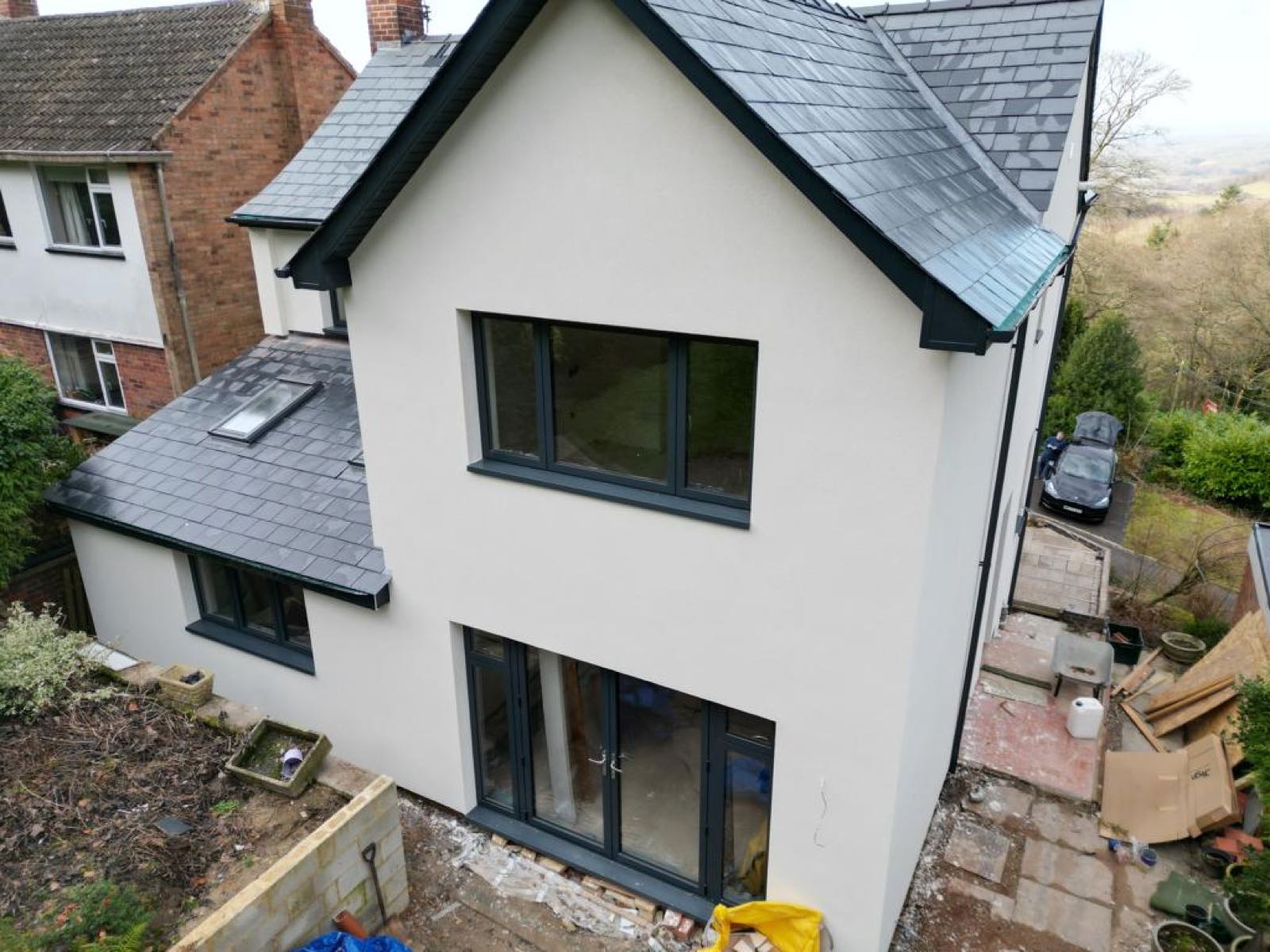
Rendering in London costs £45–£110 per square metre in 2026, depending on the system. Traditional sand-and-cement render runs £45–£70 per square metre, while through-coloured silicone and monocouche renders cost £75–£110. Rendering a terraced rear elevation typically costs £2,000–£4,000, and a whole house £5,000–£12,000 including scaffold. This guide breaks down the cost to render a house by type, covers pebbledash removal, and weighs rendering against simply painting the masonry.
How much does rendering cost per square metre in London?
Rendering is priced per square metre of wall, and the rate depends almost entirely on the system you choose. The cheapest is traditional sand-and-cement render, applied in coats and then painted. The most expensive are modern through-coloured systems where the colour runs through the render itself, so there is no painting to maintain.
In London in 2026, the ranges below are what we see for supplied-and-applied rendering, excluding scaffold and VAT. Through-coloured silicone and monocouche cost more up front but are breathable, flexible, self-coloured and far lower maintenance, which usually makes them the better long-term value on a house you intend to keep.
Render system
Cost per square metre (2026)
Sand-and-cement render (then painted)
£45 – £70
Monocouche (through-coloured)
£75 – £100
Silicone / acrylic thin-coat
£85 – £110
The cost to render a house in London
Translating per-square-metre rates into a real budget depends on how much wall you are rendering and the access needed.
A single terraced rear elevation, the most common rendering job in London, typically measures 30–45 square metres and costs £2,000–£4,000 including a modest scaffold. Rendering the rear of an extension or a single-storey return is less again.
Rendering a whole house, all elevations on a typical terrace or semi, costs £5,000–£12,000 once full scaffold is included. Detached and larger properties, or anything over three storeys, run higher. The system drives the spread: a whole house in painted sand-and-cement sits near the bottom, the same house in silicone thin-coat near the top. As with all external work, the access cost is a major component, which is why rendering pairs efficiently with repointing or roof work while the scaffold is up.
Rendering job
Typical London cost (2026)
Single rear elevation (terrace)
£2,000 – £4,000
Side return / extension
£1,200 – £2,500
Whole house (terrace / semi)
£5,000 – £12,000
Which render system should you choose?
The right render depends on the property, the look you want and how much maintenance you are prepared to do.
Sand-and-cement render is the traditional, lowest-cost option and gives a smooth or textured finish that is then painted with masonry paint. It works, but it is prone to hairline cracking, needs repainting every five to ten years, and on older breathable walls it can trap moisture if applied incorrectly.
Monocouche is a one-coat, through-coloured render: the colour is in the mix, so there is no painting, and it gives a clean, even, slightly textured finish popular on extensions and modern frontages.
Silicone and acrylic thin-coat systems, applied over insulation or a backing coat, are the premium choice: breathable, flexible, self-cleaning to a degree, available in many colours and the most crack-resistant. They cost the most but look the best for the longest with the least upkeep. On a period property, breathability is the key consideration, so a breathable silicone or a lime-based render is usually preferable to a dense cement one.
Pebbledash removal costs
Many London houses carry old pebbledash that owners want gone, either to re-render smooth or to expose the brickwork beneath, and removal is a job in its own right.
Removing pebbledash costs £20–£40 per square metre, depending on how well it is keyed to the wall and what lies underneath. It is labour-intensive, dusty work, and the result is not always predictable: the brickwork below may be sound and attractive, or it may be damaged, previously painted, or made up of poor-quality bricks that were rendered over for good reason in the first place.
Because of that uncertainty, most owners remove pebbledash and re-render rather than expose brick, which means budgeting for removal plus a new render system on top, typically £65–£140 per square metre all-in. We always recommend exposing a small test patch first, so you can see the condition of the brickwork before committing to a strip-and-expose approach that may disappoint.
Scaffold and preparation costs
As with repointing and roofing, scaffold and preparation are a real part of any rendering quote and should never be hidden.
Scaffold for rendering costs £800–£2,500 per elevation depending on height and duration, and rendering needs the scaffold up for longer than a quick repair because the coats must be applied and allowed to cure in stages. Preparation matters too: render is only as good as what it is applied to. Old loose render must come off, the wall may need a stabilising treatment, beads and stop-ends are fitted at edges and openings, and any underlying defects such as damp or cracked brickwork must be put right first.
Skimping on preparation is the most common cause of render failing early, cracking, blowing or coming away from the wall within a few years. A quote that itemises preparation and scaffold separately from the render rate is usually more honest than a single low all-in figure that assumes a perfect substrate.
Should you render or just paint the masonry?
Rendering is not always the answer. If your brickwork is sound and you mainly want a cleaner, fresher look, painting the masonry can achieve much of the effect at a fraction of the cost.
Masonry painting costs £15–£30 per square metre including preparation, against £45–£110 for rendering, and it keeps the brick texture while unifying a patchy or previously painted elevation. The trade-off is maintenance: painted masonry needs redoing every five to ten years, and once brick is painted it is very difficult to return to bare brick.
Rendering makes more sense where the brickwork is poor, mismatched, previously rendered, or where you want a smooth contemporary finish or to add external wall insulation at the same time. Where the brick is attractive and sound, repointing and cleaning, or a breathable masonry paint, is often the smarter spend. We are happy to advise honestly on which route suits your property, because rendering a wall that did not need it is money that could have gone further elsewhere. VAT at 20% applies on top of all figures where the contractor is VAT-registered.
Frequently Asked Questions
How much does it cost to render a house in London?
Rendering a whole house in London costs £5,000–£12,000 including scaffold, depending on the system and property size. A single terraced rear elevation runs £2,000–£4,000. Per square metre, sand-and-cement render is £45–£70 and through-coloured silicone or monocouche £75–£110, with VAT added where the contractor is VAT-registered.
What is the cheapest type of rendering?
Traditional sand-and-cement render is the cheapest at £45–£70 per square metre, then painted with masonry paint. It costs less up front but needs repainting every five to ten years and is more prone to cracking. Through-coloured silicone and monocouche cost more initially but are self-coloured, breathable and far lower maintenance over time.
How much does it cost to remove pebbledash?
Removing pebbledash costs £20–£40 per square metre, and most owners then re-render the wall, bringing the all-in cost to roughly £65–£140 per square metre. Exposing the brickwork beneath is possible but unpredictable, so it is worth removing a small test patch first to check the condition of the brick before committing.
Which render is best for a period property in London?
On older solid-wall properties, choose a breathable system, a breathable silicone render or a lime-based render, rather than a dense sand-and-cement one. Breathable render lets the wall release moisture and avoids the trapped-damp problems that cause cement render to crack and blow on period housing. Conservation areas may also specify the finish.
Should I render or paint my brickwork?
If the brickwork is sound and you want a fresher look, painting the masonry at £15–£30 per square metre is far cheaper than rendering. Render makes more sense where the brick is poor, mismatched or previously rendered, or where you want a smooth modern finish. Be aware that once brick is painted it is very hard to reverse.