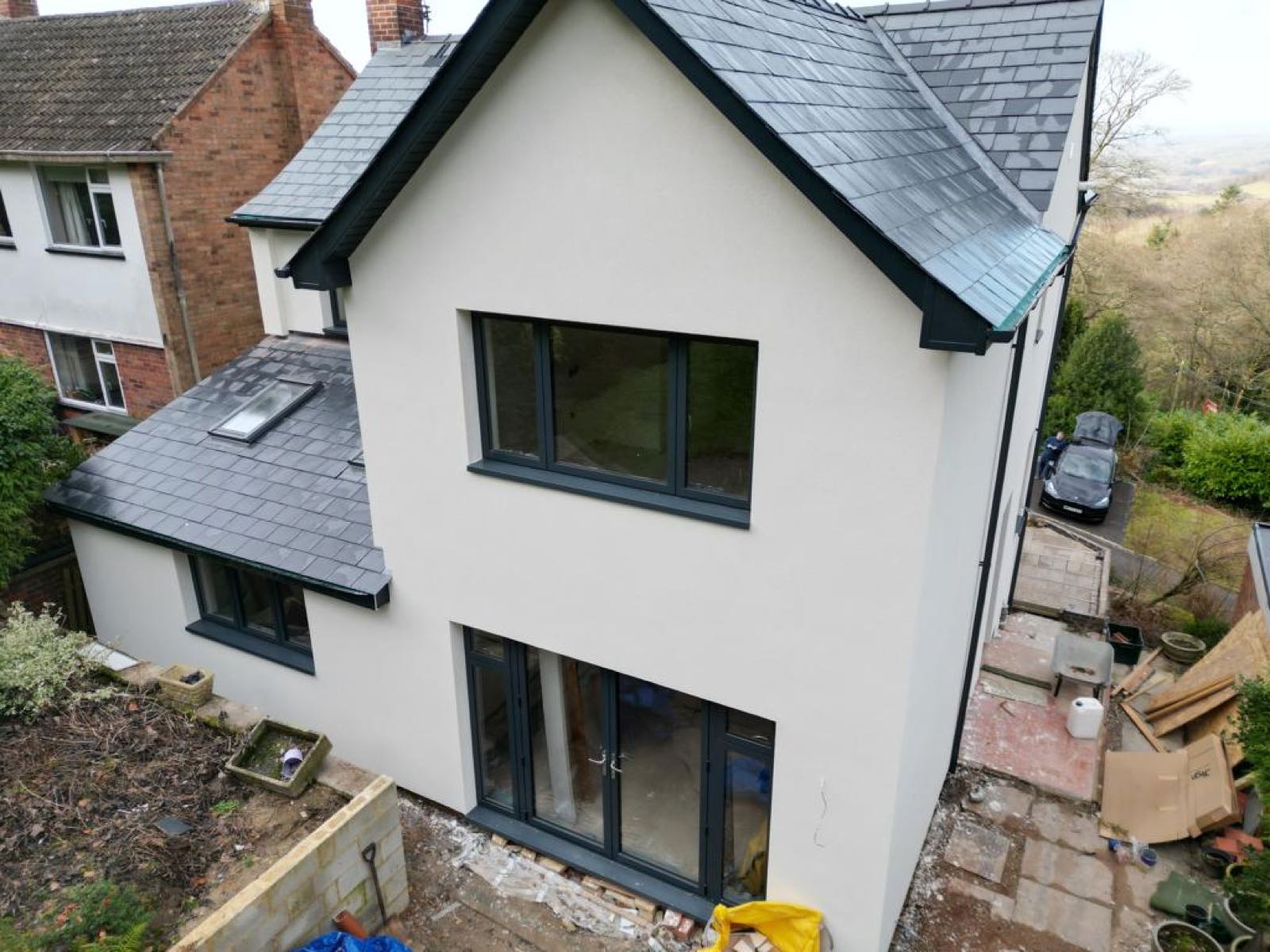
We render and reinstate external walls across London — traditional sand-and-cement, modern through-coloured silicone and monocouche systems, lime render for period solid walls, crack and blown-render repair, pebbledash removal, masonry painting and weatherproofing. As one accountable contractor for landlords, letting agents and homeowners, we prepare backgrounds properly so render bonds and lasts rather than cracking and blowing off within a few winters.
Written Guarantee: 10 Years
|
Average Timeline Range: 3 days - 3 weeks
Render Systems Matched to the Wall
Render fails when the wrong system meets the wrong wall, or when it is applied over a background that was never prepared. We start by assessing what is behind it, because a 1900s Victorian solid-brick terrace in Walthamstow behaves nothing like a cavity-walled 1980s block in Croydon.
Solid walls — the norm in Victorian, Georgian and Edwardian London stock — need a breathable finish. A sealed cement skin over solid brick traps the moisture the wall has always managed to release, so damp rises, salts crystallise and the render blows off in sheets. For these walls we specify lime render or a breathable mineral system that lets the masonry dry, and we say so honestly rather than defaulting to cement because it is quicker to trowel.
For cavity walls, block extensions and sound backgrounds we apply sand-and-cement in correctly proportioned coats with the right beads, stop edges and movement joints, or install modern through-coloured systems. Silicone and monocouche renders carry their colour throughout, need no painting, shrug off London’s driving rain and resist the algae that greens north-facing elevations. The wall dictates the system — not the other way round.
Diagnosing Cracked, Blown and Failing Render
Most rendering work across London is repair, not new application, and a proper repair starts with a diagnosis rather than a trowel. We tap the whole elevation: render that has lost its bond sounds hollow and drummy, and skimming or painting over it simply seals water behind a surface that is already letting go.
Blown render lets rain track behind the coating, where it spreads, freezes and pushes yet more render off the wall each winter — which is why a small hollow patch ignored one autumn becomes a whole gable the next. We hack off failed areas back to a sound edge, treat and prepare the background, re-render to match the existing profile and feather the repair so it does not read as an obvious patch.
Cracks need reading correctly. Fine crazing and hairline shrinkage cracks in otherwise sound render are cut out, filled and over-coated. Diagonal cracks stepping from window corners, or cracks that are widening, can signal structural movement, subsidence near London’s clay soils and mature street trees, or lintel failure — and rendering over live movement only hides it briefly. We investigate the cause first and tell you plainly whether it is cosmetic or structural before quoting a finish.
Pebbledash and Textured Coating Removal
Pebbledash, Tyrolean and old textured coatings are one of the most common requests we get across the London suburbs — Ealing, Enfield, Bromley and the inter-war semis of the outer boroughs are covered in them. They date a property, trap damp against the brickwork and hide masonry that is often perfectly good underneath.
Removal is careful, dusty work and how it is done depends on what is behind it. We strip the coating back, protect windows, boundaries and your neighbours’ side of a party wall, and manage the debris and dust properly rather than blasting it across the street. Once the wall is revealed we assess honestly: sound, attractive stock brick is best repointed and left exposed, which suits a conservation area and lifts the property; tired or previously painted brick is usually better re-rendered in a smooth modern finish.
What we never do is promise a clean brick face before we have seen behind the pebbledash — sometimes the dash was applied precisely because the brick beneath was poor, over-painted or patched. We give you the realistic options after inspection, with a price for each route, so you decide with the facts rather than being talked into the version that suits the contractor.
Masonry Painting and Weatherproofing
A rendered or masonry wall is only weatherproof while its coating is intact, and London’s rain, traffic pollution and frost work steadily against it. Exposed gable ends, chimney stacks and parapets on mansion blocks and end-of-terrace houses take the brunt of driving rain and fail first.
Preparation is the job, not the paint. We clean down algae and atmospheric dirt, treat organic growth at the roots so it does not bleed back through, stabilise chalky and friable surfaces with the correct primer, and fill and repair every defect before a drop of colour goes on. We cut in neatly around windows, copings and the roofline, and we match breathable masonry systems to the substrate — never sealing a damp-prone solid wall under an impermeable film that blisters and peels within a season.
Where weatherproofing rather than appearance is the priority, we apply breathable water-repellent treatments that keep liquid rain out while still letting the wall dry from the inside. This is often the right answer for a persistently damp exposed elevation where full re-rendering is not justified. All external work is quoted with access included — tower, scaffold or rope access as the elevation demands — and carries our written workmanship guarantee.
How to Choose the Right Renderer in London
Rendering is easy to sell and hard to judge until it fails, so choose on evidence rather than the cheapest number. Use these criteria.
First, background assessment. A competent renderer inspects and taps the wall, identifies whether it is solid or cavity, and specifies a system to suit — breathable lime or mineral on period solid walls, silicone or monocouche on sound modern backgrounds. Anyone who quotes a system before looking at the wall is guessing.
Second, a fixed written quote that states the scope of removal, the render system and coats, the beads and movement joints, and access separately. Vague day rates and cash-only pricing are where disputes and mid-job "extras" live.
Third, insurance and compliance. Confirm £5m public liability cover, and check whether your job touches a party wall, needs a scaffold licence over a pavement, or — for a flat — needs freeholder licence-to-alter. A serious contractor raises these before you ask.
Fourth, the honesty test. Ask what happens if they find the brick behind the pebbledash is poor, or a crack turns out to be structural. The right answer is that they stop and tell you, with a priced variation — not that they carry on and render over it. Finally, get the guarantee in writing; ours runs to 10 years on rendering workmanship.
Access, Party Walls and Leasehold Compliance
In London the wall is only half the job — getting to it legally and safely is the other half, and it is where cheap quotes quietly omit the real cost. Most rendering is two or three storeys up, so we itemise scaffold or tower access per elevation, arrange a pavement licence from the borough where the scaffold stands over a public footway, and manage traffic and pedestrian safety on busy terraced streets.
Where your wall is a party wall, or where scaffold needs to sit on a neighbour’s ground or oversail their garden, the Party Wall etc. Act 1996 and basic neighbourly notice come into play. We flag this early so access is agreed rather than disputed halfway up.
Leasehold flats and mansion blocks add another layer. Altering an external wall finish — or its colour — usually needs the freeholder’s or managing agent’s licence-to-alter, and in an estate of matched elevations they will often specify the finish and shade. Conservation areas and listed buildings can require planning or listed-building consent before the external appearance changes at all. We help landlords and letting agents navigate these approvals so the work is compliant and the finish is signed off, not unpicked later at your cost.
Rendering for Landlords, Letting Agents and HMOs
For landlords and letting agents, external walls are risk management. Blown render and failed masonry coatings are the entry point for penetrating damp, and damp complaints now carry real teeth — Awaab’s Law and the Homes (Fitness for Human Habitation) Act mean a tenant’s damp report on a licensed HMO or a managed let cannot sit unaddressed. Sound, breathable external walls are one of the cheapest ways to keep the inside dry and the property lettable.
We work to landlord and agent priorities: minimal disruption to tenants, coordinated access across occupied flats, and a fixed written quote that goes cleanly into a service charge or maintenance budget. Because we are one contractor for the whole envelope, when render failure has already let damp inside we repair the wall, let it dry, then re-plaster and redecorate internally under the same team and the same guarantee — rather than leaving you to chase a second trade for the damage.
For blocks and portfolios we can phase elevations, share dated photographs of condition for your records, and prioritise the exposed gables and parapets that fail first. It is planned maintenance that heads off the far larger damp, timber-rot and disrepair-claim bills that neglected external walls always lead to.
Curing, Aftercare and the Guarantee
Render is a wet, cementitious or lime-based material, and how it cures in the first weeks decides how long it lasts. We work with the weather, not against it: applying in frost gives a weak, friable surface, and applying in the height of a London heatwave dries the render too fast and causes crazing. Where needed we dampen backgrounds, shade elevations and protect fresh render from driving rain and sun so it sets slowly and bonds fully.
Fresh render also carries construction moisture and needs to dry before it is decorated. Silicone and monocouche systems are through-coloured and finished on application, so there is no repaint to wait for; sand-and-cement should be left to dry properly before masonry paint goes on, or the coating traps moisture and blisters. We will tell you the realistic timeline rather than rushing a finish to close the job.
Every external rendering job is covered by a fixed written quote and our written workmanship guarantee of up to 10 years, on top of any manufacturer warranty on a proprietary silicone or monocouche system. Typical projects run from 3 days for repairs and single elevations to around 3 weeks for a full re-render with access — and we hand over aftercare guidance so the finish keeps performing.
What Rendering & External Walls Costs in London (2026)
Traditional finish, painted after; well suited to matching existing elevations
Through-coloured silicone render system
£70–£95 per m²
Colour throughout, never repainted; sheds rain and resists algae
Monocouche render (one-coat, scraped finish)
£65–£90 per m²
Through-coloured, ideal on block and new extensions
Lime render (breathable, period solid walls)
£75–£110 per m²
For Victorian and Georgian solid brick that must breathe
Crack and blown-render patch repair
from £250 per repair
Hacked back to a sound edge and matched in; priced after tapping the wall
Pebbledash / textured coating removal
£25–£45 per m²
Careful strip-back, then repoint the brick or re-render smooth
Breathable masonry paint (clean, prep, 2 coats)
£15–£30 per m²
Preparation is most of the cost; colour is the quick part
Scaffold / tower access per elevation
£600–£1,500 per elevation
Depends on height, pavement licence and traffic-management needs
Guide prices for Greater London in 2026, ex-VAT and excluding access — every wall is quoted fixed after inspection. Scaffold, party wall and licence-to-alter costs are itemised separately so nothing is buried.
Insider Tips Before You Commit
Tap the whole wall with a knuckle or coin before agreeing any repair — a hollow, drummy sound means the render has lost its bond and needs hacking off, not skimming over.
On a Victorian or Georgian solid-brick wall insist on a breathable lime or mineral render; a sealed cement skin traps rising and penetrating damp and blows off within a few winters.
Never let anyone render over a live crack — get diagonal or stepped cracks investigated for movement first, because rendering only hides structural cracking for a season.
Ask for through-coloured silicone or monocouche if you want to skip the repainting cycle; the higher upfront cost is usually cheaper than repainting sand-and-cement every 5–7 years.
Check the forecast — render needs to cure slowly, so avoid application in frost or in the height of a heatwave, both of which cause crazing and weak bonds.
Get the guttering, flashings and copings sorted before rendering; new render over an overflowing gutter or failed coping will stain and fail exactly where the water lands.
In a conservation area or on a listed building, confirm whether planning consent or listed-building consent is needed before you change the external finish or colour.
How Not to Get Scammed
London has more rogue traders than any other UK market. These are the warning signs we see most often — and exactly what to do when you spot them.
Quotes to skim or paint straight over cracked, hollow-sounding render without hacking off the failed areas first.
Insist the drummy render is tapped and removed back to a sound edge; get the scope of removal written into the quote before work starts.
Cash-only price, no written quote and no VAT invoice, often with a large deposit demanded up front.
Only deal with a contractor who gives a fixed written quote and proper invoice; keep deposits modest and pay the balance on completion, never the full sum in advance.
Cold-caller claims your render or roof is dangerous and pressures you to sign today for a discounted price.
Refuse to decide on the spot; get at least two independent inspections and quotes, and never buy under time pressure at the door.
Defaults every solid period wall to cheap cement render because it is faster, ignoring breathability.
Ask what background they have assessed and why; a genuine renderer will specify lime or a breathable mineral system on a solid wall and explain the reason.
"We’ve found more problems" appears mid-job with a demand for extra cash to keep going.
Agree a written variation with a price before any extra work proceeds; photograph the wall and pause rather than pay under pressure.
Cannot show public liability insurance and uses uninsured labour working at height over your neighbours.
Ask to see the £5m public liability cover and confirm scaffold and party wall arrangements before anyone goes up.
Standards & Compliance
Every project is delivered to current British Standards and Building Regulations, with works documented for building control and HMO licensing sign-off — backed by fixed written quotes and a written guarantee.
BRITISH STANDARDS · BUILDING REGS COMPLIANT · FD30/FD60 FIRE DOORSETS · BS 5839-6 ALARMS · WRITTEN GUARANTEE
Frequently Asked Questions (FAQ)
How much does rendering cost per square metre in London?
Rendering typically costs £45–£90 per square metre depending on the system and access: traditional sand-and-cement at the lower end, through-coloured silicone and monocouche systems at the upper, with breathable lime render for period solid walls a little higher again. Access — scaffold or towers — is itemised separately, and repairs to cracked or blown areas are priced per job after inspection. We quote fixed prices, not rough day rates.
Why does render keep cracking and falling off my wall?
Usually because it was applied over a poorly prepared or unsuitable background, in the wrong system, or over live structural movement. On older London solid walls, cement render that cannot breathe traps damp and blows off in sheets. We tap and hack back failed render to a sound edge, prepare and bond the background properly, and match the right system — breathable on solid walls — so the repair does not simply blow again next winter.
Should I use silicone, monocouche or sand-and-cement render?
Sand-and-cement is the traditional render, painted after application and well suited to repairs and matching existing work. Through-coloured silicone and monocouche renders carry their colour throughout, so they never need repainting, and they are more breathable and far better at shedding rain and resisting algae. Silicone costs more up front but saves the 5–7 year repainting cycle. On a period solid wall, though, we would usually specify breathable lime over any of these.
Can you remove pebbledash from my London house?
Yes — pebbledash and dated textured coatings are among our most common requests, especially on the inter-war semis across the outer boroughs. We strip the coating back carefully, protect windows and boundaries, then assess the brickwork underneath. Depending on its condition and the look you want, we either repoint and leave the brick exposed or re-render in a smooth modern finish. We give you a realistic option after inspection rather than promising a clean brick face unseen.
Do I need permission to render or repaint my external walls?
Often, yes. In a conservation area or on a listed building, changing the external finish or colour can need planning or listed-building consent. If you own a leasehold flat or a property in a managed block, altering the external appearance usually needs the freeholder’s or managing agent’s licence-to-alter, and matched estates may specify the finish. We flag these approvals for landlords, agents and homeowners before work starts so nothing has to be unpicked later.
Will rendering stop damp on my wall?
The right render on the right wall helps significantly, but only if the cause is addressed first. On a solid period wall, a breathable lime or mineral render keeps rain out while letting the masonry dry; a sealed cement skin often makes damp worse by trapping it. We also check that guttering, flashings and copings are not the real source, because new render over an overflowing gutter or failed coping will stain and fail exactly where the water lands.
How long does an external rendering job take?
Most projects run from around 3 days for repairs and single elevations to about 3 weeks for a full re-render with scaffold access, depending on the property size, weather and the system used. Render also needs to cure slowly and, for painted systems, dry before decorating — so we build realistic timing into the plan rather than rushing a finish that then crazes or blisters. We confirm the schedule in your fixed written quote.
Can you repair the damp damage inside as well as the render outside?
Yes — that single-contractor approach is a core reason clients use us. When failed render has let penetrating damp through, we repair and re-render the wall, let it dry, then re-plaster and redecorate the affected area inside under the same team and the same guarantee. You are not left fixing the outside and chasing a separate trade for the damage indoors, which is exactly how so many damp repairs end up recurring.
Are you insured, and do you guarantee the work?
Yes. We carry £5m public liability insurance, work to the relevant British Standards and Building Regulations, and every external rendering job is covered by a fixed written quote and our written workmanship guarantee of up to 10 years — on top of any manufacturer warranty on a proprietary silicone or monocouche system. Scaffold, party wall and access arrangements are confirmed before anyone works at height over your property or your neighbours’.
Our Written Guarantee
We provide a fully comprehensive, written 10-Year guarantee covering all structural reinstatement, moisture boundaries, and finish coatings.
100% Insurance Protected
Request an Elite Assessment
Secure a rapid, high-precision physical survey by our team. Fill out our briefing engine instantly.
We deliver rendering & external walls across all 33 London boroughs — from the City and Central London out to the M25. Tap any marker to see coverage and local postcodes.