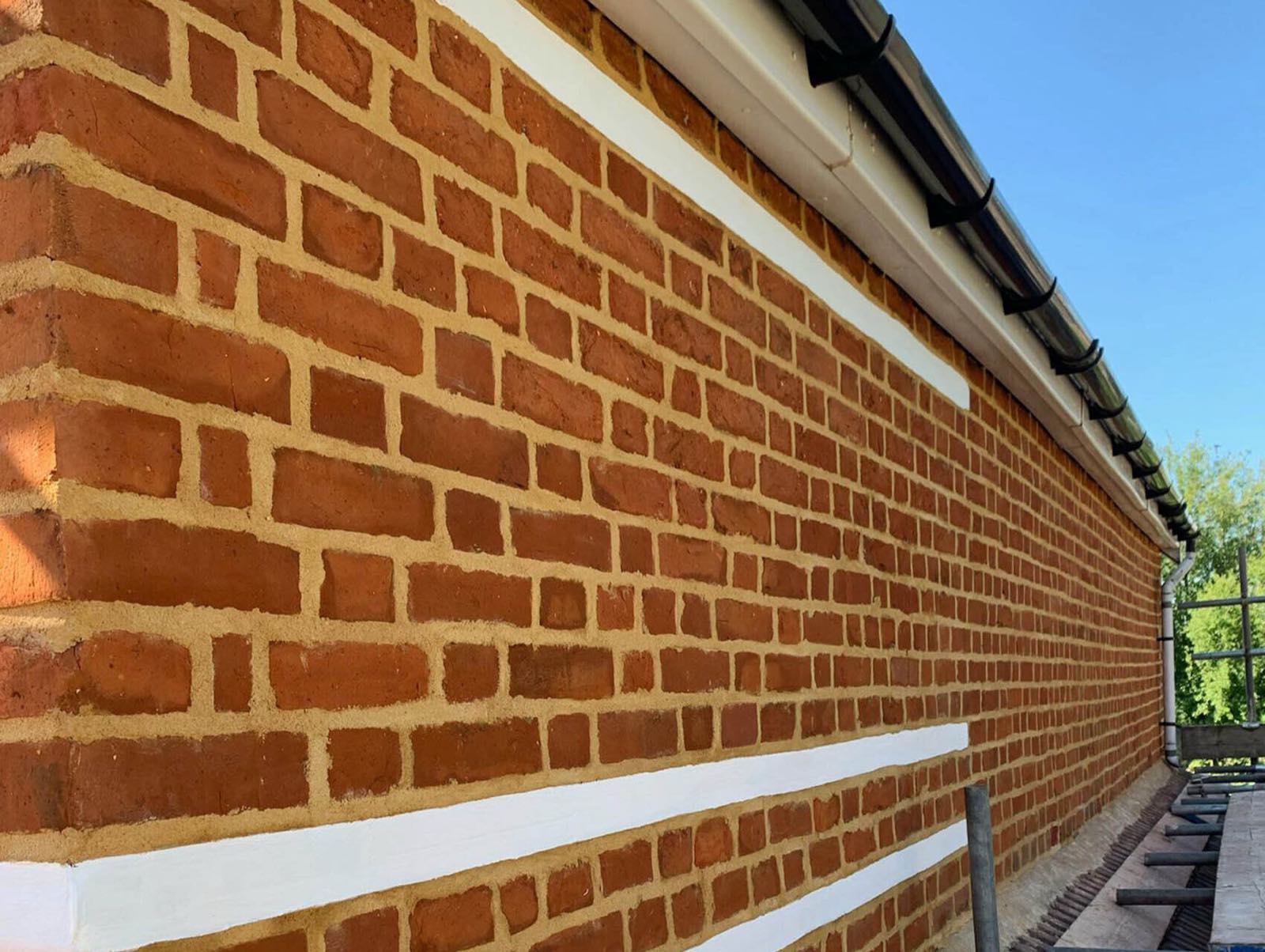
We carry out brickwork and repointing across London for landlords, letting agents and homeowners: raking out and repointing failed joints, replacing spalled bricks, stitching cracks, renewing airbricks and rebuilding parapets and chimneys. One contractor matches your London stock brick and mortar — lime on period fabric, cement where correct — so repairs read as original wall rather than patch, backed by a fixed written quote and a 10-year guarantee.
Written Guarantee: 10 Years
|
Average Timeline Range: 2 days - 3 weeks
Repointing Done to Last a Generation
Repointing is the most commonly botched trade in London, and the damage is usually invisible until it isn’t. Joints raked too shallow, the wrong mortar, a smeared overband finish and a buttered-on cement skim are the giveaways — all of them trap water in the wall rather than shedding it, accelerating the very decay they were meant to stop. Pointing is the brickwork’s rain coat: get it wrong and damp follows within a season, blowing plaster on the inside face and spalling bricks on the outside.
We rake out failed joints to a proper depth — typically at least twice their width — by hand or with controlled tools that don’t chew the brick arrises. Joints are then flushed clean, dampened down and filled in lifts with mortar mixed to match the original in colour, sand, texture and strength. The finished profile — weatherstruck, bucket-handle or flush — is chosen to suit the elevation and its exposure, not imposed as a one-size template across every wall.
We work on Victorian, Georgian and Edwardian terraces, mansion blocks and ex-local authority stock across Central and Greater London, from Islington and Hackney to Wandsworth and Ealing. We’re also honest about scope: many walls need only localised repair to the weathered south and west elevations rather than a full four-sided repoint, and we’ll tell you when that’s the case rather than pricing the whole house.
Lime Mortar for Period and Listed Buildings
Most of London’s older housing was built with soft, hand-made bricks and lime mortar, a deliberately breathable system that lets moisture move through the joint and evaporate away from the brick. Repointing such a wall in hard modern cement is actively damaging: the cement is stronger and less permeable than the brick, so trapped moisture is forced out through the brick faces instead of the joints. Those faces then freeze, spall and crumble — which is why you so often see eroded, pitted brick fronts sitting beside immaculate grey cement joints.
For period and listed brickwork we specify lime mortar, usually a natural hydraulic lime, matched in mix, aggregate and finish to what survives on the wall. Lime cures more slowly and can’t be worked in frost, so we programme this work for the milder months and protect green pointing from rain and cold while it carbonates.
Within the capital’s many conservation areas — and on any listed building — the mortar specification is not optional. We prepare the spec and sample panels that conservation officers and listed building consent require, and sequence the works around approval timescales so you don’t start illegally. Getting the mortar right isn’t nostalgia: it’s the difference between a wall that breathes for another century and one whose bricks need cutting out in twenty years.
Brick Replacement, Crack Stitching and Structural Repairs
Beyond pointing, we handle the brickwork repairs London’s ageing stock routinely needs. Spalled, frost-damaged and over-cleaned bricks are cut out individually and replaced with reclaimed or matched London stock, bonded in and pointed so the repair disappears into the wall rather than announcing itself as a patch. Sourcing the right yellow London stock, red rubber or gault to match a specific street matters — a wrong brick is as obvious as a wrong tooth.
Stepped or diagonal cracking — commonly caused by thermal movement, lintel failure, corroded wall ties or historic foundation movement — is repaired with helical crack-stitching bars bedded into raked joints. This restores tensile strength across the crack without dismantling and rebuilding the wall, and it’s far less disruptive for an occupied flat or let property.
We also renew blocked or painted-over airbricks to keep subfloor voids ventilated and free of damp and rot, rebuild leaning or cracked parapets and chimney stacks, replace failed lintels, and re-bed copings and cills with a proper damp-proof course. Where movement looks active, we say so plainly and recommend monitoring or a structural engineer before any cosmetic repair — filling a live crack only hides it until it reopens, usually just after the decorators leave.
How to Choose a London Brickwork Contractor
Repointing looks simple, which is exactly why so much of it is done badly — the failures are hidden inside the wall and only surface as damp a year later, long after the cash-in-hand trader has moved on. Use these criteria to separate a proper mason from a smearer.
First, judge the quote. A good one names the mortar (lime or cement, and the mix), the rake-out depth, the joint profile and how spalled bricks will be matched. A single lump sum with none of that detail is a warning sign. Second, ask to see the process: on a small area you should see clean, deep joints raked out before anything is filled — never new mortar buttered straight over old.
Third, check period competence. If your home is a pre-1919 terrace, the contractor should reach for lime without prompting and be able to explain why cement damages soft brick. Fourth, insist on a sample panel for approval before the full elevation, and get the joint profile and colour signed off in daylight. Fifth, confirm the paperwork that protects you: £5m public liability insurance, a fixed written quote, a proper VAT invoice and a written guarantee — ours runs to 10 years.
Finally, weigh access honestly. For a full-height London terrace or mansion-block elevation, scaffold is safer and gives a better finish than a wobble on ladders, and a contractor who prices it properly rather than skipping it is telling you they intend to do the job right.
Brickwork, Damp and Why Pointing Is the First Line of Defence
Most of the ‘rising damp’ blamed on old London houses is nothing of the sort — it’s penetrating damp getting in through failed pointing, cracked render, bridged cavities and defective parapet or chimney details, then showing up on the inside face as tide marks, blown plaster and mould. Fix the outside of the wall and the inside usually dries itself.
Brickwork sheds water through a chain of details working together: sound pointing, an intact damp-proof course, weathered cills and copings that throw water clear, and airbricks keeping the subfloor void ventilated. When one link fails, water finds the path. Blocked airbricks — often painted over during a decorating job — starve the void of air and invite rot into timber floors. A leaning parapet or cracked chimney lets water down the wall head. Perished pointing on an exposed gable soaks up rain like a sponge.
Because we also run a leak damage repair service across London, we see the inside consequences of bad brickwork constantly — the stained bedroom wall in a Clapham conversion traced back to a split parapet gutter three metres up. That’s why we assess the whole wall, not just the joint in front of us, and why we’re wary of quick ‘damp-proofing’ injections and waterproof coatings that treat symptoms while the real defect keeps letting water in.
Working With Landlords, Letting Agents and Leaseholders
A large share of our brickwork goes through landlords, letting agents and leaseholders, and the practical hurdles matter as much as the trowel work. In a leasehold flat or mansion block, external walls are almost always demised to the freeholder, so repointing, parapet and chimney works usually need the freeholder or managing agent’s involvement and, for anything structural, a licence to alter. We’re used to producing the specification and method statement managing agents ask for before granting access to shared scaffold or communal elevations.
For letting agents and portfolio landlords we work to fixed written quotes that map cleanly onto a works order, close each job with dated before-and-after photographs, and issue VAT invoices that match the quote line for line — the evidence trail a landlord statement or service-charge file needs. Where brickwork sits above an HMO or an occupied let, we programme around tenants and give proper access notice.
Access and logistics are half the London job: controlled parking zones, scaffold licences from the borough, party wall considerations where a stack or parapet sits on a shared boundary, and neighbour agreement for scaffold on a terraced elevation. We handle those conversations rather than leaving them on your desk, and we carry £5m public liability insurance with certificates issued straight to your compliance file.
Timelines, Guarantee and What to Expect On Site
Most brickwork jobs run between two days and three weeks depending on scope and access. A localised repoint of one weathered elevation or a handful of spalled bricks is typically a two-to-four-day job; a full-height terrace repoint, a chimney rebuild or crack-stitching with parapet works sits toward the upper end, with scaffold erection and lime cure times built into the programme. Lime mortar in particular can’t be rushed — it needs protecting and time to carbonate, and we’d rather quote an honest three weeks than a fictional three days that ends in failed pointing.
On site, expect protection to windows, paths and neighbouring surfaces, dust control while raking out, and a tidy handover with the joints matched and the area swept. We agree access, parking and scaffold arrangements in writing before we start so there are no day-one surprises about where the tower goes or which permit is needed.
Every brickwork job is backed by a fixed written quote up front and a 10-year written guarantee on our workmanship — the confidence that comes from raking out to depth and using the correct mortar rather than cheap overbanding. If a joint we’ve repointed fails within that period through our workmanship, we put it right. Call 020 3962 0455 for a wall inspection and a fixed price; we quote after seeing the brickwork, never by guessing from a photo.
What Brickwork & Repointing Costs in London (2026)
Item
Typical London Price
Notes
Repointing — cement mortar
£40–£65 per m2
Rake out to depth, repoint and match joint profile; ground-floor or tower-access elevations.
Repointing — natural hydraulic lime
£60–£90 per m2
Period and conservation-area walls; includes mortar matching and slower cure.
Spalled brick replacement
£30–£60 per brick
Cut out and rebond with reclaimed or matched London stock; per-brick on small numbers.
Helical crack stitching
£350–£900 per crack
Bars bedded into raked joints across a stepped or diagonal crack; depends on length and runs.
Airbrick renewal
£60–£120 per unit
Clear or replace blocked/painted-over airbricks to keep subfloor voids ventilated.
Chimney stack rebuild / repoint
£900–£3,500 per stack
Re-bed pots, repoint or partial rebuild; scaffold and flaunching extra where needed.
Parapet or coping repair
£450–£2,500 per run
Rebuild leaning parapet, re-bed copings and DPC; upper end where lead and scaffold apply.
Access scaffold
£800–£2,500 per elevation
Full-height terrace or mansion-block elevation; tower or ladder access is cheaper on low work.
Indicative Greater London 2026 prices. Every wall is quoted fixed in writing after inspection — access, scaffold, mortar type and brick matching move the final figure.
Insider Tips Before You Commit
Insist joints are raked out to at least twice their width — shallow 10mm scrapes filled with a cement skim trap water and fail within a season.
On any pre-1919 London terrace, assume lime mortar until proven otherwise; a magnet won’t tell you, but a soft, sandy joint that crumbles between finger and thumb usually will.
Ask for a sample panel of a square metre before the full elevation is pointed, so you can approve the colour and joint profile in daylight before committing.
Check the finish matches the elevation — weatherstruck sheds rain on exposed fronts, bucket-handle suits softer stock; a flush cement smear over the brick faces is a red flag.
Book brickwork for spring through early autumn — lime mortar must not be worked in frost, and green lime caught by an early London frost carbonates poorly and fails.
Photograph stepped cracks with a coin for scale and date them; a crack that hasn’t widened over two seasons is usually thermal, not subsidence.
In a conservation area or on a listed building, confirm the mortar spec and get consent before a trowel touches the wall — unauthorised cement pointing can force a costly reversal.
Don’t let a decorator paint or ‘waterproof’ old brickwork with sealant — masonry needs to breathe, and film-forming coatings drive damp inward and blow the brick faces.
How Not to Get Scammed
London has more rogue traders than any other UK market. These are the warning signs we see most often — and exactly what to do when you spot them.
Doorstep trader says your pointing is ‘dangerous’ and wants a cash deposit to start today.
Never pay cash on the doorstep or agree same-day. Get a written, itemised quote, check the wall yourself, and take a second opinion before parting with money.
Quote is a single lump sum with no mortar type, joint depth or brick-matching detail specified.
Ask for a written spec: mortar mix (lime or cement), rake-out depth, joint profile and how spalled bricks are matched. Vague quotes hide cheap cement smearing.
They ‘repoint’ by buttering new cement over the existing joints without raking anything out.
Inspect a test area — you should see clean, deep joints before filling. Overband smearing traps damp and peels off; refuse to pay for it and photograph the work.
Cement mortar pushed hard on a soft-brick Victorian or Georgian wall as ‘stronger and longer lasting’.
On period stock the mortar must be weaker than the brick. Insist on natural hydraulic lime matched to the original — hard cement spalls the brick faces within years.
Mid-job the trader ‘finds’ major structural cracking or subsidence and demands more money to continue.
Stop and get an independent structural engineer to assess before authorising extra work. Genuine movement needs monitoring, not a rushed upsell.
No VAT invoice, no written guarantee, no public liability insurance and no company address.
Ask for the certificate of £5m public liability, a company address and a written guarantee before booking. No paperwork means no recourse when pointing fails.
Standards & Compliance
Every project is delivered to current British Standards and Building Regulations, with works documented for building control and HMO licensing sign-off — backed by fixed written quotes and a written guarantee.
BRITISH STANDARDS · BUILDING REGS COMPLIANT · FD30/FD60 FIRE DOORSETS · BS 5839-6 ALARMS · WRITTEN GUARANTEE
Frequently Asked Questions (FAQ)
How much does repointing cost per square metre in London?
Repointing typically costs £40–£90 per square metre depending on access, the condition of the joints and whether lime or cement mortar is specified — lime work and full-height scaffolded elevations sit at the upper end, around £60–£90. Small localised repairs are priced per job. We quote fixed prices in writing after inspecting the wall, never by guessing from a photo.
Should my Victorian or Georgian house be repointed in lime or cement mortar?
Almost always lime. Period London brickwork was built with soft bricks and lime mortar designed to breathe; repointing in hard cement forces moisture out through the brick faces, causing them to spall and crumble. We match a natural hydraulic lime mortar to the original mix and finish — which is also what conservation areas and listed building consents require in the capital.
Can you match the existing brick and mortar colour?
Yes — matching is the whole point of a good repair. We source reclaimed or matched London stock bricks for replacements and mix mortar to the original colour, sand and texture, finishing the joint profile to suit the elevation. On larger jobs we produce a sample panel of around a square metre for you to approve in daylight before committing to the full wall.
Do cracks in brickwork mean subsidence?
Not always — much cracking is thermal movement, lintel failure, corroded wall ties or old brittle pointing rather than subsidence. We assess the pattern and width, and where movement looks active we recommend monitoring or a structural engineer before any repair. Stable cracks are repaired with helical stitching bars; we never cosmetically fill a live crack just to hide it.
How long does a repointing job take?
Most brickwork jobs run between two days and three weeks. A localised repoint of one elevation or a few spalled bricks is usually two to four days; a full-height terrace repoint, chimney rebuild or crack-stitching with parapet works sits toward three weeks once scaffold and lime cure times are included. Lime mortar can’t be rushed, so we programme it honestly rather than promising an unrealistic finish.
My flat is leasehold — can you still repoint the outside wall?
Usually yes, but external walls in a leasehold flat or mansion block are almost always the freeholder’s responsibility, so the work needs the freeholder or managing agent’s consent and, for structural elements, a licence to alter. We prepare the specification and method statement managing agents ask for and help arrange access to shared scaffold or communal elevations.
Will repointing fix the damp inside my house?
Often, yes. A lot of ‘rising damp’ in London houses is actually penetrating damp getting in through failed pointing, cracked cills, leaning parapets or defective chimney details. Sound repointing plus repairs to those details usually lets the wall shed water again and the inside dries out — far more reliably than chemical injection or waterproof coatings, which tend to treat symptoms while the real defect keeps letting water through.
Do you do chimney and parapet work as well as pointing?
Yes. Alongside repointing we rebuild and repoint chimney stacks, re-bed pots and flaunching, rebuild leaning or cracked parapets, re-bed copings with a proper damp-proof course, replace failed lintels and cills, and renew blocked airbricks. These upper details cause a large share of the ceiling leaks we also repair, so we assess the whole wall head rather than the joint in front of us.
What guarantee do you offer on brickwork and repointing?
Ten years’ written guarantee on our workmanship, backed by a fixed written quote agreed before we start. That confidence comes from doing the job properly — raking joints out to depth, using mortar matched in strength and finish, and never overbanding cement across the brick faces. We also hold £5m public liability insurance, with certificates available for your records.
Do you need scaffolding, and who arranges it?
For low-level work a tower or ladder access is fine, but a full-height London terrace or mansion-block elevation is safer and better finished from scaffold, and a good repoint depends on steady, close access to every joint. We arrange the scaffold and any borough scaffold licence, agree parking within controlled zones, and handle neighbour access on shared terraced elevations — all confirmed in writing before we start.
Our Written Guarantee
We provide a fully comprehensive, written 10-Year guarantee covering all structural reinstatement, moisture boundaries, and finish coatings.
100% Insurance Protected
Request an Elite Assessment
Secure a rapid, high-precision physical survey by our team. Fill out our briefing engine instantly.
We deliver brickwork & repointing across all 33 London boroughs — from the City and Central London out to the M25. Tap any marker to see coverage and local postcodes.