Rising Damp vs Penetrating Damp vs Condensation: How to Tell the Difference
Updated 12 June 2026|9 min read
There are three common types of damp and they are easy to confuse. Rising damp shows as a tide mark up to about a metre on ground-floor walls, often with a white salt bloom. Penetrating damp appears as a localised patch that worsens after rain, usually traced to an external defect. Condensation is black mould on cold surfaces, windows and behind furniture, driven by moisture in the air. Each needs a completely different fix, and getting the diagnosis right is what saves you money.
Why getting the diagnosis right matters
Damp is the single most misdiagnosed problem in London housing, and the cost of getting it wrong is high. A chemical damp-proof course injected into a wall that was actually suffering from condensation does nothing for the mould, because the moisture was never coming up from the ground. A vendor of tanking slurry has no incentive to tell you your real problem is a cracked gutter overflowing onto the wall outside.
The three types behave differently because they have different sources. Rising damp draws ground moisture up through masonry by capillary action. Penetrating damp pushes water in horizontally through a defect in the building fabric. Condensation forms when warm, moisture-laden indoor air meets a cold surface and the water vapour turns back to liquid. Same symptom on the wall, three entirely separate mechanisms.
Before you spend a penny on treatment, the question is not how do I get rid of this damp but which kind of damp is this. The rest of this guide gives you the signs that tell them apart, and the right remedy for each.
How to identify rising damp
Rising damp is moisture travelling up from the ground through the base of a wall. It is genuinely less common than the damp-proofing industry implies, but it does occur, particularly in older properties where the original damp-proof course has failed, been bridged by a raised path or flowerbed, or never existed.
The classic sign is a tide mark: a horizontal, slightly ragged line of staining that rises to roughly half a metre to a metre above the skirting and no higher. Capillary action cannot lift water much beyond that, so damp appearing at first-floor level is almost never rising damp. Below the tide line you often see a white, fluffy or crystalline bloom on the plaster or brick. These are hygroscopic salts, nitrates and chlorides, carried up from the ground and left behind as the water evaporates. Skirting boards may rot, plaster may bubble and wallpaper peels away from the bottom up.
Rising damp affects ground-floor walls only and is consistent rather than weather-dependent: it does not come and go with the rain. If your problem is upstairs, follows a downpour, or sits in a patch rather than a band along the bottom of the wall, it is not rising damp.
How to identify penetrating damp
Penetrating damp is water finding its way in horizontally through a fault in the building fabric. Unlike rising damp it can appear at any height, on any floor, wherever the defect happens to be, and it is strongly linked to the weather.
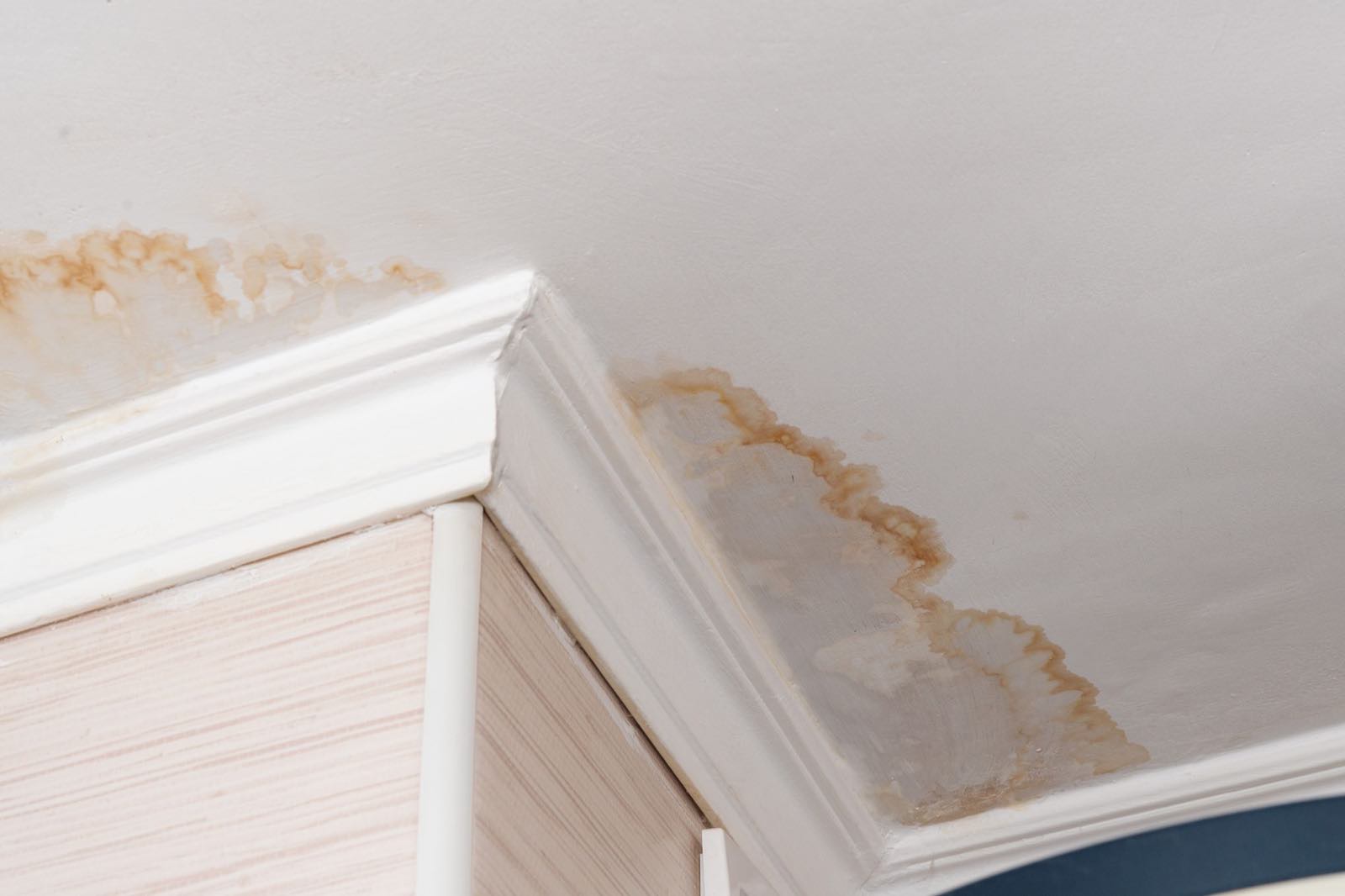
The tell-tale sign is a localised, often well-defined patch that darkens noticeably after rain and dries out in settled weather. Internally it shows as a damp stain, sometimes ringed with a tide-mark edge, blown plaster or peeling paint directly behind the source. The cause is nearly always traceable to something outside: a cracked or slipped roof tile, a blocked or split gutter, a leaking downpipe, perished pointing, failed render, a defective window seal, or a flat roof or parapet that has given up. Solid single-skin walls and exposed elevations that take the brunt of driving rain are particularly prone.
The diagnostic discipline is to follow the water. If a damp patch on an upstairs ceiling sits below a valley gutter, or a stain on a chimney breast appears after wind-driven rain, the defect is upstream of it. Penetrating damp is the type that most often turns out, on closer inspection, to be a genuine leak, which is where investigation matters most.
How to identify condensation and mould
Condensation is by far the most common form of damp in occupied homes, and the one most often mistaken for the other two. It is not water coming in from outside or up from the ground; it is moisture generated inside the home, cooking, showering, drying clothes, breathing, condensing onto cold surfaces.
The signature is black spotty mould, often appearing as clusters of dark speckles, on cold spots: window reveals and frames, the corners of rooms, north-facing external walls, behind wardrobes and sofas pushed against cold walls, and in unheated or poorly ventilated rooms. You will see streaming windows in the morning, a musty smell, and mould on soft furnishings, leather and even ceilings. It is worst in winter, when surfaces are coldest and windows stay shut.
Condensation is a balance problem between moisture production, ventilation, heating and insulation. Lifestyle factors make it worse, drying washing on radiators, no extractor fans, trickle vents taped over, but the underlying issue is usually cold surfaces and too little air movement. If the mould is black and spotty, on cold surfaces, and worse in winter and behind furniture, you are looking at condensation, not rising or penetrating damp.
The three types side by side
When you are standing in front of a damp wall, the fastest way to narrow it down is to check the signs, the likely cause and the correct fix together. The table below sets out the differences at a glance. Use it as a first filter, then confirm with a proper inspection before committing to any treatment.
Type
Key signs
Cause
Correct fix
Rising damp
Tide mark up to ~1m, salt bloom low on wall, ground floor only, weather-independent
Failed, bridged or absent damp-proof course; ground moisture rising by capillary action
New chemical DPC and/or tanking, remove bridging, replace contaminated plaster
Penetrating damp
Localised patch at any height, darkens after rain, dries in fair weather
Repair the external defect / fix the leak, then dry out and make good
Condensation
Black spotty mould on cold surfaces and windows, musty smell, worse in winter and behind furniture
Indoor moisture meeting cold surfaces; poor ventilation, heating and insulation
Improve ventilation and extraction, insulation and heating; manage moisture-producing activities
The right fix for each type
Because the mechanisms differ, the cures share almost nothing in common.
For genuine rising damp, the remedy is to re-establish a barrier against ground moisture. That usually means a new chemical damp-proof course injected into the base of the wall, removing anything bridging the existing DPC such as a high path or piled-up soil, and replacing salt-contaminated plaster with a renovating or tanking system. Replastering matters because the old plaster holds hygroscopic salts that keep attracting moisture even after the wall dries.
For penetrating damp, do not touch the inside until you have fixed the outside. Repair the cracked tile, clear or replace the gutter, repoint the brickwork, renew the failed seal, whatever the source is, then allow the wall to dry fully before replastering or redecorating. Treating the internal stain without curing the external defect simply hides the problem until it returns.
For condensation, the answer is ventilation, insulation and heating, not damp-proofing. Extractor fans in kitchens and bathrooms, trickle vents left open, in some cases positive input ventilation, better insulation on cold walls to lift surface temperatures, and consistent low background heat. Mould washes off, but it returns until the air and surface conditions change.
When damp is actually a leak, and how we investigate
A large proportion of what gets labelled penetrating damp is in fact a plumbing or roofing leak, and that distinction changes everything, including whether your insurer is involved. A wet patch that stays wet in dry weather, grows steadily, or sits near a bathroom, kitchen, soil stack or heating pipe is far more likely to be a leak than weather-driven penetration.
We investigate before we treat. That means moisture meter readings across the affected area and adjacent dry walls for comparison, tracing the pattern of staining back to its highest point, checking the external fabric directly above and behind, and where the source is hidden, thermal imaging or careful exposure to find the active leak rather than guessing. Only once the source is confirmed do we agree the repair.
This is the difference between a lasting fix and a recurring stain. If you treat the symptom, the moisture finds its way back; if you find and stop the source, the wall dries and stays dry. If you are unsure which type of damp you have, an inspection that correctly identifies the mechanism is the cheapest money you will spend, because it stops you paying for the wrong cure.
Frequently Asked Questions
How can I tell if it's rising damp or condensation?
Rising damp forms a tide mark up to about a metre on ground-floor walls only, often with a white salt bloom, and stays the same regardless of weather. Condensation shows as black spotty mould on cold surfaces, windows, room corners and behind furniture, is worst in winter and improves with ventilation and heating. If the problem is upstairs or behind a wardrobe, it is condensation, not rising damp.
Why does misdiagnosing damp waste money?
Because each type needs a different fix. A chemical damp-proof course costing £70–£120 per linear metre does nothing for condensation, and tanking a wall will not stop a leaking gutter. People routinely pay £2,000–£5,000 for damp-proofing treatments when the real cure was a £200 gutter repair or a £400 extractor fan and better ventilation. A correct diagnosis first is what prevents paying for the wrong cure.
Is penetrating damp the same as a leak?
Not always, but they overlap. Penetrating damp is water entering through an external building defect such as cracked render or failed pointing, and the symptoms come and go with the rain. A plumbing or roof leak produces a similar wet patch but stays wet in dry weather and often grows. A patch that does not dry out, or sits near a bathroom, soil stack or heating pipe, should be investigated as a leak.
How much does it cost to treat rising damp in London?
A new chemical damp-proof course typically costs £70–£120 per linear metre of wall, plus replastering of the affected area at roughly £40–£70 per square metre. A single ground-floor room often lands between £1,500 and £4,000. Always confirm it is genuinely rising damp first, because the treatment is wasted if the real cause is condensation or a leak.
Will black mould go away on its own?
No. Black mould is a symptom of condensation and will keep returning until the underlying conditions change. Washing it off with a suitable mould treatment removes the visible growth, but unless you improve ventilation, reduce indoor moisture and raise the temperature of cold surfaces through heating and insulation, it grows back within weeks. The lasting fix is to change the air and surface conditions, not just clean the wall.