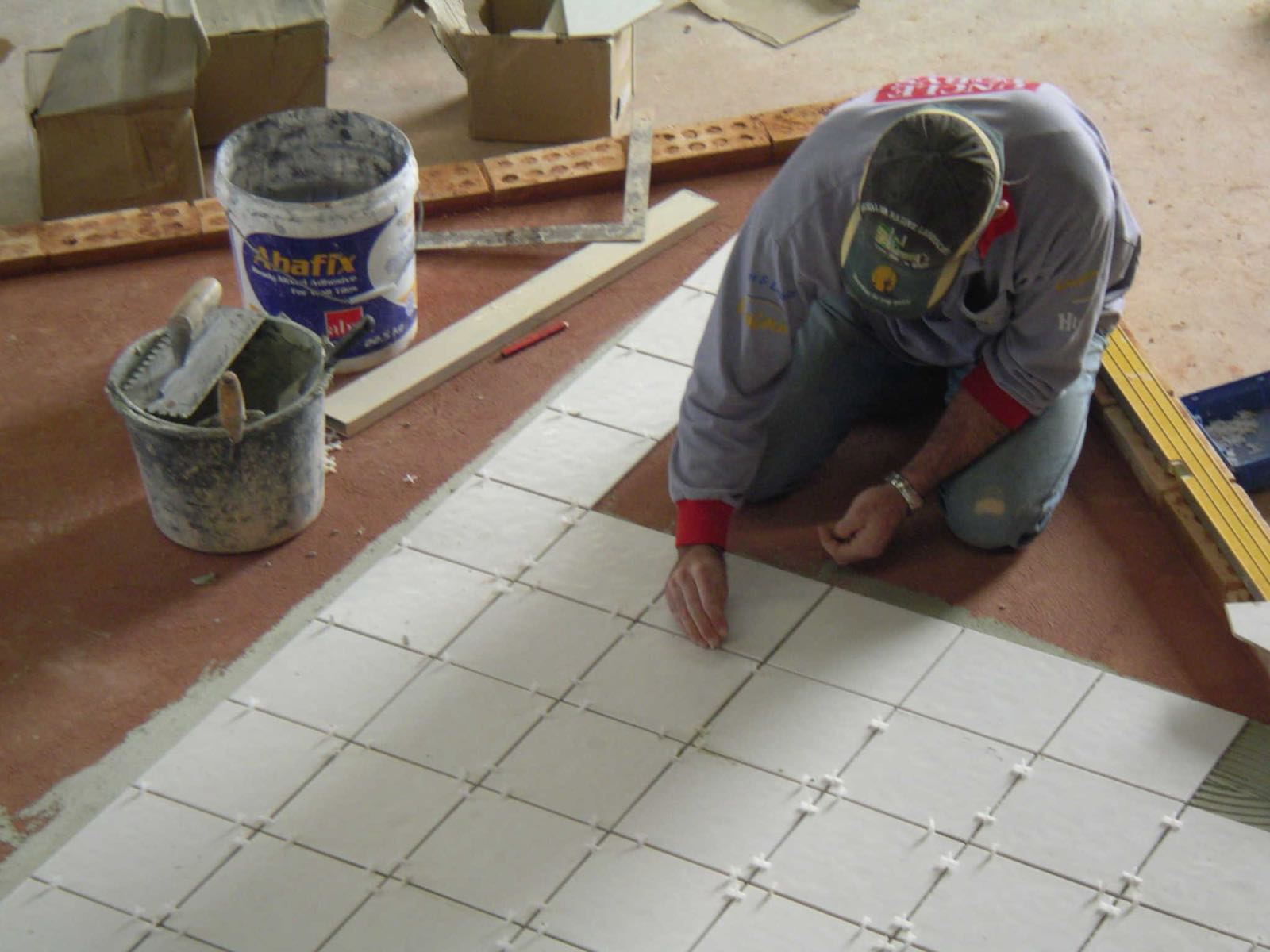
Our tilers handle wall and floor tiling right across London — bathrooms, kitchen splashbacks, hallway floors and full wetrooms in porcelain, ceramic and natural stone including large-format slabs. As one accountable contractor we prepare, tank and tile on substrates we can stand behind, coordinating with our own plumbers and leak teams so nothing gets fudged at the joints. Landlords, letting agents and homeowners get a fixed written quote and a five-year workmanship guarantee.
Written Guarantee: 5 Years
|
Average Timeline Range: 2 days - 2 weeks
Wall and Floor Tiling Done Properly
Tiling failures are almost never the tile’s fault. Cracked floor tiles mean a substrate that flexed; hollow-sounding wall tiles mean dot-and-dab adhesive instead of a solid bed; lifting edges mean movement joints that were never cut. Our tilers spend as long on preparation as on fixing — floors are levelled or overboarded, walls flattened, cement backer board fitted where plasterboard would fail in a wet zone, and decoupling matting laid over timber floors before any porcelain goes down.
London’s housing stock makes this non-negotiable. Victorian and Edwardian terraces across Wandsworth, Hackney and Islington sit on suspended timber floors that move seasonally; ex-local-authority flats hide uneven screeds; period walls are rarely plumb. We set out every room dry first — centring patterns, balancing cuts at the edges, aligning grout lines through doorways — and fix to British Standard tolerances with the right adhesive and trowel notch for the format. The difference between a proper tiler and a cheap one is visible from the doorway for the next twenty years, which is exactly why we won’t tile over a substrate we don’t trust.
Wetrooms, Tanking and Bathrooms
Tiles and grout are decorative, not waterproof. In showers and wetrooms the real waterproofing is the tanking membrane behind the tiles, and skipping it is the single most common cause of the leak damage our teams repair in London flats — usually discovered via the downstairs neighbour’s stained ceiling, and often only after a managing agent gets involved.
We tank every wet zone with a full membrane system, seal pipe penetrations and floor-to-wall junctions with proprietary gaskets, and form and water-test wetroom falls before a single tile is fixed. Because our tilers work alongside our own plumbers, valves, niches, shower trays and waste positions are set to tile dimensions rather than fudged later with slivers and silicone. We photograph the tanking before it disappears behind the finish and hand you the images, so the waterproofing is documented rather than promised.
For leasehold flats and mansion blocks this record matters twice: it evidences that the work was done properly if a downstairs claim ever arises, and it satisfies freeholders and managing agents who increasingly ask for proof before signing off bathroom works under a licence to alter.
Materials: Porcelain, Ceramic, Natural Stone and Large Format
Porcelain has become the default for London bathrooms and floors: harder-wearing than ceramic, dense enough to be effectively waterproof, frost-proof at external thresholds and now available in large slab formats that make small rooms feel bigger. Ceramic still earns its place on walls and splashbacks where it’s cheaper and easier to cut. Natural stone — marble, limestone, travertine — remains beautiful and remains needier, requiring sealing before and after grouting and gentler cleaning for life, and we say so plainly before you commit money to it.
Large-format tiles and slabs are unforgiving. They telegraph every hump in a wall or floor, demand a flatter substrate, need levelling clip systems and two-person handling, and take longer to fix — which is why preparation shows up as a visible line on the quote rather than a hidden shortcut. Done on a properly prepared substrate they transform a cramped Victorian bathroom; laid over a wavy wall to save a day, they look worse than budget ceramic. We help you match format and finish to the room, the traffic and the tenancy before you buy a single box.
How to Choose the Right Tiler in London
Judge a tiling quote on what it includes, not the headline rate. A cheap figure that omits tanking, decoupling, levelling and movement joints isn’t cheaper — it’s the same job with the durable parts deleted, and you pay for them again when it fails. Use these criteria to compare like for like.
First, insist on a fixed written quote that itemises substrate preparation, tanking for any wet zone, adhesive and grout type, and how edges and corners are finished (tile trim versus mitred versus silicone). Vague verbal prices are where disputes start. Second, confirm £5m public liability insurance and a written workmanship guarantee — ours runs to five years — and check the person quoting is the person tiling. Third, ask how they’ll set the room out and whether they dry-lay first; a tiler who talks about balancing cuts and grout-line alignment is thinking about the finish you’ll actually see.
For flats, check the tiler understands the leasehold context: access and parking in controlled zones, protecting communal stairs and lifts, and coordinating with the freeholder or managing agent where a bathroom alteration needs a licence. A contractor who handles the whole job — plumbing, waterproofing and tiling under one accountable roof — removes the gap between trades where most bathroom leaks are actually born.
Tiling for Landlords, Letting Agents and HMOs
Rental bathrooms and kitchens live a harder life than owner-occupied ones, so the specification should be chosen for turnover, not for a showroom photo. We steer landlords and letting agents toward mid-range porcelain with a darker, through-coloured epoxy or standard grout: it resists chips, staining and limescale, needs no sealing, and individual tiles can be lifted and replaced without retiling a whole wall when a tenant cracks one. We hand over a labelled box of batch-matched spares at the end of every job so a future repair matches perfectly.
Time between tenancies is money, and our two-days-to-two-weeks range means a splashback or a small bathroom refresh can slot into a void period without dragging a flat off the market. In HMOs and shared houses we specify robust floor tiling in kitchens, hallways and shower rooms where mopping and heavy footfall would defeat vinyl or laminate, and we tank shared shower rooms as standard because a leak in a multi-let travels fast and expensive.
Every job comes with a fixed written quote up front and tanking photographs on handover — the paperwork letting agents need for their files and landlords need if a deposit or a downstairs-leak dispute ever lands on the desk.
Access, Leasehold and How a London Tiling Job Actually Runs
Most of our tiling work is in occupied flats and houses, so the logistics matter as much as the tiling. We agree access and parking before we start — CPZ permits, loading windows and how spoil and old tiles leave the building — because in a Kensington mansion block or a Camden conversion, getting a skip-bag of broken tile out is a genuine planning question, not an afterthought.
A typical bathroom retile runs strip-out, substrate repair, tanking and water test, then fixing, grouting and silicone — commonly a week for a single bathroom, longer where we uncover rot or a failed screed, and up to two weeks for larger multi-room or natural-stone work. We protect communal stairs, lifts and hallways, sheet up and dust-manage inside the flat, and clear up daily rather than living out of the room we’re working in.
Where a lease requires it we help you square the freeholder or managing agent before work starts — bathroom alterations, and any change that touches waste stacks or waterproofing, often need a licence to alter, and doing the paperwork first is far cheaper than unpicking it later. As one contractor we carry the whole sequence, so there’s no gap between plumber and tiler for a problem to fall into.
Standards, Grout, Movement Joints and the Details That Last
The parts of a tiling job you can’t see are the parts that decide how long it lasts. We fix to British Standards using the correct adhesive class for the substrate and format — a heavy porcelain floor tile needs a different bed and cure than a light ceramic wall tile — and we back-butter large formats for full contact rather than leaving voids that later sound hollow and crack.
Movement matters more than most people expect. Buildings expand, timber floors flex and underfloor heating cycles hot and cold, so we cut movement joints where the standards require them — at floor perimeters, over structural joints and across large runs — and leave flexible silicone rather than rigid grout in every internal corner and at bath, tray and worktop junctions. Grout itself is chosen for the job: standard cementitious for most walls, and stain-resistant epoxy grout in wet zones and heavy-use rental floors where cleaning and hygiene matter.
We also get the boring things right: consistent grout-joint width, level trims and tidy silicone lines, sealed stone, and falls that actually run water to the waste. These are the details that separate a bathroom still crisp after ten years from one that’s discolouring and lifting after two — and they’re why our tiling carries a five-year workmanship guarantee in writing.
What Tiling Services Costs in London (2026)
Item
Typical London Price
Notes
Wall tiling, standard ceramic
£40–£65 per m²
Straightforward bathroom or kitchen walls on sound plaster or backer board
Floor tiling, porcelain
£55–£100 per m²
Includes setting out and levelling; large-format and slabs at the upper end
Natural stone (marble, limestone, travertine)
£70–£120 per m²
Sealing, careful handling and slower fixing push the rate up
Labour-only fixing
£35–£60 per m²
Where you have already supplied the tile; we flag any substrate clash first
Kitchen splashback, fitted
£300–£700 per job
Depends on run length, tile format and pattern (herringbone, metro, mosaic)
Wetroom tanking membrane
£350–£800 per wet zone
Full membrane, gaskets and a water test before any tile goes on
Itemised separately; unavoidable over timber floors and tired walls
Full bathroom retile (walls + floor, small London bathroom)
£1,800–£4,500 per room
Tanked and fitted; tile supply extra and varies widely by choice
Guide prices for Greater London in 2026, supply-and-fit unless stated. Final cost depends on substrate condition, access and tile choice — we quote a fixed written price after seeing the room.
Insider Tips Before You Commit
Buy ten per cent more tile than the calculator says — breakages, cuts and a labelled box of batch-matched spares for future repairs are all cheaper than reordering a discontinued line.
In a small London bathroom, lay large-format tiles with narrow grout joints and rectified edges; fewer grout lines make the room read bigger and cut future cleaning.
Ask to see the tanking membrane photographed before it disappears behind the tile — no photo, no proof the wet zone was ever waterproofed.
For rentals, pick mid-range porcelain with a darker through-coloured grout: it hides limescale and tenant wear and individual tiles can be swapped without retiling the wall.
Insist the room is set out dry first so cuts are balanced at the edges and grout lines run through the doorway — a bad set-out is visible from the threshold for twenty years.
Over any timber or chipboard floor, budget for a decoupling matting; porcelain laid straight onto a flexing subfloor will crack along the joists within a year.
Reseal natural stone before grouting and again on handover — unsealed marble and limestone soak up grout haze and bathroom products permanently.
Leave silicone, not grout, in every internal corner and along the bath and tray junction; these movement joints are where rigid grout always cracks first.
How Not to Get Scammed
London has more rogue traders than any other UK market. These are the warning signs we see most often — and exactly what to do when you spot them.
Quotes to tile a shower straight onto bare plasterboard or existing tiles with no mention of tanking or backer board.
Ask in writing whether the wet zone is tanked and the substrate replaced; if tanking is not a named line on the quote, walk away — it is the one thing you cannot inspect later.
Cash-only, no VAT invoice and a large upfront deposit before any materials are on site.
Pay a modest deposit against delivered materials only, insist on a written quote and proper invoice, and stage payments against completed stages so leverage stays with you.
"We’ve found more rot/damp behind the wall" mid-job, with an on-the-spot price rise and pressure to decide now.
Stop and ask for photographs and a written variation before any extra work or payment; genuine trades document additional findings, they don’t rush you into cash on the day.
No proof of public liability insurance and vague answers about who is actually doing the work.
Ask to see the £5m public liability certificate and confirm the tiler on site is the one you’re paying — uninsured labour on your floor is your problem if a leak floods the flat below.
A day rate so far below market that preparation is obviously being skipped, with no decoupling, levelling or movement joints mentioned.
Compare quotes on what’s included, not the headline number; a fixed written spec that lists prep, tanking and setting out beats a cheap verbal price every time.
No written guarantee, and reluctance to put the waterproofing warranty in writing.
Get the workmanship and waterproofing guarantee in writing with the years stated; a trader confident in their tanking has no reason to refuse.
Standards & Compliance
Every project is delivered to current British Standards and Building Regulations, with works documented for building control and HMO licensing sign-off — backed by fixed written quotes and a written guarantee.
BRITISH STANDARDS · BUILDING REGS COMPLIANT · FD30/FD60 FIRE DOORSETS · BS 5839-6 ALARMS · WRITTEN GUARANTEE
Frequently Asked Questions (FAQ)
How much do tilers charge per square metre in London?
Supply-and-fit typically runs £40–£100 per square metre depending on tile and preparation: standard ceramic walls at the lower end, large-format porcelain floors with levelling at the upper. Labour-only fixing is usually £35–£60 per square metre. Natural stone, intricate patterns like herringbone, and decoupling over timber floors add to the rate. We quote a fixed written price after seeing the substrate.
Do you tank showers and wetrooms before tiling?
Always. Tiles and grout are not waterproof, and a shower tiled straight onto bare plasterboard will eventually leak into the room — or the flat — below. We apply a full tanking membrane to every wet zone, seal the penetrations with gaskets, water-test wetroom falls, and photograph the membrane before tiling. It’s a core reason our bathrooms carry a written five-year waterproofing guarantee.
How long does a bathroom retile take?
A single small London bathroom is commonly around a week: strip-out, substrate repair, tanking and water test, then fixing, grouting and silicone, allowing proper cure time between stages. Larger rooms, natural stone or jobs where we uncover rot or a failed screed run longer, and multi-room or slab work can reach two weeks. We give a firm timeline with the fixed quote.
Can you fit large-format tiles and slabs?
Yes — large-format porcelain up to slab sizes, with the flat substrates, levelling clip systems and two-person handling they demand. Large formats are unforgiving of poor walls and floors, so expect substrate preparation to be a visible line on the quote rather than a hidden shortcut. Done properly on a level base, they make small Victorian and mansion-block bathrooms feel considerably bigger.
Which tiles are best for rental properties and HMOs?
Mid-range porcelain with a darker, through-coloured grout: it resists chips, stains and limescale better than ceramic or stone, needs no sealing, and individual tiles can be replaced if one cracks. In HMO kitchens and shower rooms, robust floor tiling outlasts vinyl under heavy footfall. Keep a box of batch-matched spares — we hand them over labelled at the end of every job.
Do you supply the tiles or can I buy my own?
Either. We can supply-and-fit, or fix a tile you’ve already chosen on a labour-only basis at roughly £35–£60 per square metre. If you’re buying your own, send us the specification first — we’ll tell you honestly whether it suits the substrate and traffic, and whether the format will fight your walls or floor before you’ve paid for a pallet of it.
Why do tiles crack or come loose, and can you fix an existing failure?
Almost always it’s the substrate, not the tile: a flexing timber floor with no decoupling, dot-and-dab adhesive leaving hollow voids, or missing movement joints. Cosmetic re-grouting rarely cures it. We diagnose the real cause, and where the substrate is sound we can overlay or repair; where it isn’t, we’re honest that a proper strip-out and re-prep is the only lasting fix.
Do I need the freeholder’s or managing agent’s permission to retile a leasehold bathroom?
Often, yes. Many London leases require a licence to alter for bathroom works, especially anything touching waterproofing, waste stacks or floor build-up above another flat. Managing agents increasingly ask for evidence the wet zone was tanked. We help you square the paperwork before starting and provide tanking photographs and a written spec for the freeholder’s file.
How much does a kitchen splashback cost to tile?
Typically £300–£700 fitted, depending on the run length, tile format and pattern — a simple metro or ceramic run sits at the lower end, while herringbone, mosaic or slab splashbacks with more cutting and setting-out cost more. Tile supply is on top and varies enormously by choice. We quote a fixed price once we’ve measured and seen the wall behind.
Is your tiling guaranteed and are you insured?
Yes. All our tiling carries a written five-year workmanship guarantee, and wet zones are backed by our waterproofing guarantee with tanking photographs as evidence. We carry £5m public liability insurance and work to British Standards, and everything is agreed on a fixed written quote up front — no cash-only jobs, no surprise mid-work price rises.
Our Written Guarantee
We provide a fully comprehensive, written 5-Year guarantee covering all structural reinstatement, moisture boundaries, and finish coatings.
100% Insurance Protected
Request an Elite Assessment
Secure a rapid, high-precision physical survey by our team. Fill out our briefing engine instantly.
We deliver tiling services across all 33 London boroughs — from the City and Central London out to the M25. Tap any marker to see coverage and local postcodes.