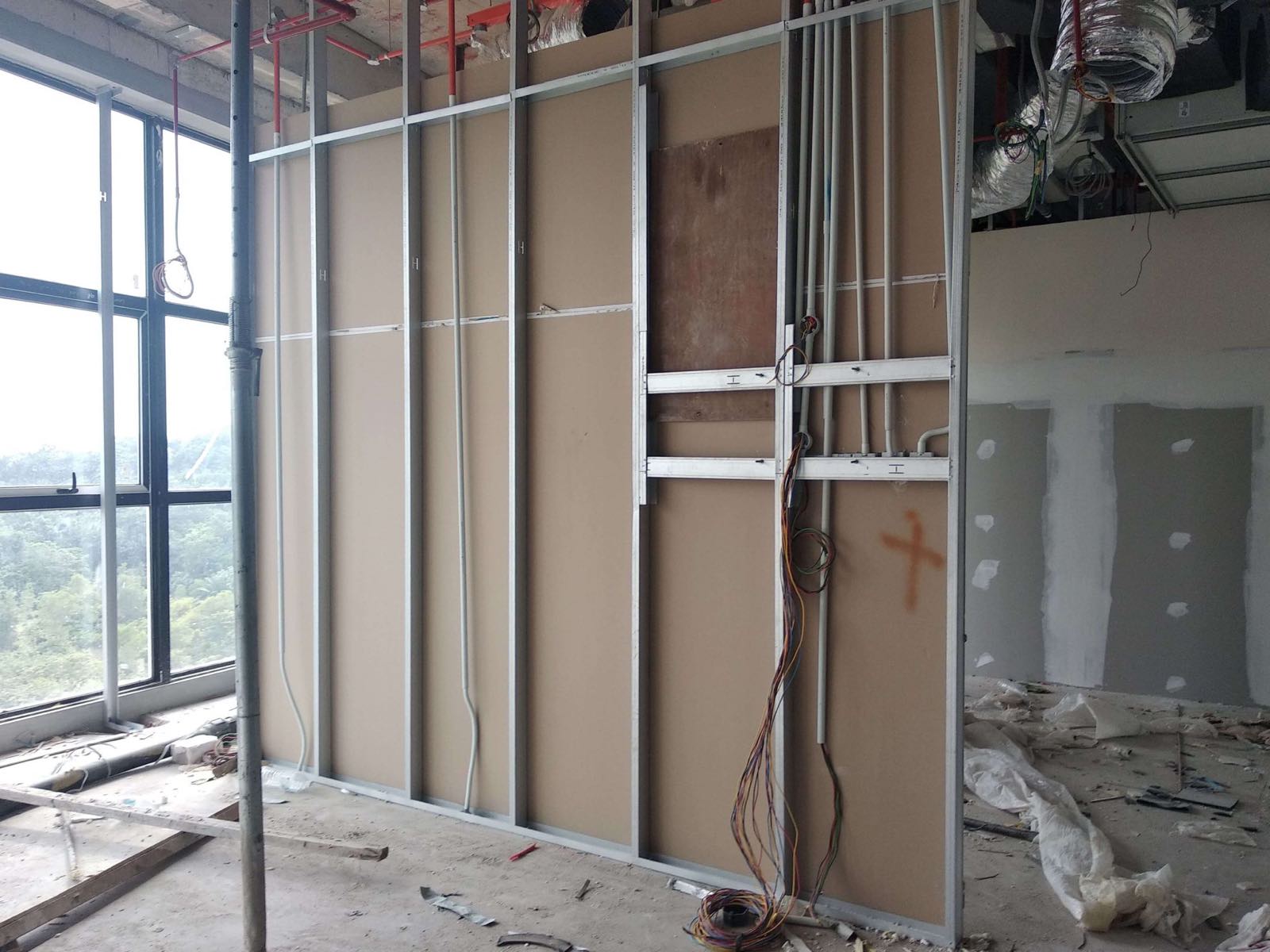
Soundproofing a flat in London costs roughly £40–£90 per square metre to upgrade a wall or partition acoustically, with whole-room treatments running £3,000–£8,000 and full-flat projects £8,000–£15,000 or more in 2026. The price depends on what you are treating, walls, floors or ceilings, and how far you go: a single acoustic plasterboard upgrade is modest, while independent isolated systems with resilient bars and mass cost considerably more. This guide explains the treatments, the cost per square metre, the Approved Document E context for conversions, and where the money is best spent.
How much does it cost to soundproof a flat in London?
Soundproofing in London is priced per square metre for the surface treated, and the acoustic uplift on a wall or partition typically costs £40–£90 per square metre on top of the base construction in 2026. The wide range reflects how much isolation you are buying: a single layer of acoustic board and insulation sits at the lower end, while an independent isolated system with resilient bars, mass-loaded vinyl and double boarding sits at the upper end.
Scaled up to whole rooms and flats, a single room treated on its problem surfaces runs £3,000–£8,000, and a whole-flat project, treating party walls, floors and ceilings, runs £8,000–£15,000 or more depending on size and the level of isolation required.
The table below shows typical costs by treatment. Note that soundproofing always reduces room size slightly, because effective treatments add thickness, and that VAT applies to most of this work.
Soundproofing treatment
Typical London cost (2026)
Acoustic partition uplift (per m²)
£40 – £90
Wall treatment, single room
£1,500 – £4,000
Floor or ceiling treatment, single room
£2,000 – £5,000
Whole room, multiple surfaces
£3,000 – £8,000
Whole flat
£8,000 – £15,000+
How soundproofing actually works: mass, isolation and absorption
Effective soundproofing combines three principles, and understanding them explains why the better systems cost more. Adding mass blocks sound; isolating surfaces stops vibration passing through the structure; and absorption inside cavities damps the sound that does get in. The cheapest treatments use only the first; the best use all three.
In practice, an acoustic upgrade to a wall or ceiling layers these up. Mineral wool insulation fills the cavity or void to absorb sound. Resilient bars, metal channels that the plasterboard fixes to, isolate the new surface from the structure so vibration cannot pass straight through. Acoustic plasterboard, denser and heavier than standard board, adds mass, often in two layers. Mass-loaded vinyl, a heavy flexible membrane, is added where extra mass is needed in a thin build-up.
The reason a basic single-board upgrade underperforms is that it adds a little mass but no isolation, so vibration still travels through the rigid connection to the structure. Spending the extra to include resilient bars and proper cavity insulation is what turns a modest improvement into a genuinely quieter room, which is why we steer clients towards the complete system rather than a token layer of acoustic board.
Walls, floors and ceilings: which to treat
Where you spend depends on where the noise comes from, and treating the wrong surface is the most common waste of a soundproofing budget. The honest first step is identifying the path the sound takes.
Party walls are the usual target for noise from a neighbouring flat or house: an independent acoustic stud wall, or a bonded system of resilient bars, insulation and acoustic board, built against the existing wall, gives the best result but costs more and steals 75–120mm of room width. Floors matter most for impact noise, footsteps and furniture, from the flat above, or for stopping your own noise reaching the flat below: treatments range from acoustic underlay beneath a new floor to a full floating floor on resilient battens. Ceilings are treated to block noise from above where the floor cannot be accessed, using an independent or resiliently-fixed plasterboard ceiling with insulation in the void.
The practical point is that airborne noise (voices, TV) and impact noise (footsteps) need different treatments, and a flat usually suffers from one more than the other. We assess which dominates before quoting, because a floor treatment will do little for a neighbour's television through a party wall, and a wall upgrade will do little for footsteps overhead.
Approved Document E: conversions, HMOs and flats
Soundproofing in flats is not only about comfort; for conversions and certain works it is a regulatory requirement under Approved Document E of the Building Regulations, which sets minimum sound insulation standards between dwellings.
Approved Document E applies where new dwellings are created, including converting a house into flats or creating separate units. It sets performance standards for airborne sound insulation through separating walls and floors, and for impact sound through separating floors, and for material change of use conversions these standards must be met and can be checked by pre-completion sound testing. This is why a house-to-flats conversion cannot simply rely on the existing structure: the separating walls and floors usually need acoustic upgrade to pass.
For HMOs and shared houses, good sound separation between rooms is part of providing decent accommodation and reduces disputes, even where the full Part E conversion standards do not strictly apply. The practical implication for landlords and developers is to design the acoustic treatment in from the start of a conversion, rather than discovering at sound-test stage that the separating floors fail. We build conversions to meet these standards as part of the partition and floor works, which is far cheaper than retrofitting isolation after the units are finished.
Leaseholder considerations before you start
If you live in a flat, soundproofing is rarely a free hand, because your lease and the building structure constrain what you can do, and overlooking this causes problems later.
Most flat soundproofing happens on the inside face of your own walls, floors and ceilings, which is usually within your control as a leaseholder, but there are limits. Treatments that build up the floor can affect door heights and the relationship with the flat below. Work to a party structure may engage the lease terms or, in some cases, the building's freeholder consent. Many leases require landlord consent for alterations, and treating a ceiling or floor that forms part of the structure can fall within that. It is worth checking the lease and, where required, seeking consent before committing.
There is also a courtesy and practical dimension: floor treatments reduce the impact noise you transmit downwards, which is often the very thing a downstairs neighbour complains about, so they can resolve disputes as well as improve your own comfort. We routinely flag the leaseholder and consent dimension before work begins, because the building work is the easy part; the permissions are what catch people out.
What drives soundproofing cost up or down
The cost of soundproofing a flat is driven mostly by how much isolation you specify and how many surfaces you treat, so the budget is highly controllable once you know where the noise is.
The upward drivers are independence and mass: an independent stud wall built off its own track, fully isolated from the existing structure, outperforms a bonded resilient-bar system but costs more and takes more space. Double boarding, mass-loaded vinyl and floating floors all add cost. Treating every surface of a room, rather than just the offending one, multiplies the figure. Access and making good, removing and reinstating skirtings, architraves, sockets and radiators, adds labour.
The savings come from precision: treating only the surface the noise actually travels through, choosing a bonded system over an independent one where space is tight and the performance gain justifies it, and accepting a small loss of room dimension in exchange for a thinner, cheaper build-up. The single best cost control is an honest assessment of the noise path before any board goes up, so the money lands where it works. VAT applies to most of this work and should be added to the figures above.
Frequently Asked Questions
How much does it cost to soundproof a flat in London?
Soundproofing a wall or partition acoustically costs £40–£90 per square metre on top of base construction in 2026. A single room treated on its problem surfaces runs £3,000–£8,000, and a whole flat, treating party walls, floors and ceilings, runs £8,000–£15,000 or more. The figure depends mainly on how much isolation you specify and how many surfaces you treat. VAT applies on top.
What is the best way to soundproof a flat wall?
The best wall treatment combines mass, isolation and absorption: mineral wool in the cavity, resilient bars to isolate the new surface from the structure, and one or two layers of dense acoustic plasterboard, sometimes with mass-loaded vinyl. A single layer of acoustic board alone underperforms because it adds mass but no isolation. A full bonded or independent system costs £40–£90 per square metre and steals 75–120mm of room width.
Do I need to meet Building Regulations when soundproofing a conversion?
Yes. Approved Document E of the Building Regulations sets minimum sound insulation standards between dwellings, and it applies where new dwellings are created, such as converting a house into flats. The separating walls and floors must meet airborne and impact sound standards, which can be confirmed by pre-completion sound testing. This usually means upgrading the existing structure acoustically as part of the conversion, designed in from the start rather than retrofitted.
Should I soundproof the wall, floor or ceiling?
It depends on the noise. Airborne noise such as voices and television from a neighbour usually needs the party wall treated; impact noise such as footsteps from above needs the floor or ceiling treated. Treating the wrong surface wastes money, so the path of the noise should be identified first. A single-room treatment runs £1,500–£4,000 for a wall and £2,000–£5,000 for a floor or ceiling.
Do I need permission to soundproof my leasehold flat?
Often, yes. Many leases require landlord or freeholder consent for alterations, and treatments to ceilings or floors that form part of the building structure can fall within that. Internal treatments to your own walls are usually within your control, but floor build-ups can affect door heights and the flat below. It is worth checking the lease and seeking consent where required before committing, as the permissions catch people out more than the building work does.