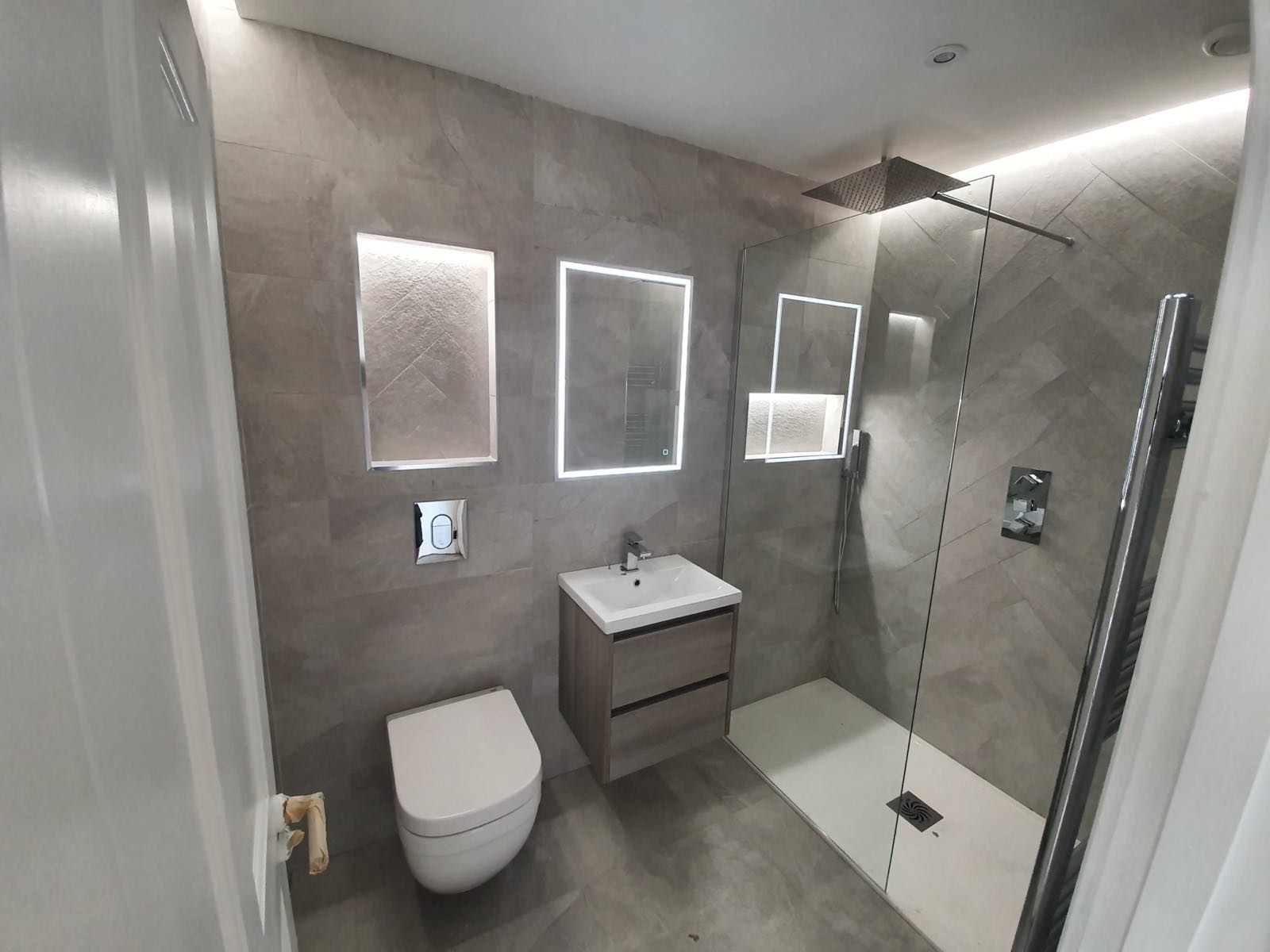
Wet Room vs Standard Bathroom: Which Should You Choose?
Updated 12 June 2026|8 min read
A standard bathroom has an enclosed shower tray or bath with a screen; a wet room has an open, level shower area draining through a floor gully, with the entire room waterproofed (tanked) beneath the tiles. Wet rooms feel spacious and modern, suit small ensuites and step-free accessibility, and can add appeal in the right home. But they live or die on the waterproofing: a wet room tanked properly lasts decades, while a poorly tanked one leaks into the structure below. This guide compares the two on space, accessibility, cost and risk so you choose the right one.
What is the actual difference?
The difference between a wet room and a standard bathroom is not the fittings; it is how the room handles water at floor level, and that single distinction drives everything else.
A standard bathroom contains the water. A shower sits in a raised tray with a screen or door, or over a bath, and the rest of the floor is expected to stay dry. Waterproofing is concentrated around the shower and bath; the floor can be vinyl, LVT, tile or even sealed timber. It is the familiar, lower-risk layout that suits most family bathrooms.
A wet room treats the whole room as a shower. The shower area is open and at the same level as the rest of the floor, with no tray and often no screen or only a single fixed panel, and the water runs to a drain set into the floor, usually a linear channel or a central gully, with the floor gently graded to fall toward it. Because water can reach any surface, the entire floor and the lower walls (and sometimes the whole room) are tanked: a continuous waterproof membrane is applied beneath the tiles so that no water reaches the structure. The tanking is the wet room; the tiles are just the finish on top of it.
Wet room pros and cons
Wet rooms have become popular in London for good reasons, but they carry real trade-offs that are worth understanding before you commit.
On the plus side, a wet room feels open and spacious, which is exactly why it works so well in small ensuites and awkward spaces where a tray and enclosure would dominate. With no tray lip or door to step over, it is the most accessible bathroom layout there is, ideal for wheelchair users, anyone with mobility limitations and ageing-in-place adaptations. It is easy to clean, with fewer crevices and no tray seal to scrub, and a well-designed wet room has a clean, modern, hotel-like aesthetic that can lift the whole feel of a home. Because the floor is fully tanked, it can also be the most robust layout against everyday splashing, provided the waterproofing is done correctly.
The cons all stem from that same open design. The whole room gets wet, so toilet roll, towels and anything you do not want damp need careful placement or a screen. Without at least a fixed glass panel, water can spread further than people expect. And the waterproofing risk is higher: there is far more tanked area to get right, so a wet room done badly fails more comprehensively than a leaking shower tray. Done well it is superb; done cheaply it is a liability.
Standard bathroom pros and cons
The standard enclosed bathroom remains the default for most homes, and there is nothing old-fashioned about choosing it; for many properties it is simply the better-balanced answer.
Its strengths are containment and familiarity. The shower is enclosed and the rest of the floor stays dry, so towels, storage and the toilet are not in a splash zone, and the waterproofing risk is concentrated in a smaller, well-understood area around the tray and bath. It is generally cheaper to install than a wet room because there is less tanking and no need to grade the whole floor to a drain. A bath, which many buyers and families still want, fits naturally into a standard bathroom and is harder to accommodate in a true wet room. Resale-wise, a conventional family bathroom with a bath is the safest specification for a typical London home.
The downsides are mostly about space and accessibility. A tray and enclosure take up room and create a step to climb over, which is the opposite of what an accessible or very small bathroom wants. Trays and screens have seals and crevices that need cleaning, and a cracked tray or failed seal is its own source of leaks. For a small ensuite, an accessible bathroom or a deliberately minimalist design, the standard layout can feel cramped where a wet room would feel generous.
Wet room vs standard bathroom compared
The table sets the two layouts side by side on the factors that usually decide the choice. The costs are typical London ranges for the bathroom fit-out in 2026 and exclude major structural changes; the wet room premium comes mainly from the additional tanking, floor grading and drainage.
Neither is universally better. A wet room wins on space and accessibility; a standard bathroom wins on cost, containment and fitting a bath. The right answer depends on the room and who uses it.
Factor
Wet room
Standard bathroom
Waterproofing
Whole floor + walls tanked
Localised to shower / bath
Drainage
Open, floor gully or channel
Enclosed tray or bath
Accessibility
Step-free, best for mobility
Step over tray or bath
Space feel
Open, ideal for small rooms
Defined zones, can feel tighter
Typical fit-out cost
£6,000 – £15,000+
£5,000 – £12,000
Best for
Small ensuites, accessibility, modern design
Family bathrooms, budgets, keeping a bath
When does a wet room make sense?
A wet room is the right choice in specific situations rather than as a default for every bathroom, and being honest about that saves money and disappointment.
It makes most sense in small ensuites and compact spaces, where removing the tray and enclosure makes the room feel noticeably larger and a conventional shower would feel cramped. It is the standout choice for accessibility: a level, step-free, screen-light layout suits wheelchair users, anyone with reduced mobility and homeowners planning to age in place, and it is far easier to retrofit grab rails and a seat into. It also suits clients chasing a particular modern, minimalist aesthetic, the open, tiled, hotel-style bathroom that a tray and bulky enclosure cannot deliver.
Where a wet room is less obviously right is the main family bathroom of a typical house, where a bath is wanted for children and resale, and where the standard layout's containment and lower cost are real advantages. In those cases we often suggest a hybrid: a standard bathroom with a generous, well-tanked walk-in shower and a single fixed screen, which captures much of the wet room look and accessibility without tanking the entire room. The decision should follow the room and the people using it, not fashion alone.
Why professional tanking is non-negotiable
If you take one thing from this guide, take this: a wet room is only as good as its tanking, and tanking is not a place to cut corners or hire the cheapest quote. We are called out to repair the consequences of failed waterproofing far too often, and a leaking wet room is one of the most damaging.
Proper tanking means applying a continuous waterproof membrane across the floor and up the walls to the required height, sealing carefully around the drain, pipe penetrations, corners and the door threshold with proprietary tapes and collars, and grading the floor accurately so every drop runs to the gully rather than pooling or escaping. It has to be done on a sound, suitably stiff floor, because movement cracks tiles and grout and lets water through. None of this is visible once the tiles are on, which is exactly why it gets skimped by the wrong contractor, and exactly why it must not be.
When tanking fails, the water does not stay in the bathroom. It tracks into the floor structure, rots joists, stains and collapses the ceiling below and, in a flat, leaks into the neighbour's property and becomes an insurance and liability problem. Putting that right means stripping the new bathroom out, drying the structure and starting again, far more expensive than doing the waterproofing properly the first time. A wet room installed by people who treat the tanking as the heart of the job, with the right membranes and detailing, will serve you reliably for decades. One that treats it as an afterthought will leak. That is the whole risk, and it is entirely avoidable.
Frequently Asked Questions
What is the difference between a wet room and a standard bathroom?
A standard bathroom has an enclosed shower tray or bath with a screen, and only that area is waterproofed. A wet room has an open, level shower draining through a floor gully, with the whole floor and lower walls tanked with a continuous waterproof membrane beneath the tiles. The key difference is that a wet room treats the entire room as a shower, so the waterproofing must be comprehensive.
Should I get a wet room or a normal bathroom?
Choose a wet room for small ensuites, step-free accessibility or a modern minimalist look, where the open layout makes the most of the space. Choose a standard bathroom for a main family bathroom, a tighter budget, or where you want to keep a bath. A good middle ground is a standard bathroom with a generous, well-tanked walk-in shower and a single fixed screen.
Are wet rooms more likely to leak?
A wet room has far more tanked area than a standard bathroom, so a poorly waterproofed one fails more comprehensively. But a wet room installed with proper professional tanking, correct floor grading and careful detailing around the drain and pipes will serve reliably for decades. The risk is not the wet room itself; it is cutting corners on the waterproofing that can never be seen once the tiles are on.
How much more does a wet room cost than a standard bathroom?
As a London guide for 2026, a wet room fit-out typically costs £6,000–£15,000 or more, against £5,000–£12,000 for a standard bathroom. The premium comes mainly from the additional tanking across the whole floor and walls, grading the floor to a drain, and the more demanding waterproofing detailing, rather than from the fittings themselves.
Does a wet room add value to a London property?
A well-designed wet room can add appeal, particularly in a small ensuite or as an accessible bathroom, and it suits buyers wanting a modern look. For a property's only or main bathroom, however, many buyers still want a bath, so a wet room as the sole bathing facility can narrow appeal. The safest approach is a wet room as a second or ensuite bathroom, with a bath retained elsewhere.